-
.jpg)
Mesopotamian Cylinder Seal with Seated Deity
Third Dynasty of Ur, 2100-2000 B.C.Sold for (Inc. bp): £260
With cord and bead handles; accompanied by a copy of an old scholarly note, typed and signed by W.G. Lambert, late Professor of Assyriology, University of Birmingham, 1970-1993, which states: 'Cylinder Seal of lapis Lazuli, 23.5 x 9 mm. The design shows a seated deity to the right, raising one hand, while from the left an introducing goddess leads in a worshipper. The cutting is simple, but is identifiable as from the period of the Third Dynasty of Ur, c. 2100-2000 B.C., coming from southern Mesopotamia or a neighbouring area. The design is worn, but clearly visible. Lapis is a rare stone for this period.'; accompanied by a museum-quality impression. 5.65 grams total, 8.1-23.5 mm
UK private collection, acquired 1980-1983. Accompanied by a copy of a scholarly note, typed and signed by Professor Wilfrid George Lambert in July 1991. This lot has been cleared against the Art Loss Register database, and is accompanied by an illustrated lot declaration signed by the Head of the Antiquities Department, Dr Raffaele D'Amato. -
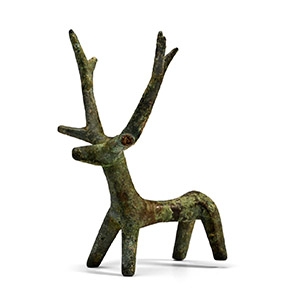
Amlash Bronze Figure of a Stag
Circa 1st millennium B.C.Sold for (Inc. bp): £845
Modelled standing with erect head and large curving antlers. 17 grams, 52 mm
Nicolas Koutoulakis (1910-1996), thence by descent. Ex Galerie Khnoum, Geneva, Switzerland. Private collection of Mr K.A. This lot has been cleared against the Art Loss Register database, and is accompanied by an illustrated lot declaration signed by the Head of the Antiquities Department, Dr Raffaele D'Amato. -
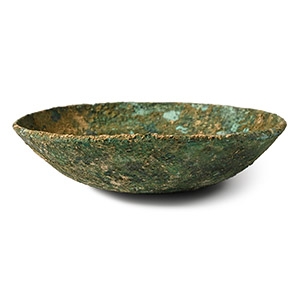
Luristan Bronze Dish
Circa 6th century B.C.Sold for (Inc. bp): £65
With hemispherical body raised from a single sheet. 167 grams, 11.1 cm
Ex London, UK, collections, 1990s-2000s. This lot has been cleared against the Art Loss Register database, and is accompanied by an illustrated lot declaration signed by the Head of the Antiquities Department, Dr Raffaele D'Amato.
The people of Luristan were nomads, constantly moving in summer and winter pastures, and needed metal utensils and tools. Therefore, in addition to weapons, these excellent metal workers produced, in considerable numbers, light and elegant bronze vases and cups. The Luristan vessels show how strongly specialised were the forms of these objects. -
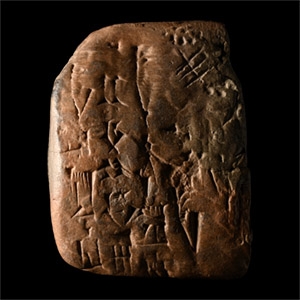
Sumerian Terracotta Cuneiform Tablet Section
Ur III, 22nd-21st century B.C.Sold for (Inc. bp): £312
Biconvex in section with rounded edges, columns of neatly impressed cuneiform text to both flat faces; old collector's label '32' to broken end. 27.8 grams, 43 mm
London, UK, art market, 1980s, with collection label with no.32. From the collection of G.M.R.H., London, UK. Examined and translated by Professor Wilfrid George Lambert FBA (1926-2011), historian, archaeologist, and specialist in Assyriology and Near Eastern archaeology, in the late 1980s and early 1990s, but the document now lost. This lot has been cleared against the Art Loss Register database, and is accompanied by an illustrated lot declaration signed by the Head of the Antiquities Department, Dr Raffaele D'Amato. -
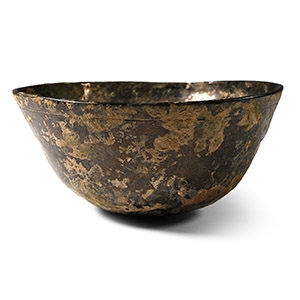
Luristan Bronze Bowl
Circa 1000 B.C.Sold for (Inc. bp): £98
Of a rounded profile with rounded base, circumferential groove beneath the rim. 365 grams, 15.7 cm
Ex London, UK, collections, 1990s-2000s. This lot has been cleared against the Art Loss Register database, and is accompanied by an illustrated lot declaration signed by the Head of the Antiquities Department, Dr Raffaele D'Amato.
In the Ancient East this was a form of vessel very common at every period. Such bronze dishes with a lip were, however, extremely rare. The specimens kept in Brussels and Berlin Museums, without lips, were also found in Luristan, but are of Mesopotamian manufacture. -
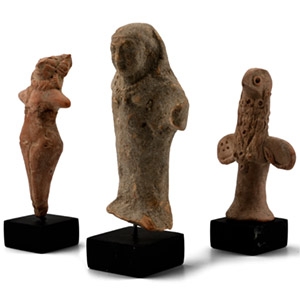
Western Asiatic Terracotta Votive Idol Group
2nd millennium B.C.Sold for (Inc. bp): £221
Comprising: columnar figure with arms raised; similar with stub arms and applied mouth and ears; tabular figure with hands held before the chest gripping a disc, perhaps a patera; each mounted on a custom-made display stand. 210 grams total, 10.5-11.8 cm including stand
From a collection acquired on the UK art market from various auction houses and collections mostly before 2000. From an important Cambridgeshire estate; thence by descent. From the private collection of John Meredith, acquired since the 1990s; thence by descent. This lot has been cleared against the Art Loss Register database, and is accompanied by an illustrated lot declaration signed by the Head of the Antiquities Department, Dr Raffaele D'Amato. -
.jpg)
Old Syrian Haematite Cylinder Seal
Early 2nd millennium B.C.Sold for (Inc. bp): £975
With frieze in three scenes: crouching gryphon with one foreleg raised above a guilloche scene-divider with a crouching ibex below; three human figures standing, the outer two wearing an ankle-length skirt with waistband, one arm bent holding a frond and, between them, a standing figure in flounced robe flanked by a squatting monkey with tail raised and a freestanding cruciform symbol; supplied with a museum-quality impression. 5.86 grams, 19 mm
From the 'S' collection, acquired 1970-1990s. The collection was seen and studied by W.G.Lambert, late Professor of Assyriology at the University of Birmingham, 1970-1993. This lot has been cleared against the Art Loss Register database, and is accompanied by an illustrated lot declaration signed by the Head of the Antiquities Department, Dr Raffaele D'Amato. -
.jpg)
Neo Babylonian Agate Stamp Seal with Star and Moon
7th-6th century B.C. or laterSold for (Inc. bp): £260
Conical body pierced through the top, underside engraved with a crescent moon and star above, sun and an altar(?) below. 7.33 grams, 21 mm
UK private collection before 2000. Acquired on the UK art market. Property of a London gentleman. This lot has been cleared against the Art Loss Register database, and is accompanied by an illustrated lot declaration signed by the Head of the Antiquities Department, Dr Raffaele D'Amato. -
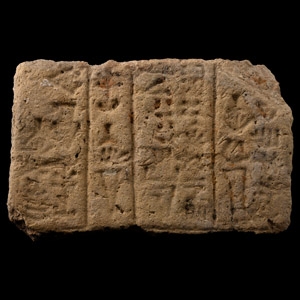
Mesopotamian Cuneiform Brick Fragment with Royal Text
3rd-2nd millennium B.C.Sold for (Inc. bp): £780
Rectangular fragment with four sections of cuneiform inscription to one side. 436 grams, 12.5 cm
From an important collection pre 1988. From a private UK collection. This lot has been cleared against the Art Loss Register database, and is accompanied by an illustrated lot declaration signed by the Head of the Antiquities Department, Dr Raffaele D'Amato. -
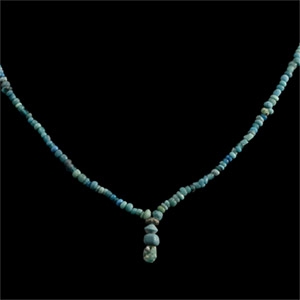
Achaemenid Blue Glass Bead Necklace String
6th-4th century B.C. and laterSold for (Inc. bp): £65
Composed of mainly oblate and annular beads with larger beads as a central feature; restrung. 5.55 grams, 38 cm
From the London, UK, art market in the 1990s. This lot has been cleared against the Art Loss Register database, and is accompanied by an illustrated lot declaration signed by the Head of the Antiquities Department, Dr Raffaele D'Amato. -
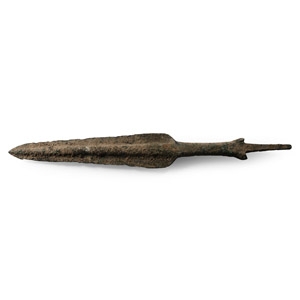
Very Large Amlash Bronze Spearhead
12th-11th century B.C.Sold for (Inc. bp): £117
Leaf-shaped blade with raised midrib extending to a square-section shank, flared below with a square-section tang. 396 grams, 24.2 cm
Acquired in the 1990s. Ex Abelita family collection. This lot has been cleared against the Art Loss Register database, and is accompanied by an illustrated lot declaration signed by the Head of the Antiquities Department, Dr Raffaele D'Amato.
The weapon belongs to the type 1 of the Khorasani spearhead classification, mainly from Marlik or Amlash areas. Similar pieces have been dated by Stutzinger to 1200-1100 B.C. -
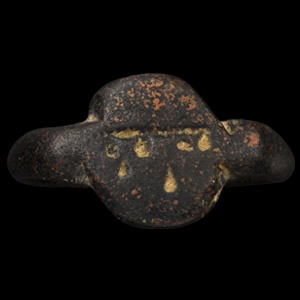
Western Asiatic Bronze Finger Ring
9th-11th century A.D.Sold for (Inc. bp): £91
With bulb to each shoulder, ellipsoid bezel, incuse legend. 4.25 grams, 21.63 mm overall, 18.49 mm internal diameter (approximate size British P, USA 7 1/2, Europe 16.23, Japan 15)
From the collection of a gentleman, acquired on the London art market in the 1990s. This lot has been cleared against the Art Loss Register database, and is accompanied by an illustrated lot declaration signed by the Head of the Antiquities Department, Dr Raffaele D'Amato.

