-
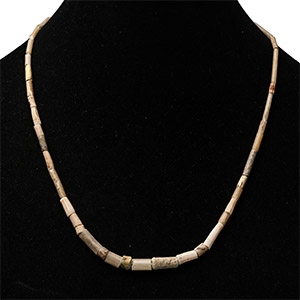
Roman Ochre Glass Bead Necklace String
1st-4th century A.D. and laterSold for (Inc. bp): £13
Composed mainly of long tubular beads; restrung. 9.16 grams, 42 cm
From the London, UK, art market in the 1990s. This lot is accompanied by an illustrated lot declaration signed by the Head of the Antiquities Department, Dr Raffaele D'Amato.
In the Roman period there was a strong formal and chromatic diversity of glass beads used for necklaces and bracelets. The most common beads in forms were small biconical (lenticular), barrel-shaped, spherical and annular; the most common colours were dark blue, followed by green and yellow. The succession of glass beads often imitates jewellery made of costly materials (gold, silver, semi-precious and precious stones). -
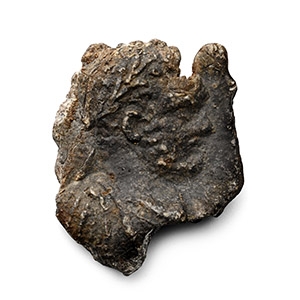
Roman Lead Tag with Bust of Caracalla
Early 3rd century A.D.Sold for (Inc. bp): £117
Irregular seal with low-relief profile bust to obverse, impressed textile pattern to reverse. 5.25 grams, 24 mm
From the collection of a gentleman, acquired on the London art market in the 1990s. This lot is accompanied by an illustrated lot declaration signed by the Head of the Antiquities Department, Dr Raffaele D'Amato. -
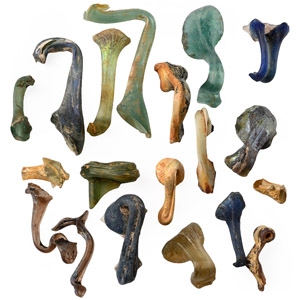
Roman Glass Handle Collection
1st-4th century A.D.Sold for (Inc. bp): £117
Including looped, right-angled and strap types in various shades. 64 grams total, 16-59 mm
Acquired on the UK art market, 1977-1979. Private collection, London. This lot is accompanied by an illustrated lot declaration signed by the Head of the Antiquities Department, Dr Raffaele D'Amato. -
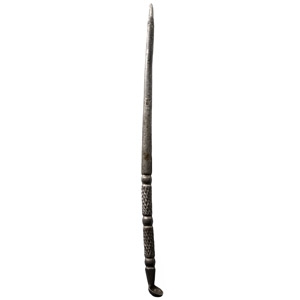
Roman Silver Ligula with Stylus
2nd-3rd century A.D.Sold for (Inc. bp): £182
Slender shank with tiered balusters to the upper end, bowl-shaped finial. 9.16 grams, 11.1 cm
Ex German art market, 2000s. Acquired from an EU collector living in London. From the collection of a Surrey, UK, gentleman. This lot is accompanied by an illustrated lot declaration signed by the Head of the Antiquities Department, Dr Raffaele D'Amato. -
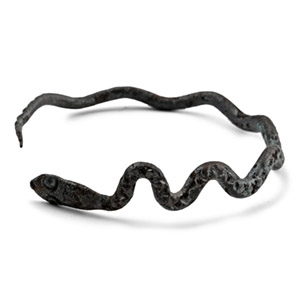
Roman Bronze Snake Bracelet
1st-4th century A.D.Sold for (Inc. bp): £442
Slender D-section shank in undulating curves, tapering to each end, outer face with punched reticulation, piriform head with punched eyes. 9.12 grams, 56 mm
Acquired on the London art market in the late 1980s-1990s. From the family collection of an East London, UK, gentleman. This lot is accompanied by an illustrated lot declaration signed by the Head of the Antiquities Department, Dr Raffaele D'Amato. -
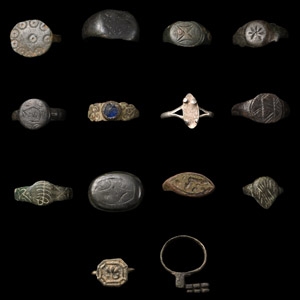
Roman and Later Bronze and Silver Ring Collection
1st-16th century A.D.Sold for (Inc. bp): £260
Comprising: a key ring, eleven rings with decorative motifs on the bezels, a ring set with blue glass, and a silver ring with lentoid claw bezel. 45 grams total, 16-24 mm
Ex German art market, 2000s. Acquired from an EU collector living in London. From the collection of a Surrey, UK, gentleman. This lot is accompanied by an illustrated lot declaration signed by the Head of the Antiquities Department, Dr Raffaele D'Amato. -
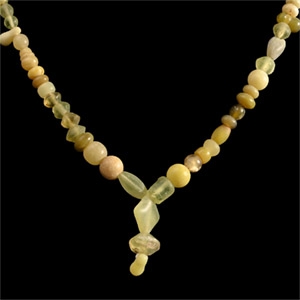
Roman Yellow Glass Bead Necklace String
1st-4th century A.D. and laterSold for (Inc. bp): £52
Composed of oblate, biconical and other beads, central feature with a tabular lozenge-shaped bead, including recent European moulded bead shapes; restrung. 20.5 grams, 37.5 cm
From the London, UK, art market in the 1990s. This lot is accompanied by an illustrated lot declaration signed by the Head of the Antiquities Department, Dr Raffaele D'Amato.
In the Roman period there was a strong formal and chromatic diversity of glass beads used for necklaces and bracelets. The most common beads in forms were small biconical (lenticular), barrel-shaped, spherical and annular; the most common colours were dark blue, followed by green and yellow. The succession of glass beads often imitates jewellery made of costly materials (gold, silver, semi-precious and precious stones). -
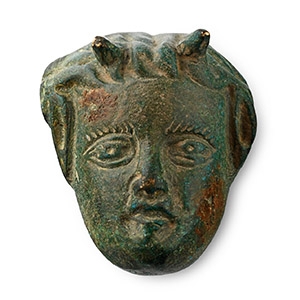
Roman Bronze Satyr Mount
1st-4th century A.D.Sold for (Inc. bp): £176
Modelled in the half-round with large eyes and defined eyebrows, short projecting horns on the forehead, ferrous spike on the reverse. 46 grams, 40 mm
Ex German art market, 2000s. Acquired from an EU collector living in London. From the collection of a Surrey, UK, gentleman. This lot is accompanied by an illustrated lot declaration signed by the Head of the Antiquities Department, Dr Raffaele D'Amato. -
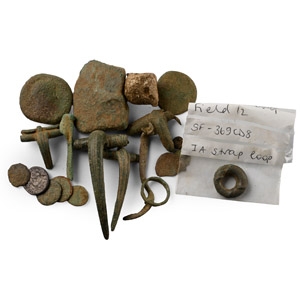
Roman and Other Bronze Artefact Group
1st millennium B.C.-4th century A.D.Sold for (Inc. bp): £65
Including a bronze steelyard weight, finger ring, Colchester-derivative brooches and other items, six objects with PAS reports. 198 grams total, 7-61 mm
Found Suffolk, UK. This lot is accompanied by an illustrated lot declaration signed by the Head of the Antiquities Department, Dr Raffaele D'Amato.
N.B. This lot is for UK buyers only. -
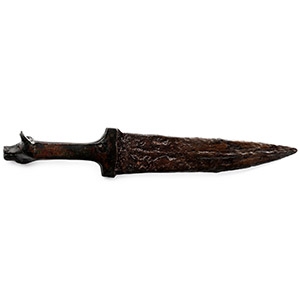
Roman Sacrificial Iron Dagger with Bronze Bull-Headed Hilt
1st-2nd century A.D.Sold for (Inc. bp): £1,105
Comprising a single-edged triangular blade, with midrib; integral baluster and grip with bull-head finial; the blade tip restored. 218 grams, 28 cm
Ex German art market, 2000s. Acquired from an EU collector living in London. From the collection of a Surrey, UK, gentleman. This lot is accompanied by an illustrated lot declaration signed by the Head of the Antiquities Department, Dr Raffaele D'Amato. -
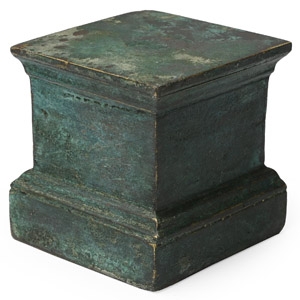
Roman Bronze Statue Base
1st-3rd century A.D.Sold for (Inc. bp): £468
Rectangular in plan, tiered in profile with solder scar to centre of the upper face, hollow to the underside. 300 grams, 51 mm
London art market, 1997. Private collection, UK. This lot is accompanied by an illustrated lot declaration signed by the Head of the Antiquities Department, Dr Raffaele D'Amato. -
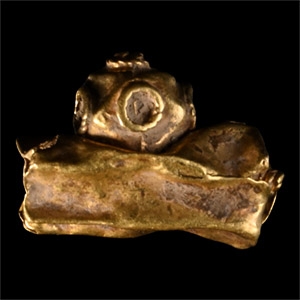
Roman Gold Amulet Case
4th-5th century A.D.Sold for (Inc. bp): £195
Composed of a cylindrical body with a domed cap to one end, spherical suspension loop with filigree decoration. 0.64 grams, 12 mm
From the collection of a late Japanese collector, 1970s. This lot is accompanied by an illustrated lot declaration signed by the Head of the Antiquities Department, Dr Raffaele D'Amato.
This jewel clearly shows the late-Antique taste for elaboration and bright colour which had been evolving since the 3rd century AD. Most of these items were the products of a single workshop, quite possibly in provinces like Britain.

