-
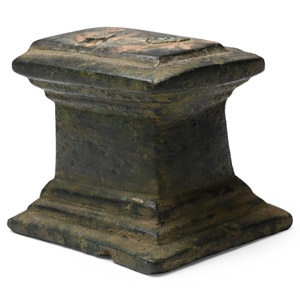
Roman Bronze Statue Base
1st-3rd century A.D.Sold for (Inc. bp): £156
Tiered socle base with raised panel to the upper face; hollow to underside. 197 grams, 53 mm
London art market, 1997. Private collection, UK. This lot is accompanied by an illustrated lot declaration signed by the Head of the Antiquities Department, Dr Raffaele D'Amato. -
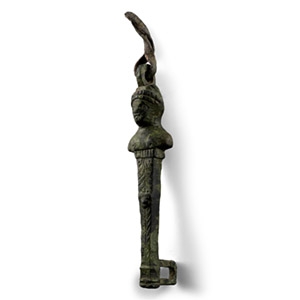
Roman Bronze Figural Lock Hasp
1st-2nd century A.D.Sold for (Inc. bp): £85
A lock hasp in the shape of a herm wearing a headdress, genitalia on the column, the shoulders forming lateral lugs, suspension ring above with separate strap, stepped base below, openwork rectangular plate to the underside. 41.2 grams, 11.9cm
Fine condition.
Property of a European lady living in London; from her father's family collection formed before 1978. From the private collection of John Meredith, acquired since the 1990s; thence by descent. This lot is accompanied by an illustrated lot declaration signed by the Head of the Antiquities Department, Dr Raffaele D'Amato. -
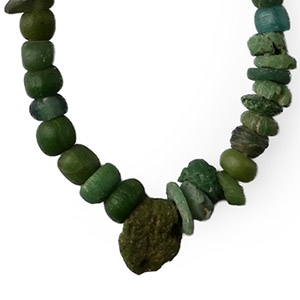
Roman Green Glass Necklace Bead String
2nd-3rd century A.D. and laterSold for (Inc. bp): £91
Restrung group of mainly spherical and biconical glass beads. 10.4 grams, 40 cm
Acquired from Coincraft, London, UK. From the private collection of Kenneth Machin (1936-2020), Buckinghamshire, UK; his collection of antiquities and natural history was formed since 1948; thence by descent. Accompanied by a Coincraft certificate of authenticity. This lot is accompanied by an illustrated lot declaration signed by the Head of the Antiquities Department, Dr Raffaele D'Amato. -
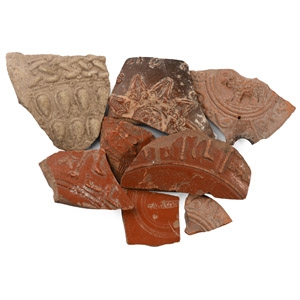
Roman Samian Ware and Other Pottery Collection
3rd-4th century A.D.Sold for (Inc. bp): £91
Comprising: an oil lamp discus with a standing ram; a Samian ware fragment with maker's mark; and other fragments with low-relief decoration. 144 grams total, 38-82 mm
From a deceased estate, UK. Acquired on the UK art market. This lot is accompanied by an illustrated lot declaration signed by the Head of the Antiquities Department, Dr Raffaele D'Amato.
One of the pottery of this collection reports the Greek name APIΣΤΩΝ (Ariston), maybe the producer of the vessel. Another one shows an aries (ram), animal sacred to the war god Mars. One of the fragments is decorated by ‘ovuli’, typical ornamentation of the Samian pottery. -
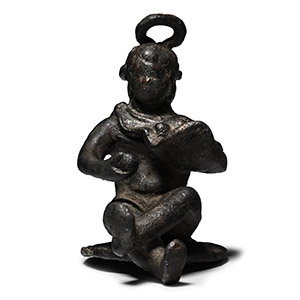
Roman Vessel Lid with Male Youth Wearing a Chlamys
1st-3rd century A.D.Sold for (Inc. bp): £520
Discoid base supporting a seated youth with legs crossed, wearing a chlamys, his left hand supporting fruit in the folds of the cloth and right hand holding one; base pierced; transverse wire to sides of the head, ring above. 366 grams, 80 mm
From the collection of a gentleman, acquired on the London art market in the 1990s. This lot is accompanied by an illustrated lot declaration signed by the Head of the Antiquities Department, Dr Raffaele D'Amato. -
.jpg)
Roman Mosaic with Naiad Holding Frond and Golden Hydria
Eastern Empire, 1st-3rd century A.D.Sold for (Inc. bp): £11,700
Floor panel with depicting a naiad nymph, minor goddess of watery elements, depicted as a beautiful young woman dressed in a garment draped around her slender waist, secured by a golden sash, holding a reed at the crook of her right elbow and bringing a golden hydria to her lips; some reconstitution, restored and mounted in a modern matrix and frame for display. 47.5 kg, 112 x 80 cm including frame
Ex property of a Munich collector; previously acquired in the 1980s. Property of an English gentleman. This lot has been checked against the Interpol Database of stolen works of art and is accompanied by AIAD certificate number no.160577-10073. This lot has been cleared against the Art Loss Register database, and is accompanied by an illustrated lot declaration signed by the Head of the Antiquities Department, Dr Raffaele D'Amato.
Naiades were the nymphs of streams, fountains, lakes, rivers, marshes and springs, and in conjunction with Artemis, they were protectors of girls and nurses of the young. They were minor goddesses who attended the assemblies on Mount Olympus and often gave their names to water supplies, towns and islands. -
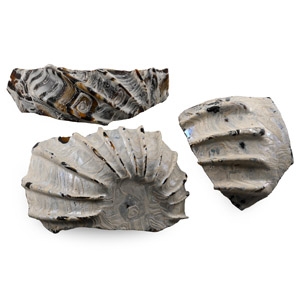
Roman Marbled Glass Fragments
2nd century A.D.Sold for (Inc. bp): £52
Including portions of patella cup, and other types. 134 grams total, 7.4-10.4 mm
Acquired on the UK art market, 1977-1979. Private collection, London. This lot is accompanied by an illustrated lot declaration signed by the Head of the Antiquities Department, Dr Raffaele D'Amato. -
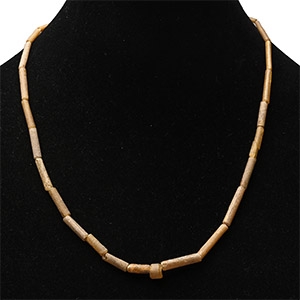
Roman Ochre Glass Bead Necklace String
1st-4th century A.D. and laterSold for (Inc. bp): £20
Composed of long tubular beads with a cylindrical bead to the centre; restrung. 10.5 grams, 45.2 cm
From the London, UK, art market in the 1990s. This lot is accompanied by an illustrated lot declaration signed by the Head of the Antiquities Department, Dr Raffaele D'Amato.
In the Roman period there was a strong formal and chromatic diversity of glass beads used for necklaces and bracelets. The most common beads in forms were small biconical (lenticular), barrel-shaped, spherical and annular; the most common colours were dark blue, followed by green and yellow. The succession of glass beads often imitates jewellery made of costly materials (gold, silver, semi-precious and precious stones). -
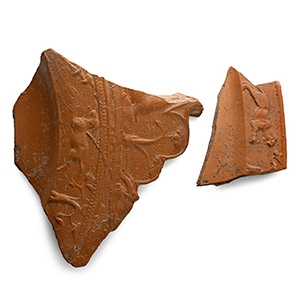
Roman Terracotta Fragments with Animals
4th century A.D.Sold for (Inc. bp): £117
Comprising two vessel rim fragments, the smaller with a leaping lion, the larger with scalloped border, crouching deer beneath a tree above and a leaping antelope below with a tree behind. 70 grams total, 56-94 mm
Ex German art market, 2000s. Acquired from an EU collector living in London. From the collection of a Surrey, UK, gentleman. This lot is accompanied by an illustrated lot declaration signed by the Head of the Antiquities Department, Dr Raffaele D'Amato. -
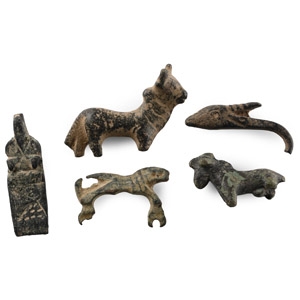
Roman Bronze Animal Artefact Group
1st-4th century A.D.Sold for (Inc. bp): £169
Including running hound, ox, horse and other types. 78 grams total, 32-47 mm
Ex German art market, 2000s. Acquired from an EU collector living in London. From the collection of a Surrey, UK, gentleman. This lot is accompanied by an illustrated lot declaration signed by the Head of the Antiquities Department, Dr Raffaele D'Amato. -
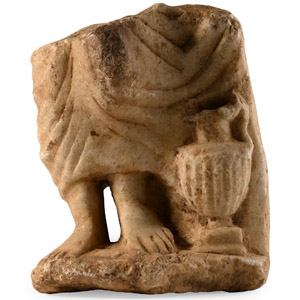
Roman Marble Sculpture Fragment
1st-2nd century A.D.Sold for (Inc. bp): £520
Carved in the half-round, pair of feet emerging from below a draped robe or toga, ewer to right on a square base. 708 grams, 11.6 cm
From the estate of a Yorkshire, UK, gentleman collector, acquired 1970s-1980s. This lot is accompanied by an illustrated lot declaration signed by the Head of the Antiquities Department, Dr Raffaele D'Amato. -
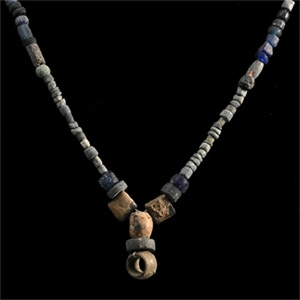
Roman Blue Glass and Stone Bead Necklace String
1st-4th century A.D. and laterSold for (Inc. bp): £39
Composed of variously shaped beads, central feature composed of tabular, annular, and ellipsoid beads; restrung. 21 grams, 41 cm
From the London, UK, art market in the 1990s. This lot is accompanied by an illustrated lot declaration signed by the Head of the Antiquities Department, Dr Raffaele D'Amato.
Such necklaces testify to the popularity of glass ornaments across the Roman Empire. Roman jewellery at first followed trends set by the Etruscans, using gold and glass beads, but with the extension of the Empire and the adoption of different styles from Greece, Egypt and North Africa, jewellery designs became increasingly various and elaborate. Each bead of this beautiful necklace is unique in shape, lustre and speckling, creating a mosaic-like impression. Blue glass beads can be grouped into opaque mid-blue and deep translucent cobalt blue types.

