-
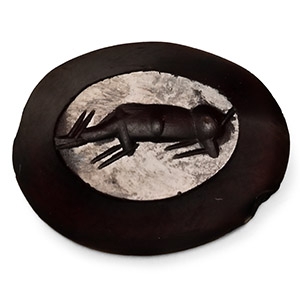
Roman Garnet Gemstone Depicting a Hunting Dog
1st-2nd century A.D.Sold for (Inc. bp): £169
Ellipsoid in plan with intaglio hound crouching. 1.62 grams, 15 mm
From the private collection of Mr K.A., acquired in the 1990s-early 2000s. This lot is accompanied by an illustrated lot declaration signed by the Head of the Antiquities Department, Dr Raffaele D'Amato.
The Romans kept dogs for many purposes; such as for hunting game, protecting a flock of sheep, guarding the house, and providing companionship. -
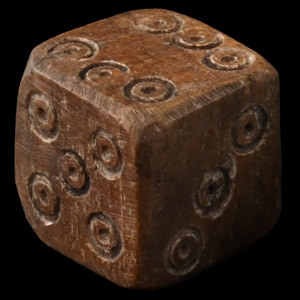
Roman Bone Gaming Dice
1st-4th century A.D.Sold for (Inc. bp): £156
Cuboid with ring-and-dot markings disposed 1:6, 2:5, 3:4. 2.9 grams, 11 mm
Acquired on the UK art market before 2000. Property of an Essex, UK, gentleman. This lot is accompanied by an illustrated lot declaration signed by the Head of the Antiquities Department, Dr Raffaele D'Amato. -
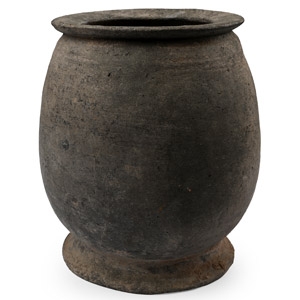
Roman Grey Ware Storage Jar
2nd-4th century A.D.Sold for (Inc. bp): £260
Barrel-shaped in profile with broad applied foot, gusset to the neck and flared mouth. 1.53 kg, 23.5 cm
From an old English collection, Oxfordshire, UK. Property of a Berkshire, UK, collector. This lot is accompanied by an illustrated lot declaration signed by the Head of the Antiquities Department, Dr Raffaele D'Amato. -
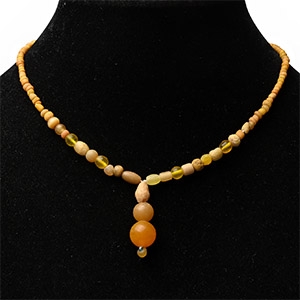
Roman Yellow Glass Bead Necklace String
1st-4th century A.D. and laterSold for (Inc. bp): £104
Composed of graduated oblate, spherical and annular beads, central feature with two large spherical beads; restrung. 10.5 grams, 37.5 cm
From the London, UK, art market in the 1990s. This lot is accompanied by an illustrated lot declaration signed by the Head of the Antiquities Department, Dr Raffaele D'Amato.
In the Roman period there was a strong formal and chromatic diversity of glass beads used for necklaces and bracelets. The most common beads in forms were small biconical (lenticular), barrel-shaped, spherical and annular; the most common colours were dark blue, followed by green and yellow. The succession of glass beads often imitates jewellery made of costly materials (gold, silver, semi-precious and precious stones). -
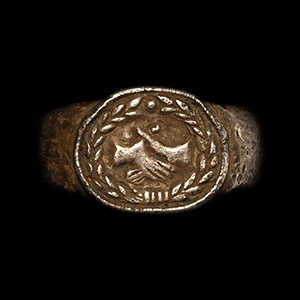
Roman Silver Ring with Clasped Hands
2nd-4th century A.D. or laterSold for (Inc. bp): £650
Plano-convex hoop and disc bezel with raised rim, wreath and mani-in-fede motif. 11.54 grams, 26.32 mm overall, 21.36 mm internal diameter (approximate size British T 1/2, USA 9 3/4, Europe 21.89, Japan 21)
UK private collection before 2000. Acquired on the UK art market. Private collection, London, UK. This lot is accompanied by an illustrated lot declaration signed by the Head of the Antiquities Department, Dr Raffaele D'Amato. -
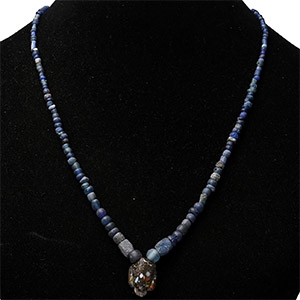
Roman Blue Glass Bead Necklace String
1st-4th century A.D. and laterSold for (Inc. bp): £91
Composed of graduated oblate, annular and other beads, central feature a large re-used mosaic glass fragment. 19.86 grams, 42.7 cm
From the London, UK, art market in the 1990s. This lot is accompanied by an illustrated lot declaration signed by the Head of the Antiquities Department, Dr Raffaele D'Amato.
Such necklaces testify to the popularity of glass ornaments across the Roman Empire. Roman jewellery at first followed trends set by the Etruscans, using gold and glass beads, but with the extension of the Empire and the adoption of different styles from Greece, Egypt and North Africa, jewellery designs became increasingly various and elaborate. Each bead of this beautiful necklace is unique in shape, lustre and speckling, creating a mosaic like impression. Blue glass beads are distinguished by the scholars as opaque mid-blue and deep translucent cobalt blue. -
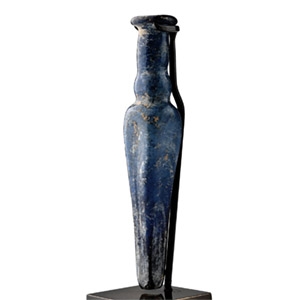
Roman Fine Blue Glass Flask
2nd-3rd century A.D.Sold for (Inc. bp): £364
Iridescent square-section vessel with dimpled sides, tall neck and everted rim; mounted on a custom-made stand. 82 grams total, 14.3 cm including stand
Ex Mayfair, London, UK, gallery, 1990s-2000s. From an important collection of glass, the property of a London gentleman. This lot is accompanied by an illustrated lot declaration signed by the Head of the Antiquities Department, Dr Raffaele D'Amato. -
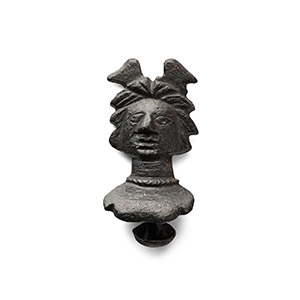
Roman Bronze Mercury Mount
1st-4th century A.D.Sold for (Inc. bp): £143
Bust of Mercury on stud with beaded band to the throat, winged diadem. 10.5 grams, 34 mm
Ex German art market, 2000s. Acquired from an EU collector living in London. From the collection of a Surrey, UK, gentleman. This lot is accompanied by an illustrated lot declaration signed by the Head of the Antiquities Department, Dr Raffaele D'Amato. -
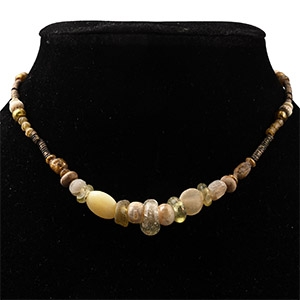
Roman Yellow Glass Bead Necklace String
1st-4th century A.D. and laterSold for (Inc. bp): £46
Restrung group including tabular, annular, ribbed tubular and other types. 10.05 grams, 28 cm
Acquired on the London art market in the late 1980s-1990s. From the family collection of an East London, UK, gentleman. This lot is accompanied by an illustrated lot declaration signed by the Head of the Antiquities Department, Dr Raffaele D'Amato. -
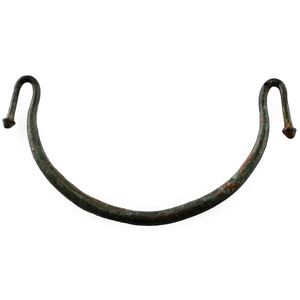
Roman Bronze Military Helmet Carrying Handle
1st-2nd century A.D.Sold for (Inc. bp): £169
With tapering round-section body and looped ends with knop terminals. 14.4 grams, 89 mm
Acquired on the UK art market during the late 20th century. From the private collection of David King (1940-2024), Hoddesdon, Hertfordshire, UK. This lot is accompanied by an illustrated lot declaration signed by the Head of the Antiquities Department, Dr Raffaele D'Amato. -
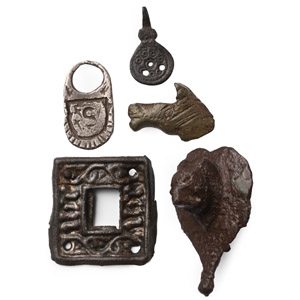
Roman to Tudor Bronze Artefact Group
2nd-16th century A.D.Sold for (Inc. bp): £78
Comprising: a heart-shaped mount with a central lion-head; a rectangular mount with decorative border in low-relief; a horse head modelled in the round; an oval silver pendant with S and stars; hooked tag with ring-and-dot motifs. 38.7 grams total, 23-42 mm
Acquired on the UK art market in the 1970s-1990s. Property of a Nottinghamshire, UK, gentleman. This lot is accompanied by an illustrated lot declaration signed by the Head of the Antiquities Department, Dr Raffaele D'Amato.
The use of hooked tags for fastening first became fashionable during the Anglo-Saxon period. They are usually triangular or circular in shape, of sheet metal (normally bronze or occasionally in silver) and have two or three attachment holes at the widest end. -
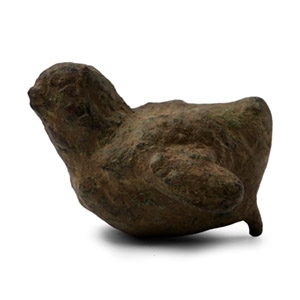
Roman Bronze Bird Figure
1st-4th century A.D.Sold for (Inc. bp): £98
Modelled in the round figure of a fledgling with bulbous body and short, stubby wings, head raised to accept food. 133 grams, 46 mm
Found Little Blakenham, Suffolk, UK. Accompanied by a copy of the British Museum's Portable Antiquities Scheme (PAS) report no.SF-4991D6. This lot is accompanied by an illustrated lot declaration signed by the Head of the Antiquities Department, Dr Raffaele D'Amato.

