-
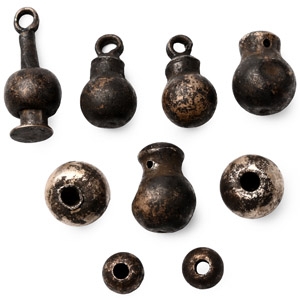
Egyptian Silver Poppy Amulet Collection
Late-Ptolemaic Period, 664-30 B.C.Sold for (Inc. bp): £234
Group of poppy-head amulets, some with suspension loop, others pierced. 7.21 grams total, 5-18 mm
Ex London, UK, gentleman 1980-1990s. This lot is accompanied by an illustrated lot declaration signed by the Head of the Antiquities Department, Dr Raffaele D'Amato.
Amulets in the form of poppies were used to heal and alleviate pain and to ward off death. These types of amulets were also linked to Osiris, the Egyptian deity of agriculture, death, and the afterlife. -
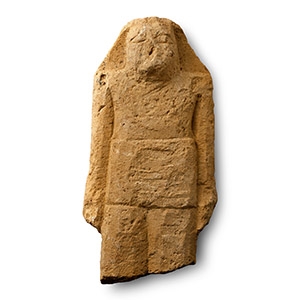
Egyptian Limestone Grave Figure
Old Kingdom, 4th Dynasty, circa 2613-2498 B.C.Sold for (Inc. bp): £416
Carved in the half-round with suggestion of facial features and kilt; remains of an inscription on the right arm; perhaps unfinished. 969 grams, 17.5 cm
From a Swiss private collection. Acquired in Zurich in 1999. From the collection of G.M.R.H., London, UK. This lot is accompanied by an illustrated lot declaration signed by the Head of the Antiquities Department, Dr Raffaele D'Amato. -
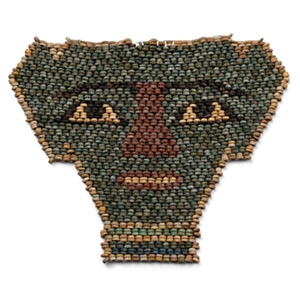
Egyptian Faience Mummy Bead Mask
Ptolemaic Period, 332-30 B.C.Sold for (Inc. bp): £234
A restrung beadwork panel of small glazed composition beads in various colours representing a mummy face mask with false beard. 38.8 grams, 14 cm wide
From the private collection of a Canadian gentleman living in Essex, UK, formed since the 1920s-circa 1990. Property of an Essex lady until the late 1990s; thence by descent. From the private collection of an Essex gentleman since the late 1990s. This lot is accompanied by an illustrated lot declaration signed by the Head of the Antiquities Department, Dr Raffaele D'Amato. -
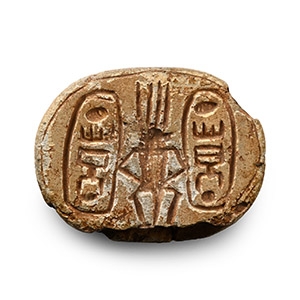
Large Egyptian Steatite Scarab with Bes and Cartouches of Thutmose III
Late Period, 664-332 B.C.Sold for (Inc. bp): £390
With segmented carapace, detailed legs and mouth, incuse image of Bes with plumed headdress to underside flanked by two cartouches, each bearing the throne name of Thutmose III (Men-kheper-Re); chipped. 26.3 grams, 39 mm
Ex London, UK, gentleman's collection, 1990s. This lot is accompanied by an illustrated lot declaration signed by the Head of the Antiquities Department, Dr Raffaele D'Amato.
The royal name is incorrectly written, containing two sun discs rather than one, suggesting it may be of Levantine manufacture. Thutmose III, a dynamic New Kingdom pharaoh celebrated centuries after his death, frequently appears on scarabs during the Late Period. From the New Kingdom onwards, Bes became one of ancient Egypt's most popular apotropaic deities. Despite his fearsome appearance, Bes served as the patron and protector of pregnant women and children, and was also believed to shield them from snakes. The combination of Thutmose III and Bes harnessed both royal and divine protection. -
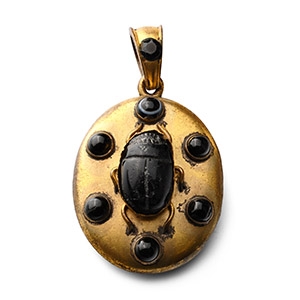
Egyptian Black Stone Scarab in Gilt Bronze Memorial Locket
Late Period, 664-332 B.C. and laterSold for (Inc. bp): £572
Haematite scarab with carapace and mouth, mounted in the centre of a 19th century memorial locket with glazed inner chamber, obverse with six agate cabochons in cells and applied filigree around the central cell mimicking legs. 24.95 grams, 53 mm
From a 19th century collection based on the locket. Acquired on the UK art market. From the collection of G.M.R.H., London, UK. This lot is accompanied by an illustrated lot declaration signed by the Head of the Antiquities Department, Dr Raffaele D'Amato. -
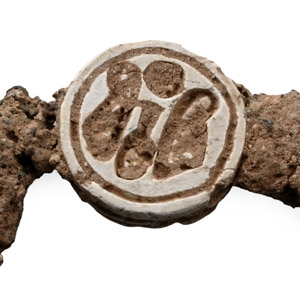
Egyptian Ring with Button Scarab
Late Period, 664-332 B.C.Sold for (Inc. bp): £124
Comprising a bronze D-shaped finger ring, the bezel formed by a faience discoid with a radiating geometric stylised rosette pattern on one side and the other featuring a central nefer sign with sun disc above flanked by two maat feathers. 4.47 grams, 27.51 mm overall, 18.98 mm internal diameter (approximate size British M, USA 6, Europe 12.46, Japan 12)
Ex London, UK, art market, 1990s. From a private UK collection. This lot is accompanied by an illustrated lot declaration signed by the Head of the Antiquities Department, Dr Raffaele D'Amato. -
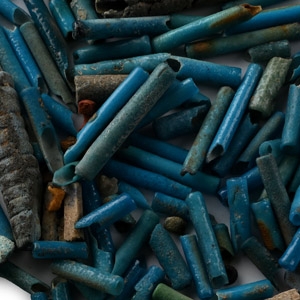
Egyptian Blue Faience Bead Group
Late Period, 664-332 B.C.Sold for (Inc. bp): £98
Comprising mainly long cylindrical beads with some larger beads. 7.7 grams total, 2-24 mm
Part of a group excavated by Petrie at Gurob, latterly in a London, UK, collection. This lot is accompanied by an illustrated lot declaration signed by the Head of the Antiquities Department, Dr Raffaele D'Amato. -
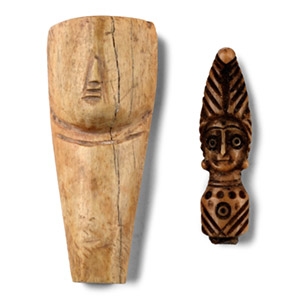
Egyptian Coptic Bone Items
3rd-6th century A.D.Sold for (Inc. bp): £65
Comprising: a tapering plano-convex section body with D-shaped face, nose and mouth; tag or lace-end with carved female bust. 9.45 grams total, 32-43 mm
From the collection of a gentleman, acquired on the London art market in the 1990s. This lot is accompanied by an illustrated lot declaration signed by the Head of the Antiquities Department, Dr Raffaele D'Amato.
The smaller item is possibly the finial from a decorative hair pin (Cf. Petrie, W.M.F., Objects of Daily Use, Warminster, 1972, pl. XIX, no. 81, for a complete example). -
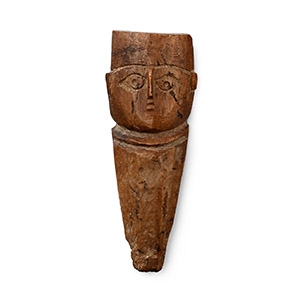
Egyptian Coptic Bone Doll's Head
4th-6th century A.D.Sold for (Inc. bp): £130
A carved face and chest from a figurine or doll, with incised eyes, mouth and brow, reserved ears and nose. 7.47 grams, 55 mm
Very fine condition.
Property of a London gentleman; acquired in the 1970s. From the private collection of John Meredith, acquired since the 1990s; thence by descent. This lot is accompanied by an illustrated lot declaration signed by the Head of the Antiquities Department, Dr Raffaele D'Amato. -
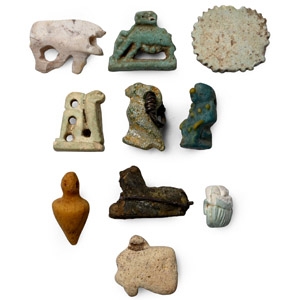
Egyptian Faience and Hardstone Amulet Group
Late-Ptolemaic Period, 664-30 B.C.Sold for (Inc. bp): £221
Including two wedjat eyes, a seated baboon, plumb bob, uraeus, scarab, falcon, recumbent lion, suckling sow (representing Nut), and a fringe-edged disc bead. 8.08 grams total, 9-18 mm
From an early 20th century collection. This lot is accompanied by an illustrated lot declaration signed by the Head of the Antiquities Department, Dr Raffaele D'Amato. -
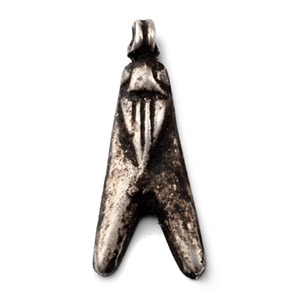
Egyptian Silver Fly Amulet
Late-Ptolemaic Period, 664-30 B.C.Sold for (Inc. bp): £85
With detailing to wings and eyes, loop for suspension above the head. 0.91 grams, 20 mm
Ex London, UK, gentleman 1980-1990s. This lot is accompanied by an illustrated lot declaration signed by the Head of the Antiquities Department, Dr Raffaele D'Amato.
Considering that Egyptian artists often depicted fly whisks in the hands of pharaohs and high officials, one might assume that flies were merely a nuisance. However, the Egyptians held flies in high regard for their speed, quick reactions, and persistence. Small fly amulets first appeared in burials during the Naqada II Period, around 3200 B.C. These amulets gained popularity, and the materials used to make them varied during the New Kingdom. They were crafted from various materials such as gold, silver, lapis lazuli, carnelian, amethyst, faience, and bone. These amulets were believed to protect against insect bites and to ward off troublesome flying creatures through apotropaic magic. Some believe they may have even symbolised the fly’s fecundity. Additionally, pharaohs would bestow gold fly-shaped pendants as military awards to honour the bravery and persistence of soldiers in battle. -
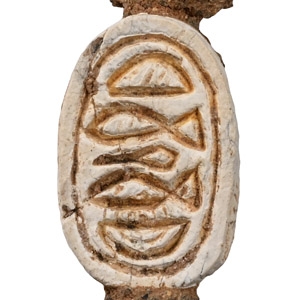
Egyptian Ring with Scarab
Late Period, 664-332 B.C.Sold for (Inc. bp): £169
Comprising a bronze D-shaped finger ring, the bezel formed by a faience scarab with symbols to the underside. 4.12 grams, 30.15 mm overall, 17.42 mm internal diameter (approximate size British J 1/2, USA 5, Europe 9.32, Japan 9)
Ex London, UK, art market, 1990s. From a private UK collection. This lot is accompanied by an illustrated lot declaration signed by the Head of the Antiquities Department, Dr Raffaele D'Amato.

