-
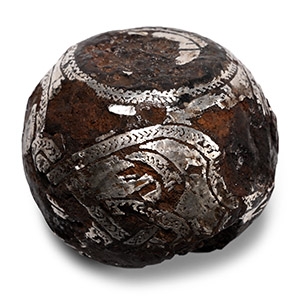
Viking Silver Inlaid Iron Weight
9th-11th century A.D.Sold for (Inc. bp): £338
Polyhedral weight bearing Insular Style inlaid decoration in the form of serpentine creatures in tondos, on a silver inlaid background. 176 grams, 38 mm
Private collection formed in Europe in the 1980s. Westminster collection, central London, UK. This lot is accompanied by an illustrated lot declaration signed by the Head of the Antiquities Department, Dr Raffaele D'Amato.
These weights were adopted by the Vikings from Middle Eastern examples and appear to have become a typical weight standard for traders. They are, in archaeology, an important form of evidence for the Viking commerce. Many of them, like those found in Ireland and of Arabic type, suggest a standardised system of weights in different areas. -
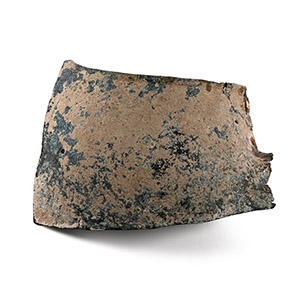
Hellenistic Bronze Cuirass Section
3rd-1st century B.C.Sold for (Inc. bp): £72
Possibly an upper right front element of a composite cuirass for a cataphract (armoured horseman), part of the edge around the neck and shoulders still preserved although fragmentary, part of the clasps for attaching the back section still visible. 245 grams, 22.6 cm
UK private collection, acquired in 1996. This lot is accompanied by an illustrated lot declaration signed by the Head of the Antiquities Department, Dr Raffaele D'Amato.
A near complete armour for cataphract was found in the French excavations in Al-Khanoum, a Hellenistic city in Afghanistan. The cavalry of Seleucid, Ptolemaic and other Hellenistic Kingdoms formed regiments of heavy armoured horsemen, who in the west, employed a combination of lamellar and segmented armour together with muscled armour of Greek type. Cataphract armour in the West had more Greek elements, for example more plate armour and less scale and lamellar. -
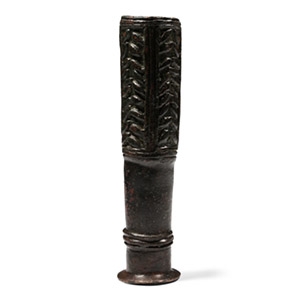
Large Luristan Bronze Gorz
Early 2nd millennium B.C.Sold for (Inc. bp): £364
Of tapering cylindrical form with flange to socket, the upper body displaying vertical columns of chevrons between plain bands. 374 grams, 14.5 cm
Acquired in the 1990s. Ex Abelita family collection. This lot is accompanied by an illustrated lot declaration signed by the Head of the Antiquities Department, Dr Raffaele D'Amato.
This gorz mace head belongs to the category of truncheon-shaped mace heads, a type developed on the Iranian plateau during the Bronze Age, used by Elamite and Luristan warriors since the 3rd millennium B.C. This category of objects was also interpreted as a part of a shaft or cudgel, but most scholars agree on the interpretation of use as a mace. -
.jpg)
Byzantine 'Greek Fire' Ceramic Fire Bomb or Hand Grenade
9th-11th century A.D.Sold for (Inc. bp): £91
Piriform in profile with narrow point and domed mouth; the body decorated with regularly arranged annulets and concentric circles; intended to be filled with explosive liquid and wick, used as a hand grenade. 510 grams, 11.9 cm
From an important specialist collection, London, UK, 1990s onwards. Accompanied by an academic paper by military specialist Dr Raffaele D'Amato, dated 15 July 2019 and titled 'Eastern Roman Empire - Greek Fire Bomb or Hand Grenade (μεσαίον kακάβιον) 9th-11th century AD'. This lot is accompanied by an illustrated lot declaration signed by the Head of the Antiquities Department, Dr Raffaele D'Amato.
Apart from the use of siphons or manual flame-throwers called cheirosiphona, special corps of Roman soldiers employed terracotta grenades, in the form of small jars, abundantly evidenced in archaeological excavations. They were called μεσαία kακαβιά or κυτροκακάβια where the former had a bulbous shape and the latter a more cylindrical form. -
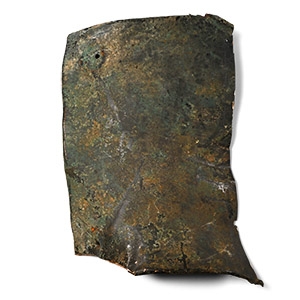
Greek Bronze Cuirass Section of Thorax Stadios
4th-3rd century B.C.Sold for (Inc. bp): £143
Possibly the lower left side element of a cavalry armour of thorax stadios (muscled armour) typology, upper, lower and external side with well preserved edge, fastening holes visible. 250 grams, 22 cm
UK private collection, acquired in 1996. This lot is accompanied by an illustrated lot declaration signed by the Head of the Antiquities Department, Dr Raffaele D'Amato.
Armour for cavalrymen in classical Greece were specially designed with these characteristics. They were very broad on the hips to enable their wearers to sit a horse. Important parallels are known from South Italy, one of them preserved in the Bari Museum. -
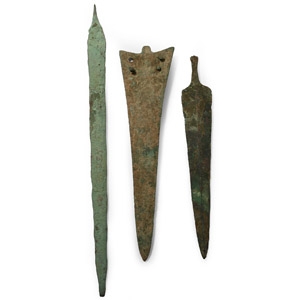
Luristan Bronze Dagger Group
Early 1st millennium B.C.Sold for (Inc. bp): £143
Comprising three dagger blades, one triangular with three fastening rivets on the ricasso, one with long tapered blade, rounded shoulders and long narrow tang, the third with a slender blade. 264 grams total, 20-29 cm
Acquired 1980-2015. Ex Abelita family collection. This lot is accompanied by an illustrated lot declaration signed by the Head of the Antiquities Department, Dr Raffaele D’Amato. This lot is accompanied by an illustrated lot declaration signed by the Head of the Antiquities Department, Dr Raffaele D'Amato.
Moorey, Gordon and Khorasani created a classification of bladed weapons, according to which daggers are edged weapons not greater than 36cm in length, dirks (short swords) are between 36cm and 50cm in length, and swords are edged weapons greater than 50cm in length. -
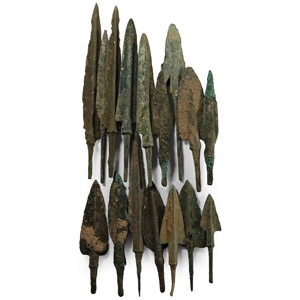
Luristan Bronze Arrowhead Collection
13th-6th century B.C.Sold for (Inc. bp): £182
Comprising a variety of tanged triangular and leaf-shaped arrowheads with thick mid-rib, one barbed-and-tanged example. 375 grams total, 7.7-16 cm
Ex London art market, 1980-1990s. This lot is accompanied by an illustrated lot declaration signed by the Head of the Antiquities Department, Dr Raffaele D'Amato.
One category of the represented arrowheads has a sharp, flat blade, the ends of which extend to form wings or barbs, and a prominent midrib extending into a long tang that often has a stop; the blade shape varies from deltoid to more triangular. Another form has no barbs, but it has a prominent midrib extending to the tang, and a narrow leaf-shaped blade. -
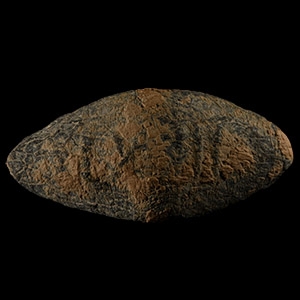
Roman Legion XIII 'Battle of Munda' Lead Slingshot
1st century B.C.Sold for (Inc. bp): £221
Fusiform with reserved legend 'LXIII' (for LEGIO XIII = 13th Legion). 32.6 grams, 36 mm
Acquired on the UK art market. Property of a gentleman collector. This lot is accompanied by an illustrated lot declaration signed by the Head of the Antiquities Department, Dr Raffaele D'Amato.
The shot (Völling type 1C) is marked with the abbreviated name of Legion XIII, and was probably used at the Battle of Munda (or Monda) against Julius Caesar, 17th March 45 B.C., or against the sons of Pompey, because both the generals (Pompey sons and Caesar) had in their army a Legio with the numeral XIII on that day. Interestingly, other glandes of the same typology from the same battlefield bear the name of Pompey, so that it is much possible that the glans belongs to the Legio XIII of Pompey, who was destroyed during the battle and whose survivors were massacred among the 22,000 defenders of Cordoba by the troops of Caesar (D'Amato, 2021, pp.421 and 424). The projectiles were made of different materials: lead (glandes) or in pottery or stone (lapides missiles). -
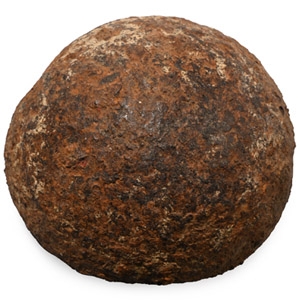
Civil War 'Battle of Newbury' Exploded Cannon Ball Section
Circa 1644 A.D.Sold for (Inc. bp): £208
A large section of missile, 100mm diameter suggesting use in a 'Bastard Carbine Cannon'. 1.47 kg, 10 cm
Found near Donnington Castle battle area, Speen, West Berkshire, UK. Acquired on the UK art market. Property of a Berkshire, UK, gentleman collector. Accompanied by a copy of the British Museum's Portable Antiquities Scheme (PAS) report no.BERK-9ED66D. This lot is accompanied by an illustrated lot declaration signed by the Head of the Antiquities Department, Dr Raffaele D'Amato. -
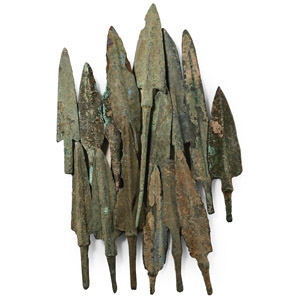
Luristan Bronze Arrowhead Collection
13th-6th century B.C.Sold for (Inc. bp): £195
Comprising triangular types with thick midrib, heater-shaped, leaf-shaped, and other types, one with a long tang and barbed head. 312 grams total, 76-162 mm
Ex London art market, 1980-1990s. This lot is accompanied by an illustrated lot declaration signed by the Head of the Antiquities Department, Dr Raffaele D'Amato.
One category of the represented arrowheads has a sharp, flat blade, the ends of which extend to form wings or barbs, and a prominent midrib extending into a long tang that often has a stop; the blade shape varies from deltoid to more triangular. Another form has no barbs, but it has a prominent midrib extending to the tang, and a narrow leaf-shaped blade, with squared shoulders. -
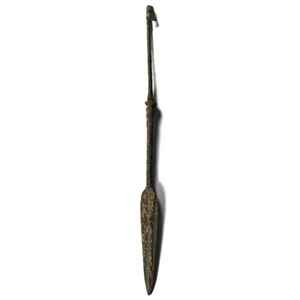
Large Mesopotamian Bronze Javelin Head
3rd-2nd millennium B.C.Sold for (Inc. bp): £124
Foliate blade, rhomboidal in section, raised mid-rib, medium length stem widening at the base and forming a small stop, rectangular-section tang with bent terminal. 187 grams, 45 cm
Ex London art market, 1980-1990s. This lot is accompanied by an illustrated lot declaration signed by the Head of the Antiquities Department, Dr Raffaele D'Amato.
The specimen belongs to the category of tripartite spears with long pointed biconvex blade and single bevelled tang. They seem to be a Mesopotamian and Susian (Elamite) variant, and this type also includes decorated blades, like the spear from Tello with the inscription 'King of Kish'. -
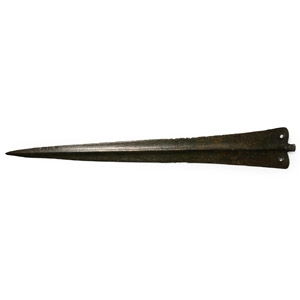
Luristan Bronze Blade
1200-1100 B.C.Sold for (Inc. bp): £234
With a long pointed triangular blade and a short tang, two rivet holes at the base of the blade. 193 grams, 36.5 cm
Acquired 1980-2015. Ex Abelita family collection. This lot is accompanied by an illustrated lot declaration signed by the Head of the Antiquities Department, Dr Raffaele D’Amato. This lot is accompanied by an illustrated lot declaration signed by the Head of the Antiquities Department, Dr Raffaele D'Amato.
The Luri people produced a quantity of fine metalwork, which according to Dr. Khorasani, could be due to a settled period which arose as a result of the defeat of the Elamites by the Babylonians, leaving the Luristani people in relative peace for a period of time after 1200 BC. According to Khorasani 'A culture of innovation and experimentation flourished, and the repertoire of the Luristan smiths expanded in the period between 1150–1050 BC.'

