-
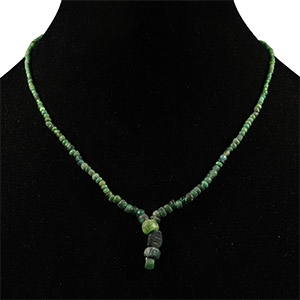
Roman Green Glass Bead Necklace String
1st-4th century A.D. and laterSold for (Inc. bp): £59
Restrung group of tabular, facetted, oblate and other beads. 8.08 grams, 36.5 cm
Ex London, UK, collection, 1990s. This lot is accompanied by an illustrated lot declaration signed by the Head of the Antiquities Department, Dr Raffaele D'Amato. -
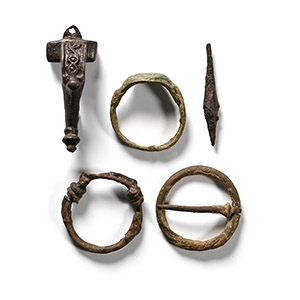
Roman to Medieval Bronze Artefact Collection
2nd-15th century A.D.Sold for (Inc. bp): £13
Comprising: an annular brooch, two finger rings, an awl(?) and a Roman bow brooch. 15.9 grams total, 23-35 mm
Acquired on the UK art market circa 2005. From an old North Country, UK, collection. This lot is accompanied by an illustrated lot declaration signed by the Head of the Antiquities Department, Dr Raffaele D'Amato. -
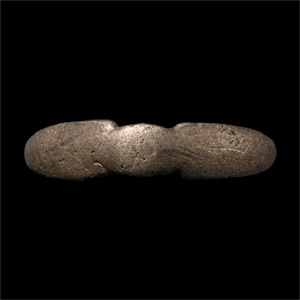
Roman Silver D-Shaped Ring
2nd-4th century A.D.Sold for (Inc. bp): £46
Round-section hoop flattened at the shoulders, discoid bezel. 2.00 grams, 22.00 mm overall, 17.51 mm internal diameter (approximate size British L1/2, USA 6, Europe 11.87, Japan 11)
Property of a Cambridgeshire, UK, collector. From his private collection since the 1970s; thence by descent circa 2000. Ex private collection of a Bedfordshire gentleman. This lot is accompanied by an illustrated lot declaration signed by the Head of the Antiquities Department, Dr Raffaele D'Amato. -
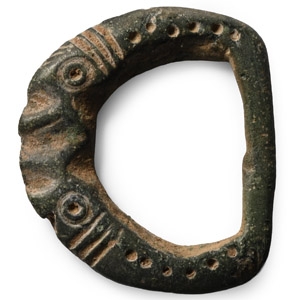
Roman Buckle with Animal Heads
1st-4th century A.D.Sold for (Inc. bp): £33
D-section loop with two opposing stylised animals with gaping jaws, incised detailing. 3.14 grams, 23 mm
Acquired on the UK art market before 2000. Property of an Essex, UK, gentleman. This lot is accompanied by an illustrated lot declaration signed by the Head of the Antiquities Department, Dr Raffaele D'Amato. -
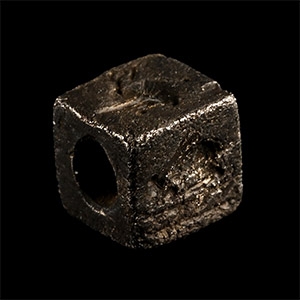
Roman Silver Gaming Cube with Animals
1st-4th century A.D.Sold for (Inc. bp): £117
Cuboid 'die' drilled through the centre, each of the four faces with a different animal: a hare, an eagle facing back, a dove, and a dolphin(?), probably used in a game of dice. 1.6 grams, 6 mm
Property of a Cambridgeshire, UK, collector. From his private collection since the 1970s; thence by descent circa 2000. Ex private collection of a Bedfordshire gentleman. This lot is accompanied by an illustrated lot declaration signed by the Head of the Antiquities Department, Dr Raffaele D'Amato. -
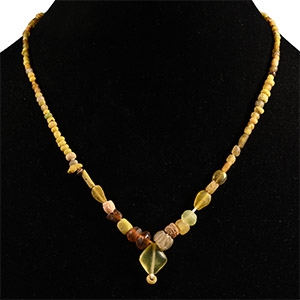
Roman Yellow Glass Bead Necklace String
1st-4th century A.D. and laterSold for (Inc. bp): £65
Restrung group of tabular, melon and other beads. 14.45 grams, 40.5 cm
Ex London, UK, collection, 1990s. This lot is accompanied by an illustrated lot declaration signed by the Head of the Antiquities Department, Dr Raffaele D'Amato. -
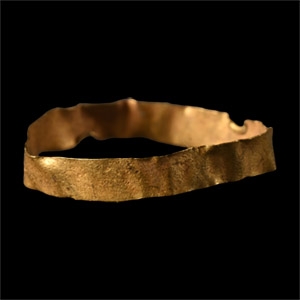
Roman Child's Gold Funerary Ring
1st-4th century A.D.Sold for (Inc. bp): £78
Comprising a slender sheet-gold hoop. 0.12 grams, 12 mm
Ex property of a late Japanese collector, 1970-2000s. This lot is accompanied by an illustrated lot declaration signed by the Head of the Antiquities Department, Dr Raffaele D'Amato. -
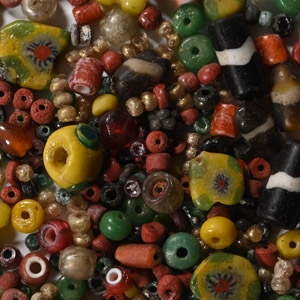
Roman Mixed Glass Bead Group
1st-4th century A.D. and laterSold for (Inc. bp): £111
Including oblate, fusiform, tabular, mosaic and other types. 15 grams total, 2-13 mm
UK gallery, early 2000s. This lot is accompanied by an illustrated lot declaration signed by the Head of the Antiquities Department, Dr Raffaele D'Amato.
The mass production of glass in Ancient Rome prompted the development of glass jewellery of unique qualities. The ancient Romans considered jewellery to be an essential accessory, being a public display of the wealth of high social classes. Roman jewellery at first followed trends set by the Etruscans, using gold and glass beads, but as the power and spread of the Roman Empire increased, jewellery designs became increasingly elaborate, incorporating elements from different cultural styles. -
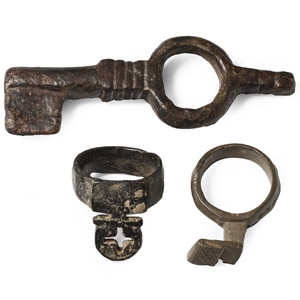
Roman Bronze Key Collection
1st-4th century A.D.Sold for (Inc. bp): £169
Comprising two key rings and a key with a looped handle and barrel-type shank. 44 grams total, 19-68 mm
Ex German art market, 2000s. Acquired from an EU collector living in London. From the collection of a Surrey, UK, gentleman. This lot is accompanied by an illustrated lot declaration signed by the Head of the Antiquities Department, Dr Raffaele D'Amato. -
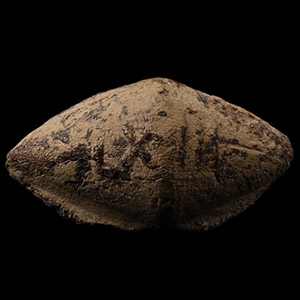
Roman Legion XIII 'Battle of Munda' Lead Slingshot
1st century B.C.Sold for (Inc. bp): £715
Fusiform with reserved legend 'LXIII' (for LEGIO XIII = 13th Legion). 55.9 grams, 41 mm
Acquired on the UK art market. Property of a gentleman collector. This lot is accompanied by an illustrated lot declaration signed by the Head of the Antiquities Department, Dr Raffaele D'Amato.
The shot (Völling type 1C) is marked with the abbreviated name of Legion XIII, and was probably used at the Battle of Munda (or Monda) against Julius Caesar, 17th March 45 B.C., or against the sons of Pompey, because both the generals (Pompey sons and Caesar) had in their army a Legio with the numeral XIII on that day. Interestingly, other glandes of the same typology from the same battlefield bear the name of Pompey, so that it is much possible that the glans belongs to the Legio XIII of Pompey, who was destroyed during the battle and whose survivors were massacred among the 22,000 defenders of Cordoba by the troops of Caesar (D'Amato, 2021, pp.421 and 424). The projectiles were made of different materials: lead (glandes) or in pottery or stone (lapides missiles). -
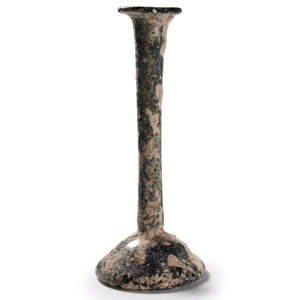
Roman Glass Candlestick Unguentarium
1st-4th century A.D.Sold for (Inc. bp): £156
Wide domed body with domed underside to the foot, tall narrow neck and splayed rim with rolled edge. 27.5 grams, 13.7 cm
From an important London collection of glass, 1990s. This lot is accompanied by an illustrated lot declaration signed by the Head of the Antiquities Department, Dr Raffaele D'Amato. -
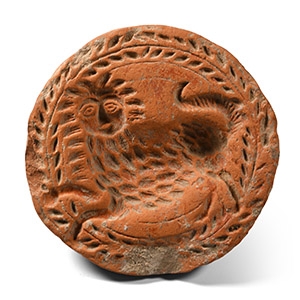
Late Roman Terracotta Bread Stamp with Lion
4th-6th century A.D.Sold for (Inc. bp): £260
Discoid in plan with integral stub handle, central figure of a stylised leaping lion with its head turned, wreath surrounding. 393 grams, 11.2 cm wide
with Galerie Rhéa, Zurich, Switzerland. This lot is accompanied by an illustrated lot declaration signed by the Head of the Antiquities Department, Dr Raffaele D'Amato.

