-
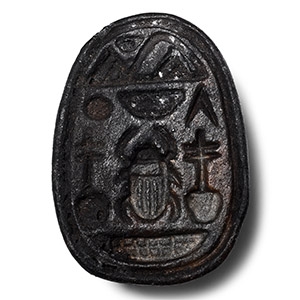
Egyptian Black Stone Scarab
Late Period, 664-332 A.D.Sold for (Inc. bp): £351
A finely detailed scarab body rests on an oval plate, its underside featuring deeply incised hieroglyphs, including the sun rising over a mountain, two neb signs, the khepri beetle, two nefer signs, a sun disc, and an enigmatic symbol, possibly the hepet sign. 15.5 grams, 31 mm
From the collection of a gentleman, acquired on the London art market in the 1990s. This lot is accompanied by an illustrated lot declaration signed by the Head of the Antiquities Department, Dr Raffaele D'Amato. -
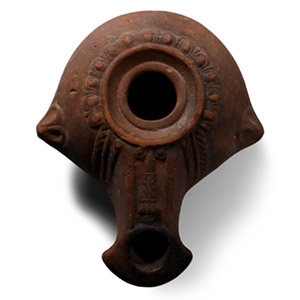
Egyptian Terracotta Oil Lamp
Ptolemaic Period, circa 200-50 B.C.Sold for (Inc. bp): £169
Rounded body with large filler hole and two pointed lugs on the shoulder, the rim with a low-relief ovolo decoration, elongated nozzle with a low-relief pillar motif; low basal ring. 60 grams, 92 mm
with Galerie Rhéa, Zurich, Switzerland. This lot is accompanied by an illustrated lot declaration signed by the Head of the Antiquities Department, Dr Raffaele D'Amato. -
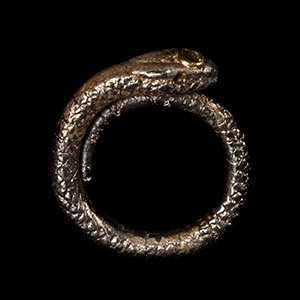
Egyptian Silver Snake Ring
1st millennium B.C.Sold for (Inc. bp): £910
Comprising a round-section tapering body with intricate scale detailing, the head resting on the body, detailed face with closed mouth and rounded eyes, an applied gold annulet with two granules above the head; part of the tail absent. 6.79 grams, 26.03 mm overall, 15.77 mm internal diameter (approximate size British J, USA 4 3/4, Europe 8.69, Japan 8)
Ex Dr Leo Mildenberg, Zurich, 1990s. Acquired by Galerie Rhéa, Zurich, from the above in 1999. This lot is accompanied by an illustrated lot declaration signed by the Head of the Antiquities Department, Dr Raffaele D'Amato.
Snake rings were not originally a traditional form in Egypt and only became common during the Ptolemaic and Roman Periods. Animal-shaped rings, including those with snake motifs, originated in Western Asia around the eighth century BC, spread to Greece by the fifth century BC, and were introduced to Egypt primarily through the Ptolemaic Period. In Greek culture, snakes were often linked to healing, though they likely carried other symbolic meanings as well. -
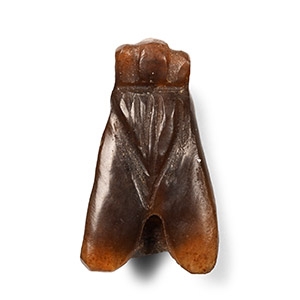
Egyptian Jasper Fly Amulet
Late Period, 664-332 B.C.Sold for (Inc. bp): £208
Carved in the round resting on an oval base, striated body; pierced longitudinally. 0.88 grams, 14 mm
Ex London and Home Counties collection, UK, 1920-1940. This lot is accompanied by an illustrated lot declaration signed by the Head of the Antiquities Department, Dr Raffaele D'Amato.
Egyptian artists often depicted fly whisks with pharaohs and officials, suggesting flies were just nuisances. In reality, Egyptians valued flies for their speed and persistence. Small fly amulets appeared around 3200 B.C. in Naqada II burials, gaining popularity and varying materials during the New Kingdom, including gold, silver, lapis lazuli, carnelian, amethyst, faience, and gemstones. These amulets were thought to protect against insect bites and troublesome creatures via apotropaic magic and possibly symbolised fecundity. Pharaohs awarded gold fly-shaped pendants to honour soldiers' bravery in battle. -
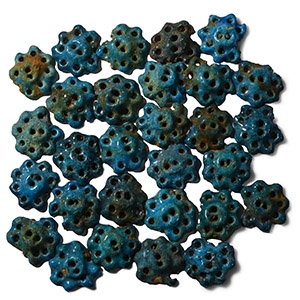
Egyptian Blue Faience Clothing Mounts
Roman Period, 30 B.C.-323 A.D.Sold for (Inc. bp): £247
Group of rosette mounts, each plano-convex in profile with two attachment holes to the centre and pierced loops to the rim. 124 grams total, 25-30 mm
UK private collection, formed in the 1980s. This lot is accompanied by an illustrated lot declaration signed by the Head of the Antiquities Department, Dr Raffaele D’Amato. This lot is accompanied by an illustrated lot declaration signed by the Head of the Antiquities Department, Dr Raffaele D'Amato. -
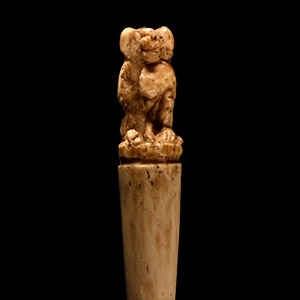
Egyptian Bone Hairpin with Thoth as a Baboon
New Kingdom, 1569-1081 B.C.Sold for (Inc. bp): £624
Tapering round-section hairpin, with a finial fashioned as a seated baboon with its tail resting along the body. 5.4 grams, 89 mm
Ex Thomas collection, UK, 1980s-1990s. This lot is accompanied by an illustrated lot declaration signed by the Head of the Antiquities Department, Dr Raffaele D'Amato.
Decorative hairpins often feature animals such as monkeys and cats, and inanimate objects such as olives. -
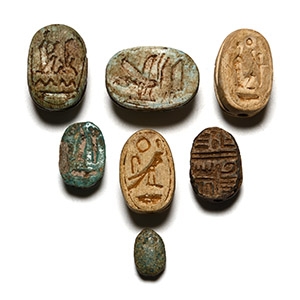
Egyptian Mixed Scarab Collection
2nd-1st millennium B.C.Sold for (Inc. bp): £572
Comprising (from left to right and top to bottom): 1) a scarab with an oval border containing the seated figure of a seated deity with arm raised in adoration before the sign partially resembling the hieroglyphic sign for a ‘thousand’, with the water and signs below; 2) a scarab with a faint oval border containing the honey bee and reed leaf symbols; 3) a scarab with an oval border containing the throne name of the 19th Dynasty pharaoh, Ramesses II (User-Maat-Re) atop a neb sign; 4) a scarab with indeterminate signs; 5) a scarab with an oval border containing the falcon god Ra-Horakhty standing atop a neb sign; 6) a scarab inscribed with numerous geometric designs that incorporate the name Amun-Re; 7) a plain scaraboid. 17.4 grams total, 10-20 mm
From the collection of a gentleman, acquired on the London art market in the 1990s. This lot is accompanied by an illustrated lot declaration signed by the Head of the Antiquities Department, Dr Raffaele D'Amato. -
.jpg)
Egyptian Gold Fly Amulet
Late Period, 664-332 B.C.Sold for (Inc. bp): £650
With hatched detailing to the body and wings. 1.62 grams, 17 mm
From the collection of a gentleman, acquired on the London art market in the 1990s. This lot is accompanied by an illustrated lot declaration signed by the Head of the Antiquities Department, Dr Raffaele D'Amato.
Considering that Egyptian artists often depicted fly whisks in the hands of pharaohs and high officials, one might assume that flies were merely a nuisance. However, the Egyptians held flies in high regard for their speed, quick reactions, and persistence. Small fly amulets first appeared in burials during the Naqada II Period, around 3200 B.C. These amulets gained popularity, and the materials used to make them varied during the New Kingdom. They were crafted from various materials such as gold, silver, lapis lazuli, carnelian, amethyst, faience, and bone. These amulets were believed to protect against insect bites and to ward off troublesome flying creatures through apotropaic magic. Some believe they may have even symbolised the fly’s fecundity. Additionally, pharaohs would bestow gold fly-shaped pendants as military awards to honour the bravery and persistence of soldiers in battle. -
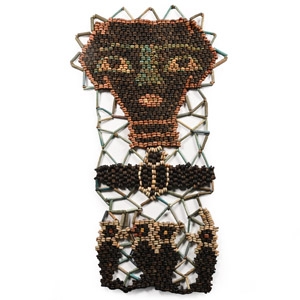
Egyptian Faience Mummy Bead Face Mask with Sons of Horus
Ptolemaic Period, 332-30 B.C.Sold for (Inc. bp): £312
Restrung; a netted beadwork panel of annular and tubular glazed composition beads in blues, greens, black, cream and red-brown colours, depicting a mummy face mask with false beard, a scarab with extended wings below, the 'Four Sons of Horus’ beneath the scarab, joined together with areas of open netting of tubular beads. 145 grams, 32 cm high
Acquired 1990s. Ex Mariaud des Serres, Paris, France. This lot is accompanied by an illustrated lot declaration signed by the Head of the Antiquities Department, Dr Raffaele D'Amato.
The 'Four Sons of Horus' protected the internal organs of the deceased. Depicted from left to right: the falcon-headed Qebhesenuef protected the intestines; human-headed Imsety, the liver; baboon-headed Hapi, the lungs; jackal-headed Duamutef, the stomach. -
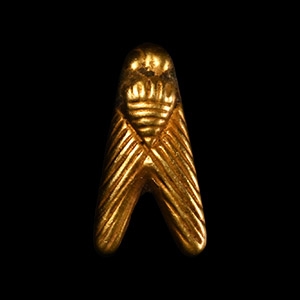
Egyptian Gold Fly Amulet
Late Period, 664-332 B.C.Sold for (Inc. bp): £780
Chevron-shaped pendant with incised detailing to the body and wings. 1.76 grams, 17 mm
From the collection of a gentleman, acquired on the London art market in the 1990s. This lot is accompanied by an illustrated lot declaration signed by the Head of the Antiquities Department, Dr Raffaele D'Amato.
Considering that Egyptian artists often depicted fly whisks in the hands of pharaohs and high officials, one might assume that flies were merely a nuisance. However, the Egyptians held flies in high regard due to their quick speed, reactions, and persistence. Small fly amulets first appeared in burials during the Naqada II Period, around 3200 B.C. These amulets grew in popularity, and the materials used to make them expanded during the New Kingdom. They are crafted from various materials such as gold, silver, lapis lazuli, carnelian, amethyst, faience, and bone. These amulets were believed to protect against insect bites and to ward off troublesome flying creatures through apotropaic magic. Some believe they may have even been intended to symbolise the fly’s fecundity. Additionally, pharaohs would bestow gold, fly-shaped pendants as military awards to honour the bravery and fly-like persistence of soldiers in battle. -
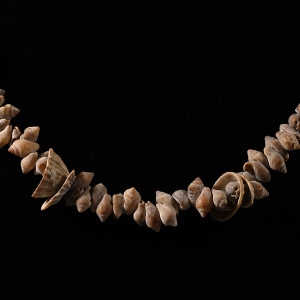
Egyptian Shell Bead Necklace
Late-Ptolemaic Period, 664-30 B.C.Sold for (Inc. bp): £26
Restrung necklace of scallops, cockles, limpets, and other types. 27 grams, 51 cm
From the private collection of Walter Thomas Gaze Cooper (1895-1980). This lot is accompanied by an illustrated lot declaration signed by the Head of the Antiquities Department, Dr Raffaele D'Amato. -
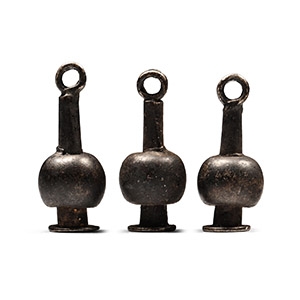
Egyptian Silver Poppy Amulet Group
Late-Ptolemaic Period, 664-30 B.C.Sold for (Inc. bp): £91
Three pendants each with poppy-head and loop at the apex. 3.67 grams total, 17-19 mm
From an early 20th century collection. This lot is accompanied by an illustrated lot declaration signed by the Head of the Antiquities Department, Dr Raffaele D'Amato.
Amulets in the form of poppies were used to heal and alleviate pain and to ward off death. These types of amulets were also linked to Osiris, the Egyptian deity of agriculture, death, and the afterlife.

