-
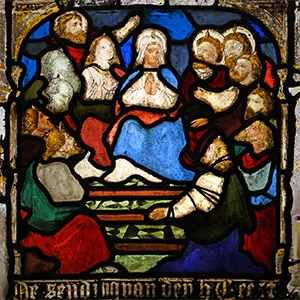
Stained Glass Panel with the Pentecost
Flemish, 19th century A.D. or earlierSold for (Inc. bp): £1,430
In late 15th century style, showing praying nimbate Mary at the centre, dressed in a blue cloak and a long white cassock, Mary Magdalene at her side with her head raised towards the sky; eleven Apostles surrounding the women, dressed in long tunics and cloaks, receiving the Holy Spirit in the form of small tongues resting on their heads; architectural background and Flemish inscription ‘DE ZENDING VAN DE HEILIGE GEEST’ (The Descent of the Holy Spirit) below; some restoration. 4.5 kg, 65 x 53.5 cm
Some restoration.
From a war-damaged church in Belgium. Ex property of a late Northumberland collector. From a private collection, Derbyshire, UK. This lot is accompanied by an illustrated lot declaration signed by the Head of the Antiquities Department, Dr Raffaele D'Amato.
The scene represents the Christian feast of the Pentecost, described in Acts, 2,1-4, when the eleven Apostles, gathered in Jerusalem together with Mary Mother of God and Mary of Magdala (the latter only according to some traditions) received the Holy Spirit as a mighty rushing wind and under the form of tongues of fire. According to the Christian tradition, this event represents the fulfilment of the promise that Christ will baptise his followers with the Holy Spirit and fire. -
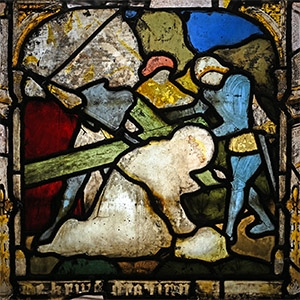
Stained Glass Panel with the Road to the Calvary
Flemish, 19th century A.D. or earlierSold for (Inc. bp): £598
In late 15th century style, showing nimbate Jesus falling under the weight of the cross, wearing a crown of thorns, led to Calvary by three men-at-arms, two of whom wearing full plate armour while the third, now barely visible, can only be seen in his yellow robe and pink cap; Flemish inscription below ‘DE KRUISDRAGING JESUS’ (Jesus wears the Cross) in uncial letters; some restoration. 4.5 kg, 65 x 53.5 cm
Some restoration.
From a war-damaged church in Belgium. Ex property of a late Northumberland collector. From a private collection, Derbyshire, UK. This lot is accompanied by an illustrated lot declaration signed by the Head of the Antiquities Department, Dr Raffaele D'Amato.
The scene represents the tragic moments of the Passion according to the Christian tradition, when Jesus succumbed under the weight of the cross. The episode is not in the Gospels, however, in the three synoptics it is noted that the three soldiers requested Simon of Cyrene to carry the cross in place of Jesus. Interestingly, the artist here painted the soldiers in contemporary armour (sallet, complete armour for breast, arms and legs), giving a good chronological element for the dating. -
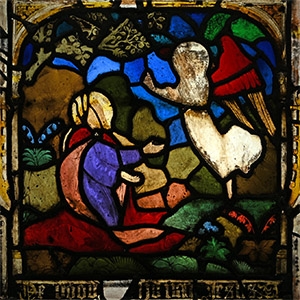
Stained Glass Panel with Jesus in the Garden of Gethsemane
Flemish, 19th century A.D. or earlierSold for (Inc. bp): £1,300
In late 15th century style, showing a nimbate angel in white robe with large red-and-gold wings, appearing to praying nimbate Jesus dressed in a red cloak and purple tunica talaris, Jesus shown with open arms in a sign of resignation to the will of God; a Flemish inscription 'DE DOODSTRIJD VAN JESUS' (The Agony of Jesus) on the bottom of the panel in uncial letters; some restoration. 4.5 kg, 65 x 53.5 cm
Some restoration.
From a war-damaged church in Belgium. Ex property of a late Northumberland collector. From a private collection, Derbyshire, UK. This lot is accompanied by an illustrated lot declaration signed by the Head of the Antiquities Department, Dr Raffaele D'Amato.
The scene represents the last prayer of Jesus before the Passion. According to the Gospel of Luke (22:43-44[1]) Jesus prayed in a farm known as Gethsemane on the Mount of Olives, and received consolation from an angel afterward, before the betrayal of Judas and his arrest. This event can be considered as the first true Passion of Jesus. -
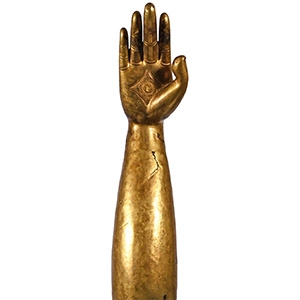
Monumental Gilt Bronze 'Earth Witness' Buddha Forearm with Open Palm
Tibetan, 15th-16th century A.D.Sold for (Inc. bp): £5,980
Hollow-formed arm, wrist and hand with fixing socket to the outside of the wrist; low-relief decoration to the palm; from a statue in the Bhumisparsa mudra; cracked; mounted on a custom-made stand. 21.5 kg total, 129 cm high including stand
Ex Sheila Allen, London. Private collection, London. This lot has been checked against the Interpol Database of stolen works of art and is accompanied by a search certificate number no.12742-236277. This lot has been cleared against the Art Loss Register database, and is accompanied by an illustrated lot declaration signed by the Head of the Antiquities Department, Dr Raffaele D'Amato. -
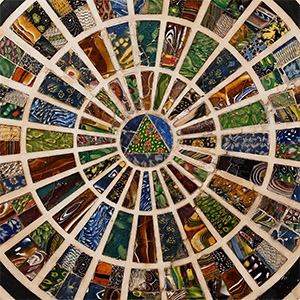
Roman Polychrome Mosaic Glass Set into a Marble Table Top
3rd century B.C.-2nd century A.D. and laterSold for (Inc. bp): £11,050
Discoid plaque with radiating panels of ancient inlaid mosaic and other glass; black outer border, centrepiece a disc with inlaid mosaic glass triangle, set into a marble table top; made in Rome circa 1825, attributed to Francesco Sibilio. 4.31 kg, 29.6 cm
Lady Walston, Newton Hall, Newton, Cambridgeshire. The collection of Mr Edric Van Vredenburgh. with Sotheby’s, London, The Eclectic World of Edric Van Vredenburgh, 6 June 2006, no.97. British private collection. This lot has been checked against the Interpol Database of stolen works of art and is accompanied by a search certificate number no.12743-235193. This lot has been cleared against the Art Loss Register database, and is accompanied by an illustrated lot declaration signed by the Head of the Antiquities Department, Dr Raffaele D'Amato. -
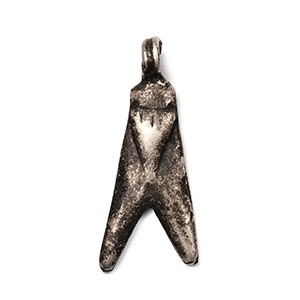
Egyptian Silver Fly Amulet
Late-Ptolemaic Period, 664-30 B.C.Sold for (Inc. bp): £111
With detailing to wings and eyes, loop for suspension above the head. 0.89 grams, 20 mm
From an early 20th century collection. This lot is accompanied by an illustrated lot declaration signed by the Head of the Antiquities Department, Dr Raffaele D'Amato. -
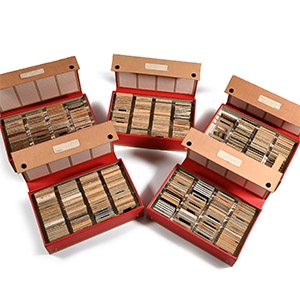
Historic Collection of 725 Slides of Archaeological Sites and Artefacts Including Other Sites in Egypt
1960s-1980s A.D.Sold for (Inc. bp): £650
Housed in five linen-covered boxes, covering general Egyptian sites, religion, Gods of Amun and Osiris, minor gods, environment, boats, and Book of the Dead etc. 4.44 kg total, 26.5 x 16.5 x 6.5 cm each box
Property of archaeologist Stephanie Gee, N.W. London, UK, 1960s-1980s. This lot is accompanied by an illustrated lot declaration signed by the Head of the Antiquities Department, Dr Raffaele D'Amato.
Stephanie Gee was a prominent archaeologist who took part in several expeditions in Egypt. She was a trusted assistant to the British-Australian archaeologist Veronica Seton-Williams, who excavated in Egypt, Britain, and the Near East. Stephanie also took part in the Tell El-Farâ'în expeditions of 1965-1968, and assisted Seton-Williams with preparing the 1966 expedition report. Their collaboration continued and Stephanie helped with the manuscript of Seton-Williams’ book ‘The Road to El-Aguzein’, a narrative account of her life that was first published in 1988. -
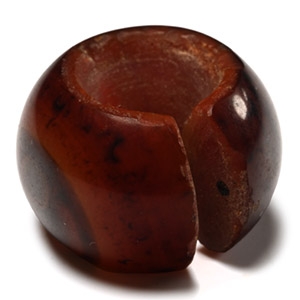
Egyptian Red Jasper Hair Ring
New Kingdom, 1550-1070 B.C.Sold for (Inc. bp): £169
Circular with a semi-circular profile and an opening on one side. 6.61 grams, 20 mm
Ex early 20th century collection, London and Home Counties, UK. This lot is accompanied by an illustrated lot declaration signed by the Head of the Antiquities Department, Dr Raffaele D'Amato. -
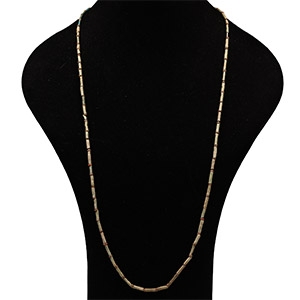
Egyptian Faience Bead Necklace String
Late Period, 664-332 B.C.Sold for (Inc. bp): £59
Composed of blue tubular beads interspersed with brown annular beads; restrung. 8.44 grams, 90 cm
Acquired on the UK art market, circa 1980. Property of an East London, UK, collector. This lot is accompanied by an illustrated lot declaration signed by the Head of the Antiquities Department, Dr Raffaele D'Amato. -
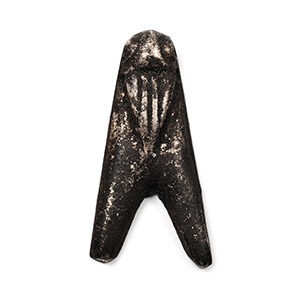
Egyptian Silver Fly Amulet
Late-Ptolemaic Period, 664-30 B.C.Sold for (Inc. bp): £78
With linear detailing to the body, raised eyes, pierced through the head for suspension. 0.82 grams, 17 mm
From an early 20th century collection. This lot is accompanied by an illustrated lot declaration signed by the Head of the Antiquities Department, Dr Raffaele D'Amato.
Egyptian artists often depicted fly whisks with pharaohs and officials, suggesting flies were just nuisances. In reality, Egyptians valued flies for their speed and persistence. Small fly amulets appeared around 3200 B.C. in Naqada II burials, gaining popularity and varying materials during the New Kingdom, including gold, silver, lapis lazuli, carnelian, amethyst, faience, and gemstones. These amulets were thought to protect against insect bites and troublesome creatures via apotropaic magic and possibly symbolised fecundity. Pharaohs awarded gold fly-shaped pendants to honour soldiers' bravery in battle. -
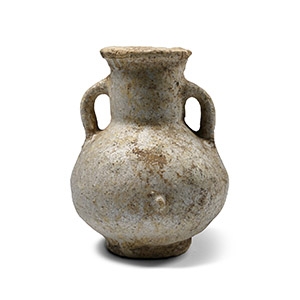
Egyptian Faience Juglet
Late Period, 664-332 B.C.Sold for (Inc. bp): £91
With squat body, broad neck with thickened rim, two strap handles to the shoulders. 88 grams, 85 mm
Acquired in the 1990s. Ex Abelita family collection. This lot is accompanied by an illustrated lot declaration signed by the Head of the Antiquities Department, Dr Raffaele D'Amato. -
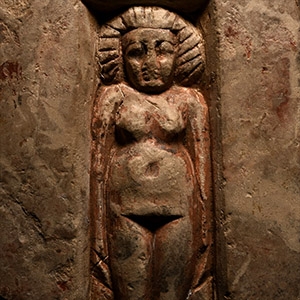
Egyptian Plaque with Fertility Figure
Late-Ptolemaic Period, 664-31 B.C.Sold for (Inc. bp): £910
Carved rectangular plaque with central recess, carved image of a nude female modelled in the half-round with a deeply striated bag wig, arms by her side; traces of red and black pigment on the body; mounted on a custom-made stand. 502 grams total, 17.1 cm including stand
From a central London collection, formed 1980-2000. From the private collection of Mr David Barker, London, UK; thence by descent. This lot is accompanied by an illustrated lot declaration signed by the Head of the Antiquities Department, Dr Raffaele D'Amato.
The rectangular limestone plaque almost certainly represents a shrine. Such plaques first appeared in Lower Egypt and became widespread in the Late Period and Ptolemaic era. They may have developed from earlier female figurines depicted on beds and are usually associated with the female goddesses Isis and Hathor, both powerful protectors of women and childbirth and associated with fertility.

