-
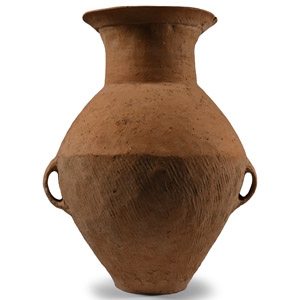
Chinese Terracotta Storage Jar
Neolithic Period, 3rd millennium B.C.Sold for (Inc. bp): £234
Biconvex in profile with flared mouth, lateral strap handles at the equator. 4.2 kg, 42 cm
Ex Hong Kong collection, 1990s. This lot is accompanied by an illustrated lot declaration signed by the Head of the Antiquities Department, Dr Raffaele D'Amato. -
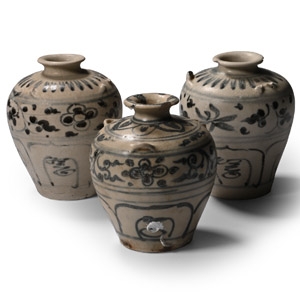
Hoi An Cargo Shipwreck Glazed Blue and White Vase Trio
15th century A.D.Sold for (Inc. bp): £715
Comprising three piriform vessels with small trumpet-shaped mouths, remains of loop handles above the shoulder, painted floral decoration to each with stylised petals radiating from the base. 742 grams total, 9.7-10 cm
Ex Butterfield and Butterfield auction with official Hoi An Hoard labels. Accompanied by an illustrated information sheet about the Hoi An shipwreck. This lot is accompanied by an illustrated lot declaration signed by the Head of the Antiquities Department, Dr Raffaele D'Amato.
In the mid 15th century a freighting junk loaded with fine Vietnamese pottery sank in an area of the South China Sea called the 'Dragon’s Embrace.' This vessel is part of the shipwreck cargo recovered off the coast of Vietnam at Hoi An. The ceramics themselves were probably made in the area of Chu Dau. -
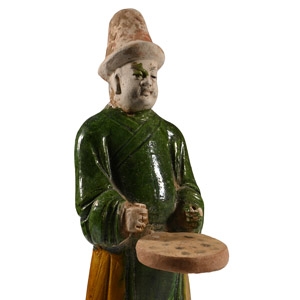
Chinese Ming Green-Glazed Musician with Drum
Ming Dynasty, 1368-1644 A.D. or laterSold for (Inc. bp): £46
Modelled standing on a tiered base; wearing a tall hat, a floor-length robe and boots; arms held in front of his body above a drum strapped to his waist; green and brown glaze. 494 grams, 24 cm
Ex H.N. collection, Milton Keynes, UK, 1990s. This lot is accompanied by an illustrated lot declaration signed by the Head of the Antiquities Department, Dr Raffaele D'Amato.
China provides some of the earliest traces of music making. These are mainly in the form of well-preserved musical instruments, the tangible evidence of music. Over several millennia, musical instruments from regional indigenous traditions as well as from India and Central and West Asia were assimilated into the mainstream of Chinese music. Some of the most ancient instruments have been retained, transformed, or revived throughout the ages and many are in common use even today, testifying to a living legacy of a durable art. This legacy is frequently celebrated in the visual arts of China, documenting rituals and celebrations, or as status symbols of those whose lives were enhanced by the resonate sounds of instruments. Ancient Chinese people believed they would go to an afterlife when they died. So they placed miniature versions of things for everyday use in tombs for the deceased, such as these musicians, hoping that the dead could enjoy the next life like when they were alive. These grave objects gradually developed into funerary artworks and reflected the social standing of the deceased. -
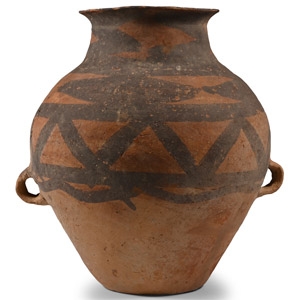
Chinese Painted Terracotta Storage Jar
Neolithic Period, 3rd millennium B.C.Sold for (Inc. bp): £286
Piriform bodied and painted with a figurative frog design; two loop handles to the equator. 1.78 kg, 26 cm
Ex Hong Kong collection, 1990s. This lot is accompanied by an illustrated lot declaration signed by the Head of the Antiquities Department, Dr Raffaele D'Amato. -
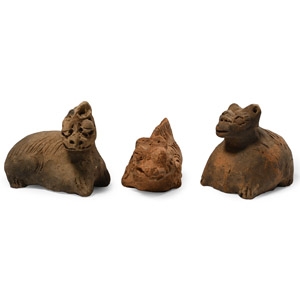
Chinese Yuan Terracotta Animal Group
Yuan Dynasty, 1271-1368 A.D. or laterSold for (Inc. bp): £33
Three hollow-formed ceramic animals with fur texture, bristle detailing and other features. 719 grams total, 11.7-12.2 mm
Ex H.N. collection, Milton Keynes, UK, 1990s. This lot is accompanied by an illustrated lot declaration signed by the Head of the Antiquities Department, Dr Raffaele D'Amato. -
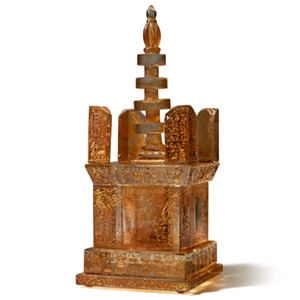
Chinese Gilt Two-Piece Stupa
20th century A.D.Sold for (Inc. bp): £91
With a cylindrical recess to the base, intricate engraved gilt decoration to the base and lid comprising peacocks, deer, elephants, and images of seated Buddha; probably glass. 1.27 kg total, 21 cm high
From the family collection of a Hampstead gentleman; formerly acquired in the 1980s. This lot is accompanied by an illustrated lot declaration signed by the Head of the Antiquities Department, Dr Raffaele D'Amato. -
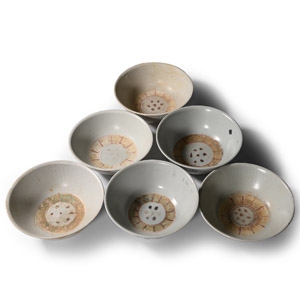
Tek Sing Treasure Shipwreck Glazed Polychrome Bowl Set
Early 19th century A.D.Sold for (Inc. bp): £169
Comprising six bowls with everted rims, painted polychrome floral and linear motifs. 2.3 kg total, 15.9-16.5 cm
Ex Nagel Auction, with official Tek Sing Treasure labels to verso. Accompanied by an illustrated information sheet about the Tek Sing shipwreck. This lot is accompanied by an illustrated lot declaration signed by the Head of the Antiquities Department, Dr Raffaele D'Amato.
The Tek Sing (True Star) wreck is one of the famous recovery stories of the 20th century. Sailing from the port of Xiamen (then known as Amoy) in February 1822 the vessel Tek Sing was bound for Jakarta, Indonesia laden with porcelain goods and 1600 Chinese emigrants. The captain decided to pass through the Gaspar Strait, between the Bangka-Belitung Islands, and ran aground on a reef. The vessel sank in about 100 feet of water. The next morning, February 7, an English East Indiaman captained by James Pearl, passing through the same waters, encountered debris and some survivors and managed to rescue about 190 of the latter. -
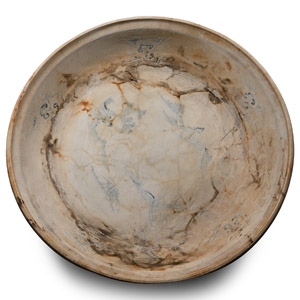
Massive Hoi An Cargo Shipwreck Glazed Blue and White Plate with Landscapes
15th century A.D.Sold for (Inc. bp): £182
Of shallow profile with stepped rim, painted arid landscape to the centre and decorative tendrils to the rim. 1.93 kg, 34 cm
Ex Butterfield and Butterfield auction with official Hoi An Hoard labels. Accompanied by an illustrated information sheet about the Hoi An shipwreck. This lot is accompanied by an illustrated lot declaration signed by the Head of the Antiquities Department, Dr Raffaele D'Amato.
In the mid 15th century a freighting junk loaded with fine Vietnamese pottery sank in an area of the South China Sea called the 'Dragon’s Embrace.' This vessel is part of the shipwreck cargo recovered off the coast of Vietnam at Hoi An. The ceramics themselves were probably made in the area of Chu Dau. -
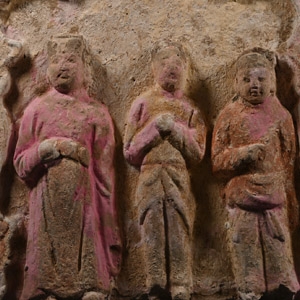
Chinese Song Terracotta Wall Tile
Song Dynasty, 960-1279 A.D. or laterSold for (Inc. bp): £234
Rectangular with shallow recess to the obverse, three standing figures to the centre, the tallest one clad in long robes; extensive pigmentation to the surface, shallow handprint on the reverse. 6 kg, 30 cm
From a West Country collection, UK, 1990s. This lot is accompanied by an illustrated lot declaration signed by the Head of the Antiquities Department, Dr Raffaele D'Amato. -
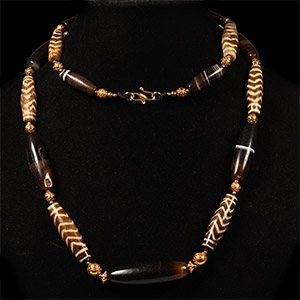
Banded Agate and Glass Bead Necklace
20th century A.D.Sold for (Inc. bp): £780
Composed of large biconical banded beads alternating with etched beads; restrung with a hook-and-loop closure. 193 grams, 99 cm
From the family collection of a Hampstead gentleman; formerly acquired in the 1980s. This lot is accompanied by an illustrated lot declaration signed by the Head of the Antiquities Department, Dr Raffaele D'Amato. -
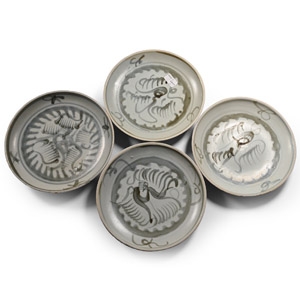
Tek Sing Treasure Shipwreck Glazed Green and Egg Shell Plate Set
Early 19th century A.D.Sold for (Inc. bp): £156
Comprising four shallow plates with feather decoration to the inner face. 1.2 kg total, 17.6-18.5 cm
Ex Nagel Auction, with official Tek Sing Treasure labels to verso. Accompanied by an illustrated information sheet about the Tek Sing shipwreck. This lot is accompanied by an illustrated lot declaration signed by the Head of the Antiquities Department, Dr Raffaele D'Amato.
The Tek Sing (True Star) wreck is one of the famous recovery stories of the 20th century. Sailing from the port of Xiamen (then known as Amoy) in February 1822 the vessel Tek Sing was bound for Jakarta, Indonesia laden with porcelain goods and 1600 Chinese emigrants. The captain decided to pass through the Gaspar Strait, between the Bangka-Belitung Islands, and ran aground on a reef. The vessel sank in about 100 feet of water. The next morning, February 7, an English East Indiaman captained by James Pearl, passing through the same waters, encountered debris and some survivors and managed to rescue about 190 of the latter. -
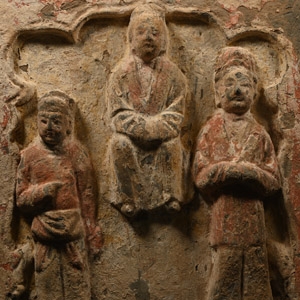
Chinese Song Terracotta Tile with Handprint Signature to Verso
Song Dynasty, 960-1279 A.D. or laterSold for (Inc. bp): £182
Ogival frame with three high-relief robed figures, the central one seated and raised to meet the upper frame, the others standing facing forward; impressed hand-print to reverse. 6.2 kg, 30 x 30.5 cm
Ex West Country, UK, collection, 1990s. This lot is accompanied by an illustrated lot declaration signed by the Head of the Antiquities Department, Dr Raffaele D’Amato. This lot is accompanied by an illustrated lot declaration signed by the Head of the Antiquities Department, Dr Raffaele D'Amato.

