-
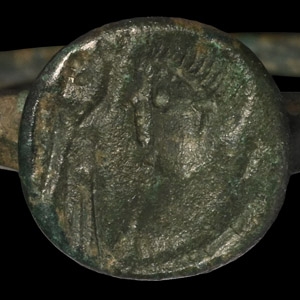
Large Roman Bronze Ring with Bust of Lucinius
3rd century A.D.Sold for (Inc. bp): £195
With cup-bezel, incuse profile bust. 4.45 grams, 26.66 mm overall, 21.00 mm internal diameter (approximate size British T 1/2, USA 9 3/4, Europe 21.89, Japan 21)
Ex German art market, 2000s. Acquired from an EU collector living in London. From the collection of Surrey, UK, gentleman. This lot is accompanied by an illustrated lot declaration signed by the Head of the Antiquities Department, Dr Raffaele D’Amato. -
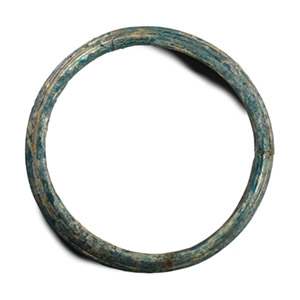
Very Large Roman Blue Glass Arm-Ring Bangle
Circa 4th century A.D.Sold for (Inc. bp): £124
D-shaped in section with slightly ribbed outer face. 31 grams, 92 mm
From an old English collection. Acquired from Alan Cherry, Bournemouth, UK, circa 2004. Ian Wilkinson collection, Nottinghamshire, UK, formed since 1985. This lot is accompanied by an illustrated lot declaration signed by the Head of the Antiquities Department, Dr Raffaele D’Amato.
The mass production of glass in ancient Rome prompted the development of glass jewellery of unique qualities. The ancient Romans considered jewellery to be an essential accessory, being a public display of the wealth of high social classes. Recent excavations have provided better information on the use of glass for necklaces and bracelets, and in some cases it has been possible to understand the exact arrangement of the jewellery. -
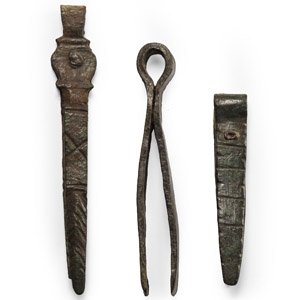
Roman Bronze Tweezers Group
1st-4th century A.D.Sold for (Inc. bp): £286
Including one with riveted shank and narrow arms, possibly for medical use. 22.8 grams total, 44-67 mm
Ex German art market, 2000s. Acquired from an EU collector living in London. From the collection of Surrey, UK, gentleman. This lot is accompanied by an illustrated lot declaration signed by the Head of the Antiquities Department, Dr Raffaele D’Amato. -
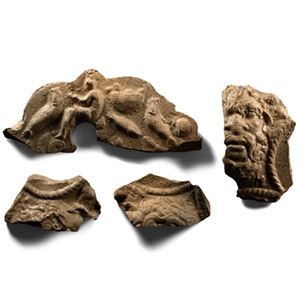
Roman Terracotta Vessel Fragment Group
1st-4th century A.D.Sold for (Inc. bp): £156
Each of curved profile with moulded ropework swags and other detailing. 96 grams total, 6-12.4 cm
Ex German art market, 2000s. Acquired from an EU collector living in London. From the collection of Surrey, UK, gentleman. This lot is accompanied by an illustrated lot declaration signed by the Head of the Antiquities Department, Dr Raffaele D’Amato. -
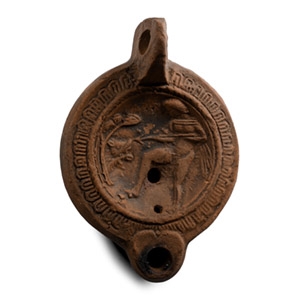
Roman Terracotta Oil Lamp with Hunter Spearing a Boar
2nd century A.D.Sold for (Inc. bp): £572
Squat lamp with pierced lug handle and short nozzle; shoulder with band of radiating feathers, discus with hunter wearing a cloak and stabbing a boar emerging from a thicket; concentric rings to underside. 137 grams, 11.9 cm
Acquired from Parthenon Gallery, London WC1, UK, before 2000. Property of a Bedfordshire, UK, private collector. Accompanied by an illustrated collector's identification tag. This lot is accompanied by an illustrated lot declaration signed by the Head of the Antiquities Department, Dr Raffaele D’Amato. -
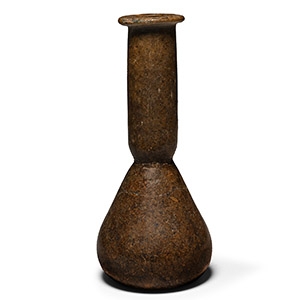
Roman Glass Unguentarium
2nd-4th century A.D.Sold for (Inc. bp): £78
With piriform body and flat base, tall neck with waisted joint to body, mouth with everted rim; old collector's labels to underside 'L-15439' and '2970'. 97 grams, 15.5 cm
with H.A.C., Basel, prior 1999. This lot is accompanied by an illustrated lot declaration signed by the Head of the Antiquities Department, Dr Raffaele D’Amato. -
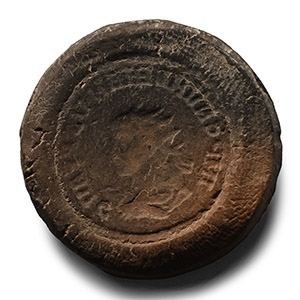
Roman Bifacial Terracotta Forger's Coin Mould
3rd century A.D.Sold for (Inc. bp): £130
Discoid in plan, one side with profile bust of an emperor wearing a radiate crown, legend surrounding; the reverse with a standing female figure holding wreath towards emperor. 4.08 grams, 27 mm
From the collection of a gentleman, acquired on the London art market in the 1990s. This lot is accompanied by an illustrated lot declaration signed by the Head of the Antiquities Department, Dr Raffaele D’Amato. -
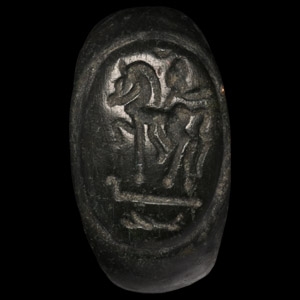
Roman Bronze Ring with Prancing Horse and Rider
2nd-3rd century A.D.Sold for (Inc. bp): £143
With broad shoulders and ellipsoid plaque, incuse profile horse and rider motif. 5.81 grams, 21.16 mm overall, 17.29 mm internal diameter (approximate size British I 1/2 , USA 4 1/2, Europe 8.07, Japan 7)
Ex German art market, 2000s. Acquired from an EU collector living in London. From the collection of Surrey, UK, gentleman. This lot is accompanied by an illustrated lot declaration signed by the Head of the Antiquities Department, Dr Raffaele D’Amato. -
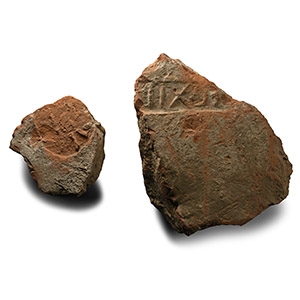
Roman Thunderbolt Legion XII Terracotta Brick Fragment Group
1st-2nd century A.D.Sold for (Inc. bp): £182
Two fragments of ceramic brick with impressed stamps: '[..]EGXII' on the larger and a disc on the other with [...]XI[I]'. 1.79 kg total, 9.7-18.2 cm
Found Northern Europe. Acquired from Den of Antiquity, circa 2010. Ian Wilkinson collection, Nottinghamshire, UK, formed since 1985. This lot is accompanied by an illustrated lot declaration signed by the Head of the Antiquities Department, Dr Raffaele D’Amato.
The Legio XII Fulminata (the 'lightning bolt' legion) was created by Gaius Julius Caesar in 58 BC and was active until the early 5th century, patrolling at that time the Euphrates borders with the Sassanian Persian Empire, near Melitene (today Malatya). Its emblem was the fulgur, which was widely used on the objects and the pertinences of the Legio. During the first two centuries of the Christian Era the Legio was located in Syria, Cappadocia and Armenia, and participated to the Jewish war between 66 and 70 AD, to be sent after the suppression of the revolt on the Euphrates Border. Cappadocia and Armenia were the main places of staying of the Legio, except for the period of the Marcomannic Wars (167-189 AD), when it operated on the Danube against the Germani. -
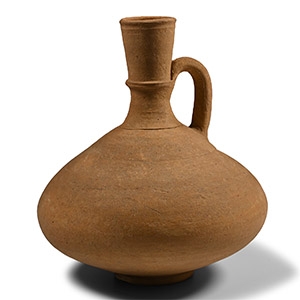
Gallo-Roman Squat Jug with Handle
1st-4th century A.D.Sold for (Inc. bp): £195
Squat and biconvex in profile with curved strap handle, funicular mouth, horizontal rib detailing. 250 grams, 14.7 cm
with Millon Auction, 06 December 21, no.38. This lot is accompanied by an illustrated lot declaration signed by the Head of the Antiquities Department, Dr Raffaele D’Amato. -
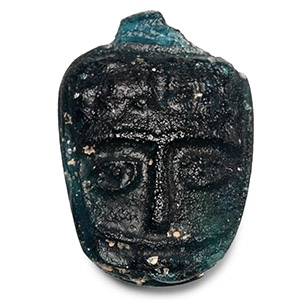
Roman Blue Glass Face Pendant
3rd century A.D.Sold for (Inc. bp): £52
D-shaped in profile and lentoid in section with moulded facial detailing, chipped suspension lug above; possibly a mask of Hercules. 6.94 grams, 30.15 mm
Acquired on the UK art market, 1971-1974. This lot is accompanied by an illustrated lot declaration signed by the Head of the Antiquities Department, Dr Raffaele D’Amato. -
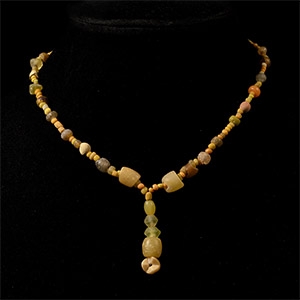
Roman Yellow Glass Bead Necklace String
1st-4th century A.D. and laterSold for (Inc. bp): £72
A restrung Y-shaped string composed of variously shaped beads with a central feature composed of larger beads. 15.7 grams, 34 cm
Acquired 1980-2015. Ex Abelita family collection. This lot is accompanied by an illustrated lot declaration signed by the Head of the Antiquities Department, Dr Raffaele D’Amato.

