-
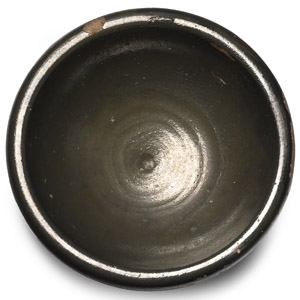
Greek Miniature Black Glazed Terracotta Dish
Circa 2nd century B.C.Sold for (Inc. bp): £52
Squat in profile with rounded rim and flared foot. 16.3 grams, 50 mm
Believed to have been part of the Duke of Northumberland collection. From an early 20th century collection. From a Hampshire, UK, private collection. This lot is accompanied by an illustrated lot declaration signed by the Head of the Antiquities Department, Dr Raffaele D’Amato. -
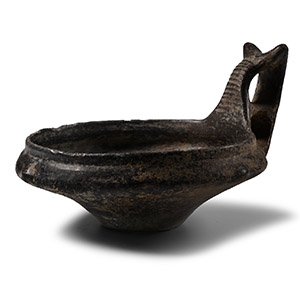
Etruscan Terracotta Impasto Kyathos
Circa 8th century B.C.Sold for (Inc. bp): £416
With low profile and narrow flat base, elaborate handle with crescent-shaped terminal and horizontal ridges below on the facing side; three small evenly placed bosses to the outer rim of the bowl. 153 grams, 13.5 cm
From the collection of a South German artist and art collector, 1960 -1980. Ex Nagel Auktionen, 9 September 2014, lot 223(part). Ancient Resource Auctions, California, USA, 6 February 2016, lot 94A. Property of a South Australian private collector, with collection reference 16.01. Accompanied by a detailed collector's catalogue page including description and photograph. This lot is accompanied by an illustrated lot declaration signed by the Head of the Antiquities Department, Dr Raffaele D’Amato. -
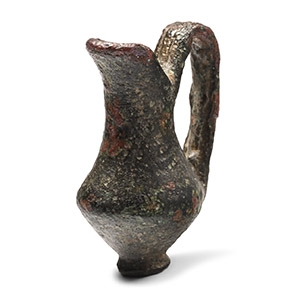
Greek Miniature Bronze Beaked Jug
Macedonia, 7th century B.C.Sold for (Inc. bp): £85
With integral strap handle and disc foot, carination to the equator, broad pouring lip. 14 grams, 26 mm
Ex Herbert A. Cahn, Basel, 1990s. Accompanied by a copy of an Art Loss Register certificate no.S00072882. This lot is accompanied by an illustrated lot declaration signed by the Head of the Antiquities Department, Dr Raffaele D’Amato. -
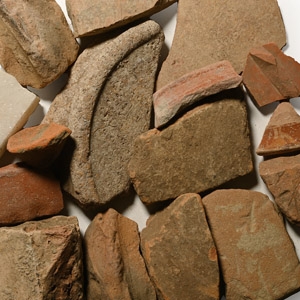
Greek and Roman Pottery Sherd Group
4th century B.C.-4th century A.D.Sold for (Inc. bp): £7
Including shards of bowl and other vessels, marble block and other items. 868 grams total, 2-11.2 cm
Acquired from Brigantia Antiques, York, circa 2003. Ian Wilkinson collection, Nottinghamshire, UK, formed since 1985. This lot is accompanied by an illustrated lot declaration signed by the Head of the Antiquities Department, Dr Raffaele D’Amato. -
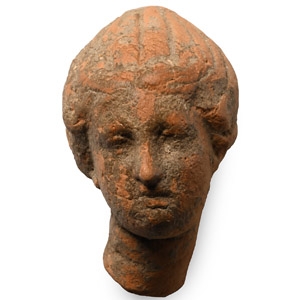
Greek Terracotta Head of a Female
Tarentine, 3rd-1st century B.C.Sold for (Inc. bp): £221
Female head moulded with a segmented conical cap with earlobes visible beneath; the head slightly turned and tilted downwards on a long slender neck. 43 grams, 56 mm
Acquired in the mid 1980s-1990s. Private collection, Switzerland, thence by descent. Private collection, since the late 1990s. This lot is accompanied by an illustrated lot declaration signed by the Head of the Antiquities Department, Dr Raffaele D’Amato. -
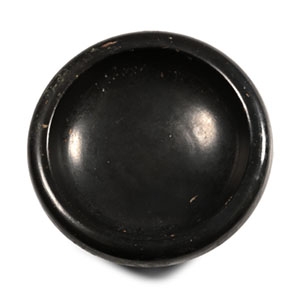
Greek Black-Glazed Terracotta Bowl
4th century B.C.Sold for (Inc. bp): £208
With lustrous black glaze with metallic shimmer; shallow bowl on ring foot, carinated inner edge, carinated lip to sidewall; old collector's label 'N12959' to underside. 140 grams, 95 mm
Private collection Bavaria. By descent, in possession of the family since 1960s-1970s. This lot is accompanied by an illustrated lot declaration signed by the Head of the Antiquities Department, Dr Raffaele D’Amato. -
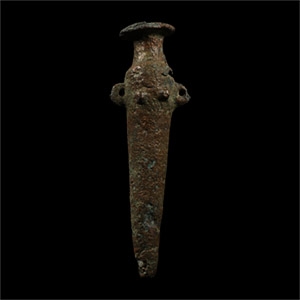
Greek Bronze Alabastron Kohl Pot
Circa 650-550 B.C.Sold for (Inc. bp): £111
With hollow-formed tapering body, rounded tip, carination at the shoulder, low neck and broad flared rim to the mouth, two lateral loop handles. 109 grams, 12.1 cm
UK private collection before 2000. Acquired on the UK art market. Property of a London gentleman. This lot is accompanied by an illustrated lot declaration signed by the Head of the Antiquities Department, Dr Raffaele D’Amato. -
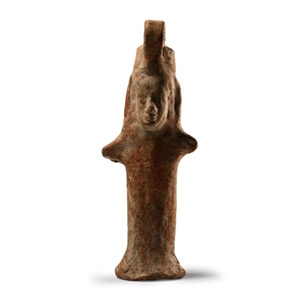
Greek Archaic Human-Faced Idol
Daedalic, 8th century B.C.Sold for (Inc. bp): £416
Modelled in the round mould-formed figure with D-shaped human face, stub arms and columnar body with flared base; exaggerated facial features, tall headdress and coiled loop above. 147 grams, 16.7 cm
German private collection, before 1997. Accompanied by a copy of an Art Loss Register certificate no.S00003188. This lot is accompanied by an illustrated lot declaration signed by the Head of the Antiquities Department, Dr Raffaele D’Amato. -
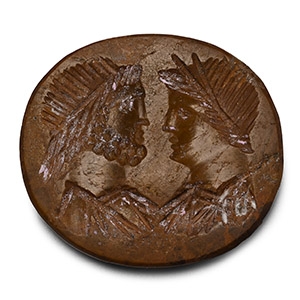
Late Roman Carnelian Double Portrait Gemstone
4th century A.D.Sold for (Inc. bp): £338
A brown oval intaglio with two facing male busts, both diademed and togate, the left bust bearded, possibly depicting Serapis and Horus. 3.38 grams, 24 mm
Mr F.D. collection, acquired on the European art market, 1975 to present. This lot is accompanied by an illustrated lot declaration signed by the Head of the Antiquities Department, Dr Raffaele D’Amato. -
.jpg)
Roman Coloured Glass Bracelet Group
Circa 2nd-4th century A.D.Sold for (Inc. bp): £143
Comprising one round-section in deep blue, one similar in deep red, and a D-section in pale blue/turquoise. 14.3 grams total, 42-55 mm
Formerly with a Bournemouth gentleman. Ex Essex collection. Property of a Scottish collector, acquired in 2013. This lot is accompanied by an illustrated lot declaration signed by the Head of the Antiquities Department, Dr Raffaele D’Amato.
Bangles did not occur in a vacuum after the Roman invasion but were an integral part of globalising networks of cross-Channel trade and connections with the European mainland in the early first century A.D. According to J. Price bangles were first developed in southern Britain in the late Claudio-Neronian period (A.D. 43–65/70) and that in subsequent periods the craft of bangle-making quickly spread further north with the advance of the Roman army. -
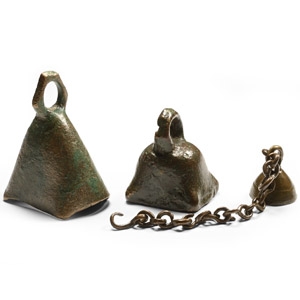
Roman Bronze Bell Group
1st-4th century A.D.Sold for (Inc. bp): £312
Each rectangular in plan, one with short length of suspension chain. 108 grams total, 24-63 mm
Ex German art market, 2000s. Acquired from an EU collector living in London. From the collection of Surrey, UK, gentleman. This lot is accompanied by an illustrated lot declaration signed by the Head of the Antiquities Department, Dr Raffaele D’Amato. -
.jpg)
Roman Ring Gemstone Collection
2nd-3rd century A.D.Sold for (Inc. bp): £286
Mainly ellipsoid carnelian plaques with incuse designs including standing figure, bird in flight and other types. 4.21 grams total, 8-15 mm
From an old UK collection, 1980s. This lot is accompanied by an illustrated lot declaration signed by the Head of the Antiquities Department, Dr Raffaele D’Amato.

