-
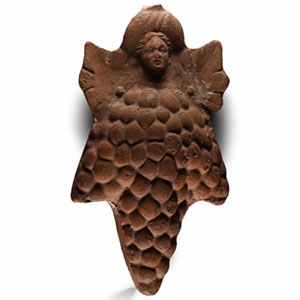
Egyptian Terracotta Figure of Artemis of Ephesus
Ptolemaic Period, 2nd-1st century B.C.Sold for (Inc. bp): £910
Hollow-formed figure of Artemis wearing a voluminous wreath, head emerging from a bunch of grapes between two vine leaves; vent on top of the head; opening to rear. 222 grams, 18 cm
The Erotica Collection Christian von Faber-Castell, Küsnacgt ZH, Switzerland, since the late 1970s. This lot is accompanied by an illustrated lot declaration signed by the Head of the Antiquities Department, Dr Raffaele D’Amato.
The statue of Artemis at Ephesus (modern Turkey) is modelled with breasts in multiple tiers and with a hairstyle reminiscent of that on this figure. -
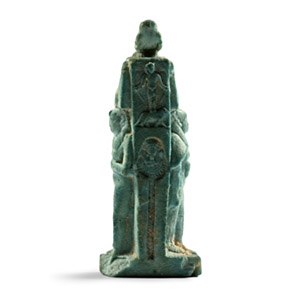
Egyptian Four-Sided Amulet
Late Period, 664-332 B.C.Sold for (Inc. bp): £1,690
An elaborate amulet in bright blue faience, modelled on four sides: Side 1: a diminutive figure of Harpokrates holding a snake in each hand and standing on the back of a lion, below which is a stylised mummiform (?) figure with a nemes headdress and a broad ornamental collar; Side 2: a baboon seated upon a nebyt collar, below which is a standing naked female figure wearing a Hathoric wig; Side 3: a standing naked female figure with right arm hanging by her side and left arm bent at the elbow and forearm positioned beneath her breasts, wearing a composite wig with striated lappets and uraeus to the front, surmounted by two tall ostrich feathers fronted by a sun disc; Side 4: a standing naked female figure with right arm hanging by her side and left arm bent at the elbow and forearm positioned beneath her breasts, wearing a lappet wig and uraeus to the front, surmounted by a tall two-plumed headdress fronted by a sun disc; the figure of a falcon tops the composition, which stands on an integral plinth. 21 grams, 60 mm
Mr F.D. collection, acquired on the European art market, 1975 to present. This lot is accompanied by an illustrated lot declaration signed by the Head of the Antiquities Department, Dr Raffaele D’Amato.
This highly unusual amulet contains elements associated with Horus cippi. On such objects, Horus is depicted as a naked child, usually holding snakes and standing on crocodiles, though other dangerous animals, such as lions, are also represented with him. The goddesses Isis and Nephthys are typically found on cippi, and two of the three female figures on this amulet may represent these goddesses. However, their headdresses are untypical of either deity, while the third female figure sports the Hathor wig. -
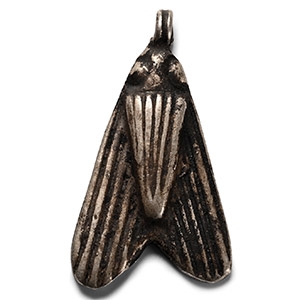
Egyptian Silver Fly Amulet
Late-Ptolemaic Period, 664-30 B.C.Sold for (Inc. bp): £221
With linear detailing to body and wings, loop above the head. 2 grams, 24 mm
From an early 20th century collection. This lot is accompanied by an illustrated lot declaration signed by the Head of the Antiquities Department, Dr Raffaele D’Amato.
Small fly amulets first appeared in burials during the Naqada II Period, c. 3200 B.C. These amulets grew in popularity and the materials used to make them expanded during the New Kingdom. They are crafted from a variety of materials such as gold, silver, lapis lazuli, carnelian, amethyst, faience, and bone. These amulets were thought to protect against insect bites and to ward off troublesome flying creatures through apotropaic magic. Some believe they may have even been intended to symbolise the fly’s fecundity. Additionally, pharaohs would bestow gold fly-shaped pendants as military awards to honour the bravery and fly-like persistence of soldiers in battle. -
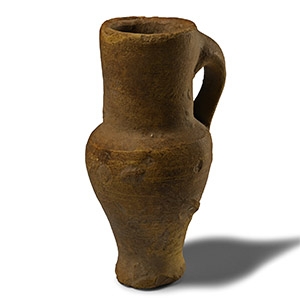
Phoenician Terracotta Juglet
Circa 5th century B.C.Sold for (Inc. bp): £78
Narrow in profile with tapering body and flared foot, tubular neck with strap handle to rear. 97 grams, 94 mm
From North Africa, UK. Ian Wilkinson collection, Nottinghamshire, UK, formed since 1985. Accompanied by an old handwritten dealer's tag. This lot is accompanied by an illustrated lot declaration signed by the Head of the Antiquities Department, Dr Raffaele D’Amato. -
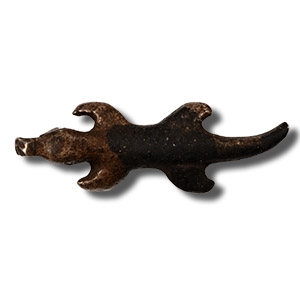
Egyptian Silver Crocodile Amulet
Late-Ptolemaic Period, 664-30 B.C.Sold for (Inc. bp): £111
Figure of a crocodile modelled in the round with pierced suspension lug. 0.49 grams, 15 mm
From an early 20th century collection. This lot is accompanied by an illustrated lot declaration signed by the Head of the Antiquities Department, Dr Raffaele D’Amato.
Crocodile amulets were worn for protective purposes to guard against dangerous creatures. -

Egyptian Faience Beads and Other Fragments
Late Period, 664-332 B.C.Sold for (Inc. bp): £338
Including seed and tubular beads, and other items. 48 grams total, 1-15 mm
From an old English collection. Acquired from Brigantia, York, 1990s. Ian Wilkinson collection, Nottinghamshire, UK, formed since 1985. This lot is accompanied by an illustrated lot declaration signed by the Head of the Antiquities Department, Dr Raffaele D’Amato. -
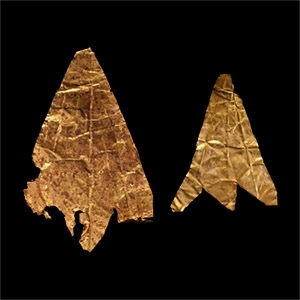
Hellenistic Gold Wreath Leaves
2nd-1st century B.C.Sold for (Inc. bp): £117
Comprising two sheet-gold leaf elements from a diadem, teach with dentilled end and impressed divergent bands. 0.31 grams total, 24-35 mm
Acquired from Brigantia Antiques, York, UK, in the early 1990s. Ian Wilkinson collection, Nottinghamshire, UK, formed since 1985. This lot is accompanied by an illustrated lot declaration signed by the Head of the Antiquities Department, Dr Raffaele D’Amato. -
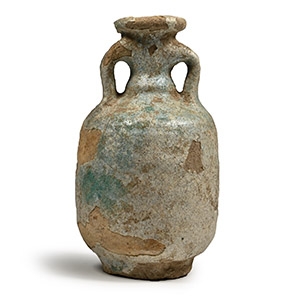
Parthian Glazed Jar with Two Handles
1st-2nd century A.D.Sold for (Inc. bp): £98
Comprising a barrel-shaped body, basal ring, balustered neck with everted rim to the mouth and two lateral strap handles. 164 grams, 11.2 cm
From a London, UK, collection, 1990s. This lot is accompanied by an illustrated lot declaration signed by the Head of the Antiquities Department, Dr Raffaele D’Amato. -
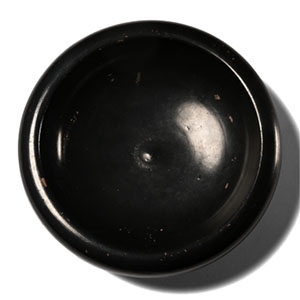
Greek Terracotta Black Glazed Bowl
4th century B.C.Sold for (Inc. bp): £260
With lustrous black glaze with metallic shimmer; shallow bowl on ring foot; fine double drill-hole in the ring for suspension; carinated inner edge, carinated lip to sidewall; base in reserve with two concentric circles in red; old collector's label 'N12960' to underside. 153 grams, 10.1 cm
Private collection Bavaria. By descent, in possession of the family since 1960s-1970s. German art market, 2013. Accompanied by a copy of an Art Loss Register certificate no.S00111200. This lot is accompanied by an illustrated lot declaration signed by the Head of the Antiquities Department, Dr Raffaele D’Amato. -
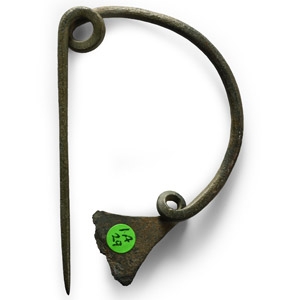
Greek Bronze Bow Brooch
Early Iron Age, 8th century B.C.Sold for (Inc. bp): £91
Single-piece fibula comprising a curved bow with integral coiled spring to one end developing to a sturdy pin; to the other end, a flared catchplate on a single-coil spring; ledge of catch absent. 15.4 grams, 78 mm
From the private collection of Kenneth Machin (1936-2020), Buckinghamshire, UK; with collection no.IA29; his collection of antiquities and natural history was formed since 1948; thence by descent. This lot is accompanied by an illustrated lot declaration signed by the Head of the Antiquities Department, Dr Raffaele D’Amato. -
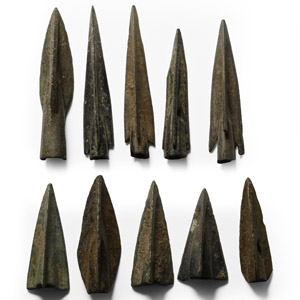
Greek Period Bronze Arrowhead Collection
5th-3rd century B.C.Sold for (Inc. bp): £98
High-quality, triangular in section, with flanges and socket. 19.3 grams total, 24-36 mm
From an English collection formed before 2000. This lot is accompanied by an illustrated lot declaration signed by the Head of the Antiquities Department, Dr Raffaele D’Amato. -
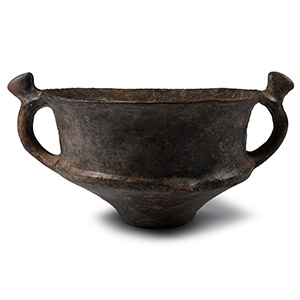
Villanovan Terracotta Impasto Kylix with Zoomorphic Finials
10th-8th century B.C.Sold for (Inc. bp): £195
Thin-walled with two elegant loop handles topped by stylised zoomorphic finials, carinated body with the lower part sloping sharply inwards to a small round foot, two small lobes to the carinated edge. 265 grams, 18 cm
Formerly in a private New Jersey, USA, collection, acquired before 1997. Artemis Gallery, Colorado, USA, 18 May 2017, lot 18D. Property of a South Australian private collector, with collection reference 17.03. Accompanied by a detailed collector's catalogue page including description and photograph. This lot is accompanied by an illustrated lot declaration signed by the Head of the Antiquities Department, Dr Raffaele D’Amato.

