-
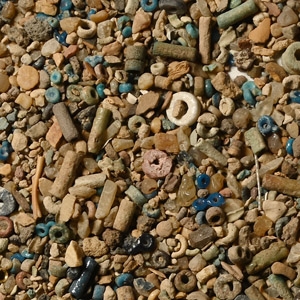
Egyptian Faience Beads and Other Fragments
Late Period, 664-332 B.C.Sold for (Inc. bp): £124
Including seed and tubular beads, and other items. 46 grams total, 1-9 mm
From an old English collection. Acquired from Brigantia, York, 1990s. Ian Wilkinson collection, Nottinghamshire, UK, formed since 1985. This lot is accompanied by an illustrated lot declaration signed by the Head of the Antiquities Department, Dr Raffaele D’Amato. -
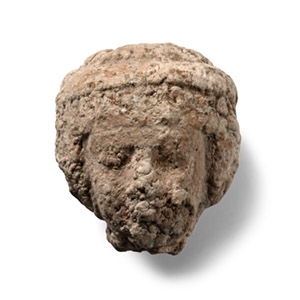
Egyptian Small Head with Wig
Ptolemaic Period, 331-30 B.C.Sold for (Inc. bp): £72
Formed as a small rounded head with filet or diadem to the brow, pert facial features. 54 grams, 44 mm
Antoni Sikorski collection, London, formed between the 1950s and 1970s. with Chiswick Auctions, 11 May 2016, [Part]. This lot is accompanied by an illustrated lot declaration signed by the Head of the Antiquities Department, Dr Raffaele D’Amato.
Although worn, the narrow diadem and curly hair are reminiscent of portraits of Ptolemaic priests, such as Pakhom of Dendera (Bothmer, B.V., Egyptian Sculpture of the Late Period 700 B.C. to A.D. 100, New York, 1960, pp. 178-179, pls. 128 and 129, 343); Spier, J., Potts, T., and Cole, S.E. (eds.), Beyond the Nile: Egypt and the classical world, Los Angeles, 2018, p. 169 no. 101. -
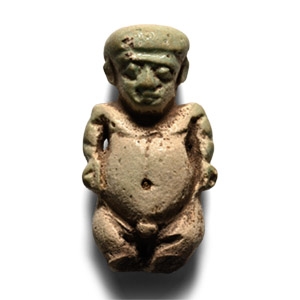
Egyptian Faience Pataikos Amulet
Late Period, 525-332 B.C.Sold for (Inc. bp): £169
Depicted nude with a cap to his head, ribbed suspension loop to the rear of the neck. 6.03 grams, 36 mm
UK private collection before 2000. Acquired on the UK art market. Property of a London gentleman. This lot is accompanied by an illustrated lot declaration signed by the Head of the Antiquities Department, Dr Raffaele D’Amato.
Pataikos is a representation of the creator deity Ptah, and his diminutive form is a symbol of his immense magical power. -
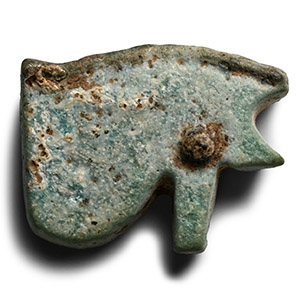
Egyptian Glazed Faience Horus Eye Amulet
Ptolemaic Period, 332-30 B.C.Sold for (Inc. bp): £59
Wedjat bead or amulet with applied black detailing to the pupil and brow. 1.18 grams, 17 mm
Mr F.D. collection, acquired on the European art market, 1975 to present. This lot is accompanied by an illustrated lot declaration signed by the Head of the Antiquities Department, Dr Raffaele D’Amato.
The wedjat-eye amulet is a representation of the healed eye of the god Horus, featuring both human and falcon elements. The name wedjat in ancient Egyptian means ‘the one that is sound.’ According to Egyptian mythology, Horus' eye was wounded or taken by the god Seth and restored by Thoth. The wedjat-eye amulet was thought to protect its wearer and bestow the power of recovery and regeneration onto them. It was very popular and used by both the living and the dead. -
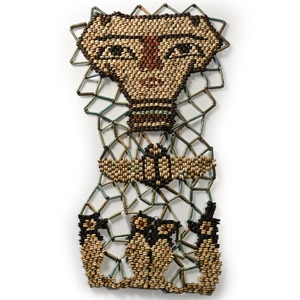
Egyptian Faience Mummy Beadwork Mask
Ptolemaic Period, 332-30 B.C.Sold for (Inc. bp): £676
A netted beadwork panel of annular and tubular glazed composition beads depicting a mummy face mask with a false beard, a scarab with extended wings below, and beneath the 'Four Sons of Horus’, Hapy, Imsety, Qebehsenuef, and Duamutef, joined together with areas of open netting of tubular examples; restrung with some later beads. 145 grams, 32 cm
Mariaud de Serres, Paris, 1990s. This lot is accompanied by an illustrated lot declaration signed by the Head of the Antiquities Department, Dr Raffaele D’Amato.
The Four Sons of Horus were deities responsible for protecting the deceased's internal organs. The human-headed Imsety protected the liver, the baboon-headed Hapy protected the lungs, the jackal-headed Duamutef protected the stomach, and the falcon-headed Qebehsenuef protected the intestines. These internal organs were often placed in canopic jars with the head of the respective Son of Horus. -
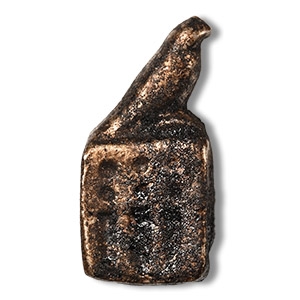
Egyptian Silver Horus Serekh Amulet
Late-Ptolemaic Period, 664-30 B.C.Sold for (Inc. bp): £65
An element from a necklace in the form of Horus in falcon form sitting atop the palace façade motif (serekh). 0.71 grams, 10 mm
From an early 20th century collection. This lot is accompanied by an illustrated lot declaration signed by the Head of the Antiquities Department, Dr Raffaele D’Amato.
Examples of this distinctive motif can be traced back to the very beginning of Egyptian history. It represents the recessed niches of royal and religious architecture, and served as a device to contain the Horus name of the king. The most notable example of jewellery incorporating this motif is the elaborate bracelet found in the tomb of King Djer at Abydos, which is composed of alternating turquoise and gold falcon-topped serekhs. Similar examples of this element occur as late as the Ptolemaic Period. -
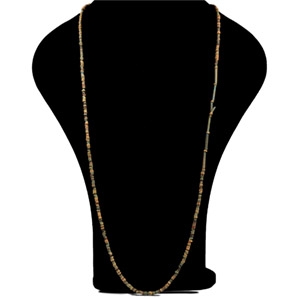
Egyptian Faience Mummy Bead Necklace
Late Period, 664-332 B.C.Sold for (Inc. bp): £46
Mainly annular beads in various shades with tubular beads to one section. 14 grams, 100 cm
From an old English deceased estate. Acquired on the Yorkshire art market in the early 1990s. Property of a London, UK, collector. This lot is accompanied by an illustrated lot declaration signed by the Head of the Antiquities Department, Dr Raffaele D’Amato. -
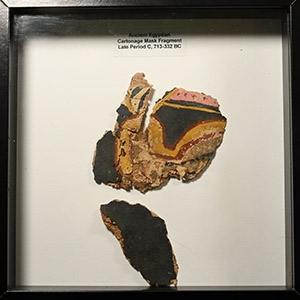
Egyptian Painted Cartonnage Cartouche Fragment
Late-Ptolemaic Period, 664-31 B.C.Sold for (Inc. bp): £143
Two large moulded fragments of cartonnage with polychrome painted decoration; mounted in a glazed frame. 824 grams including frame, 25.2 x 25.2 cm
Ex M.S. Ciappara collection, Norfolk, UK, 1939-1950. This lot is accompanied by an illustrated lot declaration signed by the Head of the Antiquities Department, Dr Raffaele D’Amato. -
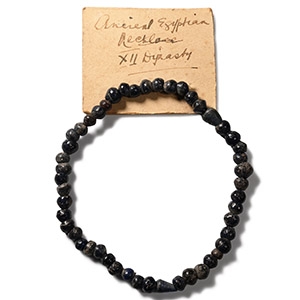
Egyptian Blue Glass Bead Bracelet
New Kingdom, circa 1400 B.C. or laterSold for (Inc. bp): £221
Mainly blue glass biconvex and spherical beads; with old collector's card erroneously dated 'Ancient Egyptian Necklace. XII Dynasty'. 18 grams, 24 cm long
From a 19th century English collection. Ex Helios Gallery, Worcestershire, UK, 2011. Ian Wilkinson collection, Nottinghamshire, UK, formed since 1985. Accompanied by an old handwritten identification card. This lot is accompanied by an illustrated lot declaration signed by the Head of the Antiquities Department, Dr Raffaele D’Amato. -
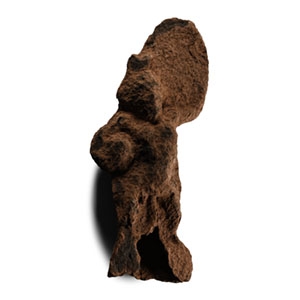
Romano-Egyptian Terracotta Figurine
1st century B.C.-2nd century A.D.Sold for (Inc. bp): £65
Hollow-formed figure modelled in the half-round with left arm raised and right arm bent carrying a vessel; piled hairstyle with lunar motif above; hole to the reverse. 220 grams, 19.5 cm
The Erotica Collection Christian von Faber-Castell, Küsnacgt ZH, Switzerland, since the late 1970s. This lot is accompanied by an illustrated lot declaration signed by the Head of the Antiquities Department, Dr Raffaele D’Amato.
Christian von Faber-Castell (born 1950) is a renowned German entrepreneur and art collector, best known as a member of the prominent Faber-Castell family, famed for their iconic writing instruments. A passionate advocate for art and culture, Christian von Faber-Castell curated an extensive and diverse private collection of erotica, spanning centuries and cultures. His collection reflects a deep appreciation for the interplay of beauty, sensuality, and artistic expression, bringing together rare and unique works that explore themes of intimacy and human connection. Pieces from this collection have been featured in notable exhibitions and are celebrated for their artistic and historical significance. This offering represents a rare opportunity to acquire works from one of the most fascinating and eclectic private collections of its kind. -
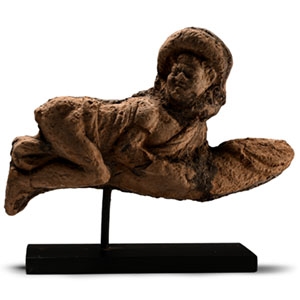
Romano-Egyptian Terracotta Figurine of a Slave with Enormous Phallus
3rd century B.C.-3rd century A.D.Sold for (Inc. bp): £260
Modelled in the round hollow-formed figure of a crouching male gripping his exaggerated phallus and looking over his right shoulder; mounted on a custom-made stand. 284 grams total, 11.6 cm wide including stand
The Erotica Collection Christian von Faber-Castell, Küsnacgt ZH, Switzerland, since the late 1970s. This lot is accompanied by an illustrated lot declaration signed by the Head of the Antiquities Department, Dr Raffaele D’Amato.
Christian von Faber-Castell (born 1950) is a renowned German entrepreneur and art collector, best known as a member of the prominent Faber-Castell family, famed for their iconic writing instruments. A passionate advocate for art and culture, Christian von Faber-Castell curated an extensive and diverse private collection of erotica, spanning centuries and cultures. His collection reflects a deep appreciation for the interplay of beauty, sensuality, and artistic expression, bringing together rare and unique works that explore themes of intimacy and human connection. Pieces from this collection have been featured in notable exhibitions and are celebrated for their artistic and historical significance. This offering represents a rare opportunity to acquire works from one of the most fascinating and eclectic private collections of its kind. -
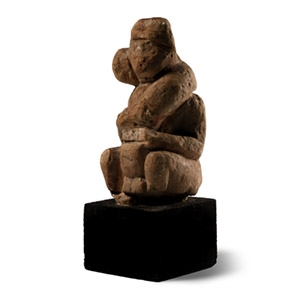
Romano-Egyptian Limestone Figure of a Seated Male with Gigantic Phallus
1st century B.C.-2nd century A.D.Sold for (Inc. bp): £72
Modelled in the round seated figure with phallus slung over his shoulders; mounted on a custom-made stand. 207 grams, 10.1 cm (235 grams total, 12.8 cm including stand)
The Erotica Collection Christian von Faber-Castell, Küsnacgt ZH, Switzerland, since the late 1970s. This lot is accompanied by an illustrated lot declaration signed by the Head of the Antiquities Department, Dr Raffaele D’Amato.
Christian von Faber-Castell (born 1950) is a renowned German entrepreneur and art collector, best known as a member of the prominent Faber-Castell family, famed for their iconic writing instruments. A passionate advocate for art and culture, Christian von Faber-Castell curated an extensive and diverse private collection of erotica, spanning centuries and cultures. His collection reflects a deep appreciation for the interplay of beauty, sensuality, and artistic expression, bringing together rare and unique works that explore themes of intimacy and human connection. Pieces from this collection have been featured in notable exhibitions and are celebrated for their artistic and historical significance. This offering represents a rare opportunity to acquire works from one of the most fascinating and eclectic private collections of its kind.

