-
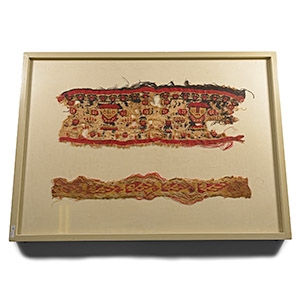
Coptic Decorative Textile with Figures
6th-8th century A.D.Sold for (Inc. bp): £312
Linen and wool, Quadratic textile fragment with brown frame, several stylised human and zoomorphic figures as well as vegetal elements in front of a yellow background; another, smaller brown frame with green background and further figures, probably a segmentum from a tunic, fixed on linen, minor lacunae. 2.14 kg total, 65 x 47 cm
London art market, 2009. This lot is accompanied by an illustrated lot declaration signed by the Head of the Antiquities Department, Dr Raffaele D’Amato. -
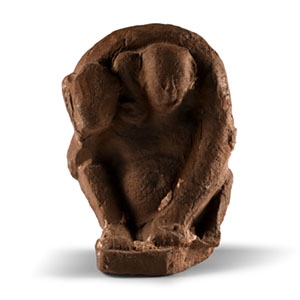
Egyptian Terracotta Ithyphallic Figurine of Harpocrates
Ptolemaic Period, 3rd-2nd century B.C.Sold for (Inc. bp): £111
Naked ithyphallic youthful Harpocrates seated, with shaved head and side-lock, his enormous phallus wrapped around on his neck. 160 grams, 84 mm
The Erotica Collection Christian von Faber-Castell, Küsnacgt ZH, Switzerland, since the late 1970s. This lot is accompanied by an illustrated lot declaration signed by the Head of the Antiquities Department, Dr Raffaele D’Amato.
Ithyphallic figures in limestone, terracotta, gypsum and faience are relatively common in the 6th to 3rd-century B.C. deposits of Lower Egypt. Despite considerable variations, the group consistently depicts a seated ithyphallic plump baby with shaved head (or skull cap) and side-lock. They were identified by Gutch as Khonsu-Horus figures and subsequently by Bailey as Harpocrates, the Greek name for young Horus. Christian von Faber-Castell (born 1950) is a renowned German entrepreneur and art collector, best known as a member of the prominent Faber-Castell family, famed for their iconic writing instruments. A passionate advocate for art and culture, Christian von Faber-Castell curated an extensive and diverse private collection of erotica, spanning centuries and cultures. His collection reflects a deep appreciation for the interplay of beauty, sensuality, and artistic expression, bringing together rare and unique works that explore themes of intimacy and human connection. Pieces from this collection have been featured in notable exhibitions and are celebrated for their artistic and historical significance. This offering represents a rare opportunity to acquire works from one of the most fascinating and eclectic private collections of its kind. -
.jpg)
Large Egyptian Steatite Scarab of Thutmose III
New Kingdom, 1504-1450 B.C. or laterSold for (Inc. bp): £351
Pierced longitudinally with a detailed carapace, the underside is decorated with the image of a coiled cobra wearing the dual crown of Egypt facing the hieroglyphs giving the throne name of King Thutmose III (mn-ḫpr-RꜤ). 5.29 grams, 28 mm
From the collection of Walter Thomas Gaze Cooper (1895-1980); thence by descent. This lot is accompanied by an illustrated lot declaration signed by the Head of the Antiquities Department, Dr Raffaele D’Amato.
The popularity of this great Egyptian pharaoh was such that his name appeared on scarabs during his reign and into the Late Period. -
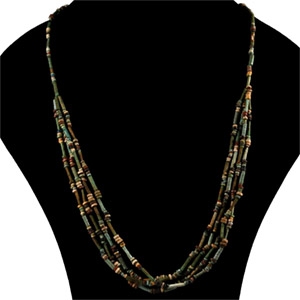
Egyptian Multi-Stranded Mummy Bead Necklace
Late Period, 664-332 B.C.Sold for (Inc. bp): £130
Multi-stranded designer necklace composed of beads of mainly annular and cylindrical types. 26 grams, 76 cm
Acquired before 1979. From the private collection of Mr F.A., South Kensington, London, UK; thence by descent 2014. This lot is accompanied by an illustrated lot declaration signed by the Head of the Antiquities Department, Dr Raffaele D’Amato.
For thousands of years, artisans in Egypt created vibrant ceramics to echo the beauty of rare jewels. These ornaments were created with almost every material, colour, and texture imaginable and they come from across Egypt and beyond: vibrant blue lapis lazuli from Afghanistan, glossy black obsidian from Turkey, and aqua-green turquoise from the Sinai. They were worn in life and, after death, they served as precious ornamentation for mummies. -
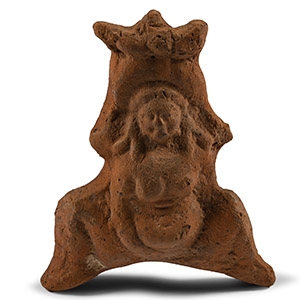
Romano-Egyptian Terracotta Figurine of Baubo
Ptolemaic Period, 2nd-1st century B.C.Sold for (Inc. bp): £221
Modelled as a seated plump fertility figure; the right hand touching the pubic area beneath the rounded abdomen, a garland upon her propoloma and thick braids falling on her shoulders, smooth back with a vent hole. 213 grams, 13 cm
The Erotica Collection Christian von Faber-Castell, Küsnacgt ZH, Switzerland, since the late 1970s. This lot is accompanied by an illustrated lot declaration signed by the Head of the Antiquities Department, Dr Raffaele D’Amato.
Baubo was a minor divinity of the Greek mythology, linked to the cult of Demeter and Persephone. The statuette belongs to the second type of Baubo figurines, widespread in the last Ptolemaic and Roman period in Egypt. The Egyptian Baubo are split into two groups, and this one belongs to the first group depicting a woman seating frontally whilst holding a musical instrument. In some of these figurines her right hand is touching her genitalia. Many of them were used as amulets or as ex-voto. Christian von Faber-Castell (born 1950) is a renowned German entrepreneur and art collector, best known as a member of the prominent Faber-Castell family, famed for their iconic writing instruments. A passionate advocate for art and culture, Christian von Faber-Castell curated an extensive and diverse private collection of erotica, spanning centuries and cultures. His collection reflects a deep appreciation for the interplay of beauty, sensuality, and artistic expression, bringing together rare and unique works that explore themes of intimacy and human connection. Pieces from this collection have been featured in notable exhibitions and are celebrated for their artistic and historical significance. This offering represents a rare opportunity to acquire works from one of the most fascinating and eclectic private collections of its kind. -
.jpg)
Egyptian Orange Carnelian Poppy Head Amulet
New Kingdom, 18th Dynasty, 1550-1292 B.C.Sold for (Inc. bp): £124
Polished and with integral suspension loop. 0.3 grams, 12 mm
Ex UK gallery, early 2000s. This lot is accompanied by an illustrated lot declaration signed by the Head of the Antiquities Department, Dr Raffaele D’Amato.
Amulets in the form of poppies were used to heal and alleviate pain and to ward off death. These types of amulets were also linked to Osiris, the Egyptian deity of agriculture, death, and the afterlife. -
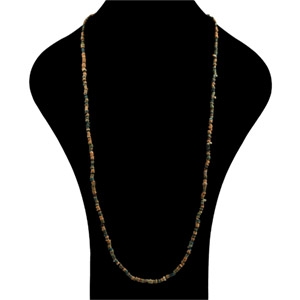
Egyptian Faience Mummy Bead Necklace
Late Period, 664-332 B.C.Sold for (Inc. bp): £78
Mainly annular beads in various shades. 14.6 grams, 90 cm
From an old English deceased estate. Acquired on the Yorkshire art market in the early 1990s. Property of a London, UK, collector. This lot is accompanied by an illustrated lot declaration signed by the Head of the Antiquities Department, Dr Raffaele D’Amato. -
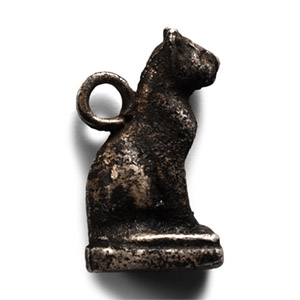
Egyptian Silver Goddess Bastet Cat Amulet
Late-Ptolemaic Period, 664-30 B.C.Sold for (Inc. bp): £234
Seated figure of a cat with pointed ears mounted on a rectangular base with a rounded end; suspension loop on the back. 1.58 grams, 12 mm
From an early 20th century collection. This lot is accompanied by an illustrated lot declaration signed by the Head of the Antiquities Department, Dr Raffaele D’Amato. -
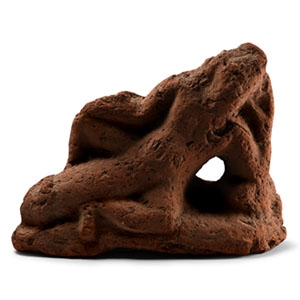
Egyptian Ithyphallic Terracotta Reclining Figure
Ptolemaic Period, 3rd century B.C.Sold for (Inc. bp): £46
Probably depicting young Harpocrates, holding his weight on his left arm, enormous phallus resting between his spread legs, shaved head and side-lock braid. 319 grams, 13 cm vwide
The Erotica Collection Christian von Faber-Castell, Küsnacgt ZH, Switzerland, since the late 1970s. This lot is accompanied by an illustrated lot declaration signed by the Head of the Antiquities Department, Dr Raffaele D’Amato.
A few early Hellenistic terracotta figures show the ithyphallic youth Harpocrates reclining on his phallus, usually depicted (when preserved) with a bald or shaved head and side-lock, sometimes in Macedonian dress. Some in this form have hermaphrodite-like features, although this may be little more than just the representation of a plump baby. Christian von Faber-Castell (born 1950) is a renowned German entrepreneur and art collector, best known as a member of the prominent Faber-Castell family, famed for their iconic writing instruments. A passionate advocate for art and culture, Christian von Faber-Castell curated an extensive and diverse private collection of erotica, spanning centuries and cultures. His collection reflects a deep appreciation for the interplay of beauty, sensuality, and artistic expression, bringing together rare and unique works that explore themes of intimacy and human connection. Pieces from this collection have been featured in notable exhibitions and are celebrated for their artistic and historical significance. This offering represents a rare opportunity to acquire works from one of the most fascinating and eclectic private collections of its kind. -
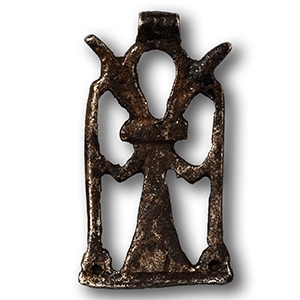
Egyptian Silver Ankh and Was-Sceptre Amulet
Late-Ptolemaic Period, 664-30 B.C. or earlierSold for (Inc. bp): £91
A silver openwork amulet featuring an ankh with outstretched arms holding tall was-sceptres. 0.31 grams, 13 mm
From an early 20th century collection. This lot is accompanied by an illustrated lot declaration signed by the Head of the Antiquities Department, Dr Raffaele D’Amato. -
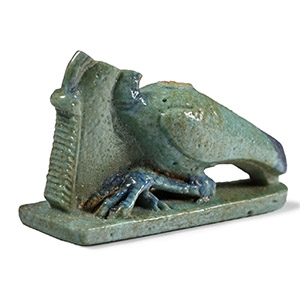
Egyptian Faience Amulet of an Ibis
Late Period, 664-332 B.C.Sold for (Inc. bp): £650
An exquisitely modelled figure of a seated ibis on a trapezoidal-shaped plinth, with its beak resting on the slender feather of Maat; light turquoise glaze for the body, plinth, and feather; blue glaze for the tail feathers, feet and neck; head absent. 3.54 grams, 31 mm
with Bonhams, Knightsbridge, 3 October 2000, no.413. Private collection, Europe. This lot is accompanied by an illustrated lot declaration signed by the Head of the Antiquities Department, Dr Raffaele D’Amato.
The ibis was considered sacred to the god Thoth. It is likely that the popularity of amulets depicting an ibis resting its beak on the feather of Maat in the funerary sphere is connected to Thoth's role as the recorder of the final judgment of the deceased by the divine tribunal. This tribunal determined if the deceased had lived a virtuous life and could enter the Underworld. This was visually represented by the deceased's heart placed on scales with the feather of Maat; if the heart and feather balanced, eternity was assured. -
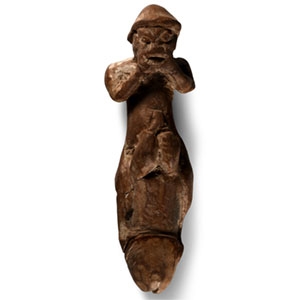
Egyptian Terracotta Ithyphallic Figurine of an Actor with Mask
Ptolemaic Period, 3rd-2nd century B.C.Sold for (Inc. bp): £221
The actor represented wearing a grotesque mask, with his legs flanking his enormous phallus and genitals above. 116 grams, 13.6 cm
The Erotica Collection Christian von Faber-Castell, Küsnacgt ZH, Switzerland, since the late 1970s. This lot is accompanied by an illustrated lot declaration signed by the Head of the Antiquities Department, Dr Raffaele D’Amato.
From the 4th century B.C. onwards, small-scale sculptures developed a rich repertoire of grotesque types. These so-called grotesques were an enhancement of the Hellenistic interest in the human body and its weaknesses and imperfections by depicting disfigured individuals. According to some scholars, terracotta (and bronze) figurines of this kind were life-like representations of beggars and others who gathered at big feasts in temples or at the houses of the wealthy. In the latter case, they indicated the importance and wealth of the host because the more beggars an event attracted, the greater the fortune of the event organiser. By implication, the bronze and terracotta portraits of these marginal people could have become symbols and charms of good luck that would have been placed in private houses. This image in particular, has evolved from the ithyphallic Harpocrates terracottas. Christian von Faber-Castell (born 1950) is a renowned German entrepreneur and art collector, best known as a member of the prominent Faber-Castell family, famed for their iconic writing instruments. A passionate advocate for art and culture, Christian von Faber-Castell curated an extensive and diverse private collection of erotica, spanning centuries and cultures. His collection reflects a deep appreciation for the interplay of beauty, sensuality, and artistic expression, bringing together rare and unique works that explore themes of intimacy and human connection. Pieces from this collection have been featured in notable exhibitions and are celebrated for their artistic and historical significance. This offering represents a rare opportunity to acquire works from one of the most fascinating and eclectic private collections of its kind.

