-
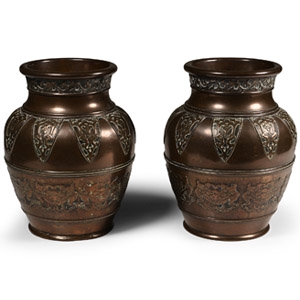
Chinese Bronze Vase Pair
18th-19th century A.D.Sold for (Inc. bp): £117
Each a barrel-shaped jar with scrolling decoration, lappets and dragons' heads. 2.66 kg total, 15.5 cm each
From the collection of the famous Eve Clarke. This lot is accompanied by an illustrated lot declaration signed by the Head of the Antiquities Department, Dr Raffaele D’Amato. -
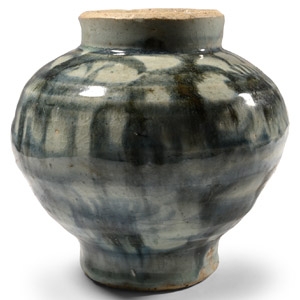
Chinese Glazed Blue and White Jar with Peony
Provincial, 15th-17th century A.D.Sold for (Inc. bp): £234
A glazed provincial ceramic footed jar with carinated profile, deep shoulder and narrow raised rim, dense floral motifs. 1.3 kg, 17.5 cm high
From a West Country, UK, collection, 1990s. This lot is accompanied by an illustrated lot declaration signed by the Head of the Antiquities Department, Dr Raffaele D’Amato. -
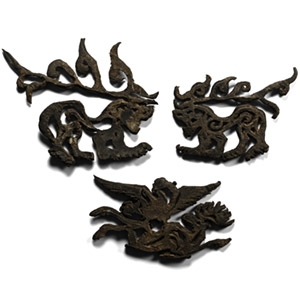
Ordos Leather Applique Group
4th-3rd century B.C.Sold for (Inc. bp): £572
Comprising three worked leather openwork figures: two stags each with scrolled tines to the antlers, crane with spread wings settling on a branch. 6.03 grams total, 59-73 mm
Ex Shinya Tagava, Honcho, Tokyo, Japan, pre-1986. This lot is accompanied by an illustrated lot declaration signed by the Head of the Antiquities Department, Dr Raffaele D’Amato. -
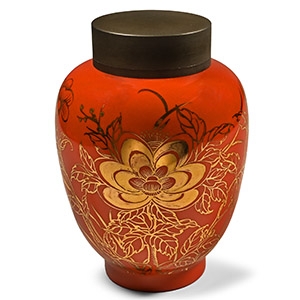
Japanese Vessel with Tea
20th-21st century A.D.Sold for (Inc. bp): £20
Glazed ceramic tea caddy with gilt chrysanthemum ornament, in a silk-lined wooden presentation box with epigraphic paper tape and chop seal, tavvy-woven band. 559 grams, 14.6 cm (1 kg total, 17.5 x 17.5 cm including case)
Acquired between 1965-2020. Private collection, London. This lot is accompanied by an illustrated lot declaration signed by the Head of the Antiquities Department, Dr Raffaele D’Amato. -
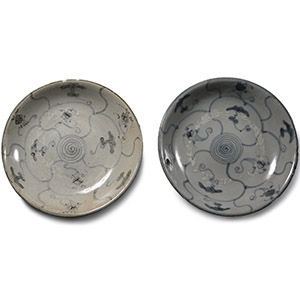
Tek Sing Treasure Shipwreck Glazed Blue and White Plate Pair
Early 19th century A.D.Sold for (Inc. bp): £85
Comprising two shallow pates with painted tendrils and floral designs to both faces. 463 grams total, 15.3-15.5 cm
Ex Nagel Auction, with official Tek Sing Treasure labels to verso. Accompanied by an illustrated information sheet about the Tek Sing shipwreck. This lot is accompanied by an illustrated lot declaration signed by the Head of the Antiquities Department, Dr Raffaele D’Amato.
The Tek Sing (True Star) wreck is one of the famous recovery stories of the 20th century. Sailing from the port of Xiamen (then known as Amoy) in February 1822 the vessel Tek Sing was bound for Jakarta, Indonesia laden with porcelain goods and 1600 Chinese emigrants. The captain decided to pass through the Gaspar Strait, between the Bangka-Belitung Islands, and ran aground on a reef. The vessel sank in about 100 feet of water. The next morning, February 7, an English East Indiaman captained by James Pearl, passing through the same waters, encountered debris and some survivors and managed to rescue about 190 of the latter. -
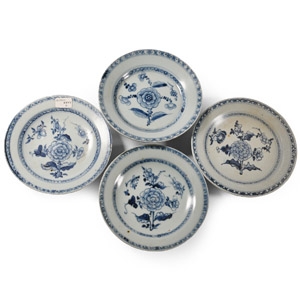
Tek Sing Treasure Shipwreck Glazed Blue and White Dish Set
Early 19th century A.D.Sold for (Inc. bp): £143
Each a shallow dish with flowers to the centre with two decorative borders surrounding. 1 kg total, 16 cm each
Ex Nagel Auction, with official Tek Sing Treasure labels to verso. Accompanied by an illustrated information sheet about the Tek Sing shipwreck. This lot is accompanied by an illustrated lot declaration signed by the Head of the Antiquities Department, Dr Raffaele D’Amato.
The Tek Sing (True Star) wreck is one of the famous recovery stories of the 20th century. Sailing from the port of Xiamen (then known as Amoy) in February 1822 the vessel Tek Sing was bound for Jakarta, Indonesia laden with porcelain goods and 1600 Chinese emigrants. The captain decided to pass through the Gaspar Strait, between the Bangka-Belitung Islands, and ran aground on a reef. The vessel sank in about 100 feet of water. The next morning, February 7, an English East Indiaman captained by James Pearl, passing through the same waters, encountered debris and some survivors and managed to rescue about 190 of the latter. -
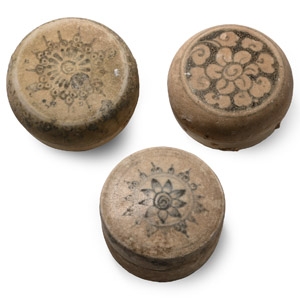
Hoi An Cargo Shipwreck Glazed Blue and White Lidded Box Collection
15th century A.D.Sold for (Inc. bp): £130
Comprising three powder boxes with painted floral motifs to the lid, two with a decorative border to the edge. 284 grams total, 58-63 mm
Ex Butterfield and Butterfield auction with official Hoi An Hoard labels. Accompanied by an illustrated information sheet about the Hoi An shipwreck. This lot is accompanied by an illustrated lot declaration signed by the Head of the Antiquities Department, Dr Raffaele D’Amato.
In the mid 15th century a freighting junk loaded with fine Vietnamese pottery sank in an area of the South China Sea called the 'Dragon’s Embrace.' This vessel is part of the shipwreck cargo recovered off the coast of Vietnam at Hoi An. The ceramics themselves were probably made in the area of Chu Dau. -
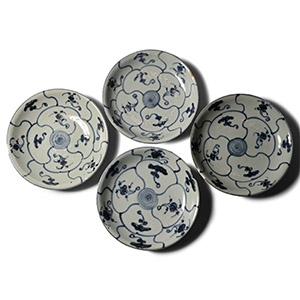
Tek Sing Treasure Shipwreck Glazed Blue and White Dish Set
Early 19th century A.D.Sold for (Inc. bp): £156
Each a shallow dish with tendrils and flowers to the upper and lower faces, central spiral. 957 grams total, 14.8-15.7 cm
Ex Nagel Auction, with official Tek Sing Treasure labels to verso. Accompanied by an illustrated information sheet about the Tek Sing shipwreck. This lot is accompanied by an illustrated lot declaration signed by the Head of the Antiquities Department, Dr Raffaele D’Amato.
The Tek Sing (True Star) wreck is one of the famous recovery stories of the 20th century. Sailing from the port of Xiamen (then known as Amoy) in February 1822 the vessel Tek Sing was bound for Jakarta, Indonesia laden with porcelain goods and 1600 Chinese emigrants. The captain decided to pass through the Gaspar Strait, between the Bangka-Belitung Islands, and ran aground on a reef. The vessel sank in about 100 feet of water. The next morning, February 7, an English East Indiaman captained by James Pearl, passing through the same waters, encountered debris and some survivors and managed to rescue about 190 of the latter. -
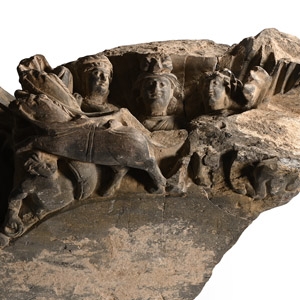
Gandharan Schist Frieze Fragment
2nd-4th century A.D. or laterSold for (Inc. bp): £286
Carved corbel or column fragment with scrolled foliage to three faces and socket to upper face to accept a statue; three youthful figures - two females flanking a larger male - each wearing the hair dressed in a topknot, with radiating sunburst behind them and below a team of two horses galloping left with empty saddles and their reins flung back towards the central character, probably a charioteer. 13.3 kg, 37 cm wide
London, UK, collection, 1990s. This lot is accompanied by an illustrated lot declaration signed by the Head of the Antiquities Department, Dr Raffaele D’Amato. -
.jpg)
Indus Valley Etched Orange Carnelian Necklace Bead Group
Circa 2nd millennium B.C.Sold for (Inc. bp): £494
Comprising polished beads in various sizes with etched geometric designs. 7.68 grams total, 3-15 mm
Ex UK gallery, early 2000s. This lot is accompanied by an illustrated lot declaration signed by the Head of the Antiquities Department, Dr Raffaele D’Amato.
Etched carnelian beads are characteristic of the Indus Valley culture and have been produced since the third millennium B.C. They are a typical product of the Harappa culture, but they are also attested in later millennia and produced elsewhere in Southeast Asia. The oldest specimens come from the Indus Valley and from Mesopotamia. A few specimens were found in the so-called royal cemetery of Ur, where they were identified in the excavation publication as coming from India. -
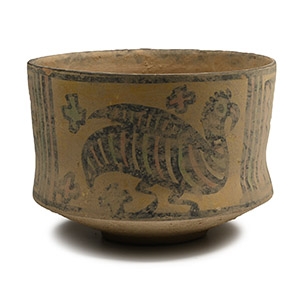
Indus Valley Painted Terracotta Vessel with Animals
3rd-2nd millennium B.C.Sold for (Inc. bp): £286
Squat in profile with slightly waisted sidewall and carination, narrow foot; painted polychrome panels with birds and geometric motifs. 305 grams, 11.6 cm
From the private collection of the late David Gold, 1990-2000s. This lot is accompanied by an illustrated lot declaration signed by the Head of the Antiquities Department, Dr Raffaele D’Amato. -
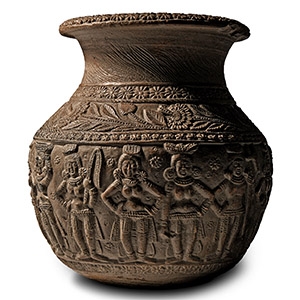
Chandraketugarh Ceramic Vessel with Seated Gods
2nd century B.C.-1st century A.D.Sold for (Inc. bp): £572
Globular-bodied with broad shoulder and neck, everted rim; the upper body decorated in relief with rosettes, phytomorphic and ropework bands, and a frieze presenting a dynamic procession of facing bare-breasted women wearing extravagant earrings, neck ornaments, arm- and leg-bangles and translucent lungis revealing their genitalia; some holding staffs, axes and other weapons, some wearing headdresses or holding vessels on their heads; flower-heads in the field; rim and sidewall chipped. 422 grams, 16 cm wide
Private collection, 1989. Acquired on the UK art market. This lot is accompanied by an illustrated lot declaration signed by the Head of the Antiquities Department, Dr Raffaele D’Amato.

