-
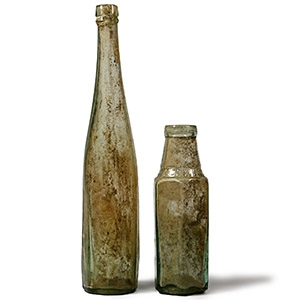
Anglo-Zulu War 'Battle of Khambula' Glass Bottles
29 March 1879 A.D.Sold for (Inc. bp): £33
Aqua glass bottle with pontil base, ten-sided body, narrow neck hexagonal-section bottle with broad mouth. 1.14 kg total, 20.8-36 cm
Found by Zulu natives, Khambula, South Africa, 1990s-early 2000s. Ian Wilkinson collection, Nottinghamshire, UK, formed since 1985. This lot is accompanied by an illustrated lot declaration signed by the Head of the Antiquities Department, Dr Raffaele D’Amato.
Following defeats by the Zulu army at Isandlwana and Hiobane, the British were desperate for a victory, which they secured at Khambula. -
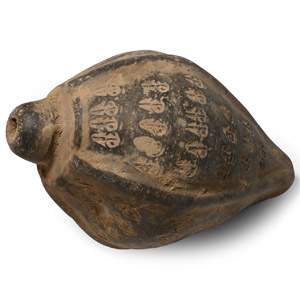
Byzantine 'Greek Fire' Ceramic Fire Bomb or Hand Grenade
9th-11th century A.D.Sold for (Inc. bp): £195
A piriform missile with domed filler-hole, four raised lugs to the body with impressed lozenges in between, intended to be filled with explosive liquid and wick, used as a hand grenade. 497 grams, 14 cm
From an important specialist collection, London, UK, 1990s onwards. Accompanied by an academic paper by military specialist Dr Raffaele D'Amato, dated 15 July 2019 and titled 'Eastern Roman Empire - Greek Fire Bomb or Hand Grenade (μεσαίον kακάβιον) 9th-11th century AD'. This lot is accompanied by an illustrated lot declaration signed by the Head of the Antiquities Department, Dr Raffaele D’Amato.
Cf. Arendt, W. I., Granaten des 13-14. Jahrhunderts, die an der Wolga gefunden sind, Zeitschrift fur Historische Waffen-und Kostumkunde, 11 (1926-8), p.42; cf. Arendt, W., Die Spharisch-konischen Gefäße aus Gebranntem Ton, ibid; cf. Ayalon, D., Gunpowder and Firearms in the Mamluk Kingdom, London, 1956, p.16. Apart from the use of siphons or manual flame-throwers called cheirosiphona, special corps of Roman soldiers employed terracotta grenades, in the form of small jars, abundantly evidenced in archaeological excavations. They were called μεσαία kακαβιά or κυτροκακάβια where the former had a bulbous shape and the latter a more cylindrical form. -
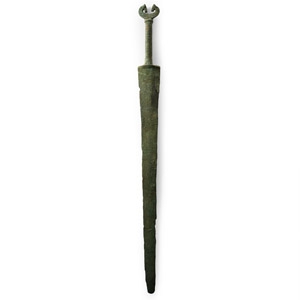
Luristan Bronze Blade
8th century B.C.Sold for (Inc. bp): £364
Pointed blade with shallow midrib increasing in width near the ricasso, cast in one with the hilt, square shoulders, circular hilt with horizontal grooves, pommel with facing horses heads. 167 grams, 44 cm
Acquired 1980-2015. Ex Abelita family collection. This lot is accompanied by an illustrated lot declaration signed by the Head of the Antiquities Department, Dr Raffaele D’Amato.
The skill of the Iranian metalworkers of this period is reflected in the numerous ornate pommels in bronze and iron found on weapons from Luristan and Iron Age Talish graves, which show close connections with the Lelvar culture of Southern Caucasus. -
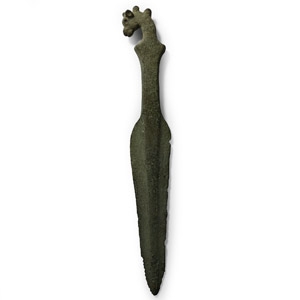
Luristan Bronze Miniature Dagger
12th-11th century B.C.Sold for (Inc. bp): £124
Short dagger with leaf-shaped blade, with a slightly pronounced midrib, expanded handle terminating in an equine protome. 294 grams, 25.2 cm
Acquired 1980-2015. Ex Abelita family collection. This lot is accompanied by an illustrated lot declaration signed by the Head of the Antiquities Department, Dr Raffaele D’Amato.
Miniature weapons such as this one apparently functioned as models for actual weapons and may have had a cultic purpose. The hilt of this dagger, if effectively used, should have been flanged for the filling with organic material. Unfortunately, only a few miniature tools and weapons have been found in the archaeological context of the graves, which does not offer clear elements of understanding and comparison. -
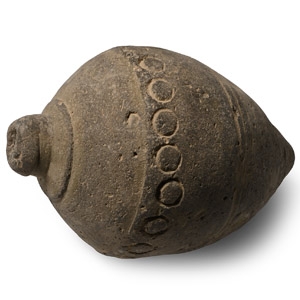
Byzantine 'Greek Fire' Ceramic Fire Bomb or Hand Grenade
9th-11th century A.D.Sold for (Inc. bp): £65
A large piriform missile with domed filler-hole, a band of impressed annulets to the shoulder and circumferential bands to the lowed body, intended to be filled with explosive liquid and wick, used as a hand grenade. 957 grams, 15.2 cm
From an important specialist collection, London, UK, 1990s onwards. Accompanied by an academic paper by military specialist Dr Raffaele D'Amato, dated 15 July 2019 and titled 'Eastern Roman Empire - Greek Fire Bomb or Hand Grenade (μεσαίον kακάβιον) 9th-11th century AD'. This lot is accompanied by an illustrated lot declaration signed by the Head of the Antiquities Department, Dr Raffaele D’Amato.
Cf. Arendt, W. I., Granaten des 13-14. Jahrhunderts, die an der Wolga gefunden sind, Zeitschrift fur Historische Waffen-und Kostumkunde, 11 (1926-8), p.42; cf. Arendt, W., Die Spharisch-konischen Gefäße aus Gebranntem Ton, ibid; cf. Ayalon, D., Gunpowder and Firearms in the Mamluk Kingdom, London, 1956, p.16. Apart from the use of siphons or manual flame-throwers called cheirosiphona, special corps of Roman soldiers employed terracotta grenades, in the form of small jars, abundantly evidenced in archaeological excavations. They were called μεσαία kακαβιά or κυτροκακάβια where the former had a bulbous shape and the latter a more cylindrical form. -
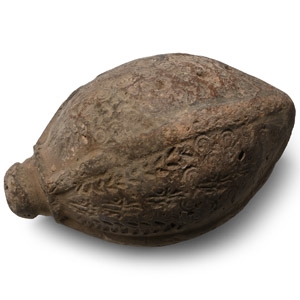
Byzantine 'Greek Fire' Ceramic Fire Bomb or Hand Grenade
9th-11th century A.D.Sold for (Inc. bp): £91
A large piriform missile with raised lugs and impressed circle-and-dot motifs, intended to be filled with explosive liquid and wick, used as a hand grenade. 708 grams, 16 cm
From an important specialist collection, London, UK, 1990s onwards. Accompanied by an academic paper by military specialist Dr Raffaele D'Amato, dated 15 July 2019 and titled 'Eastern Roman Empire - Greek Fire Bomb or Hand Grenade (μεσαίον kακάβιον) 9th-11th century AD'. This lot is accompanied by an illustrated lot declaration signed by the Head of the Antiquities Department, Dr Raffaele D’Amato. -
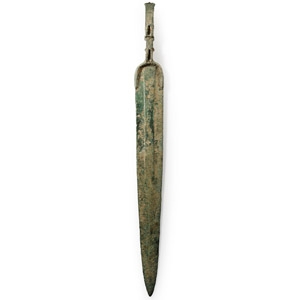
Luristan Bronze Sword
Late 2nd-early 1st millennium B.C.Sold for (Inc. bp): £234
The grip decorated with horizontal flat grooves and raised aediculae, crescentic guard, long blade with ridged flat mid-grip. 508 grams, 51.1 cm
Acquired 1980-2015. Ex Abelita family collection. This lot is accompanied by an illustrated lot declaration signed by the Head of the Antiquities Department, Dr Raffaele D’Amato.
This category of swords has been classified by Khorasani as 'swords with a mushroom pommel' and are usually characterised by a solid-cast hilt with a penannular guard, a ribbed or variously decorated grip and a conical hollow-cast mushroom pommel, here lost. Usually the blade is multi-fullered and tapers to a sharp tip. Moorey considers them to be from the end of the 2nd millennium B.C. Gorelik extends the dating to the 8th-7th century B.C. -
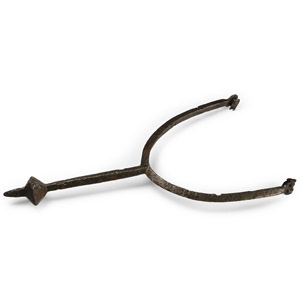
Norman Iron Prick Spur
11th-12th century A.D.Sold for (Inc. bp): £78
With rectangular finials, D-section frame, lozenge-section shank, facetted bulb and conical prick. 75 grams, 19.5 cm
Acquired from Coincraft, London, UK. From the private collection of Kenneth Machin (1936-2020), Buckinghamshire, UK; with collection no.M35; his collection of antiquities and natural history was formed since 1948; thence by descent. Accompanied by an original certificate of authenticity from Coincraft. This lot is accompanied by an illustrated lot declaration signed by the Head of the Antiquities Department, Dr Raffaele D’Amato. -
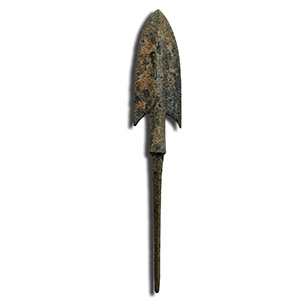
Luristan Bronze Arrowhead
13th-7th century B.C.Sold for (Inc. bp): £20
Heater-shaped with barbs to the rear and midrib developing to a tang. 30 grams, 15 cm
Acquired 1980-2015. Ex Abelita family collection. This lot is accompanied by an illustrated lot declaration signed by the Head of the Antiquities Department, Dr Raffaele D’Amato. -
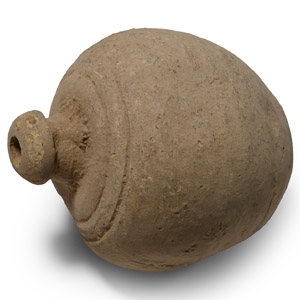
Byzantine 'Greek Fire' Ceramic Fire Bomb or Hand Grenade
9th-11th century A.D.Sold for (Inc. bp): £52
Bulbous missile with domed filler hole, circumferential double band above the shoulder, intended to be filled with explosive liquid and wick, used as a hand grenade. 388 grams, 10.6 cm
From an important specialist collection, London, UK, 1990s onwards. Accompanied by an academic paper by military specialist Dr Raffaele D'Amato, dated 15 July 2019 and titled 'Eastern Roman Empire - Greek Fire Bomb or Hand Grenade (μεσαίον kακάβιον) 9th-11th century AD'. This lot is accompanied by an illustrated lot declaration signed by the Head of the Antiquities Department, Dr Raffaele D’Amato.
Apart from the use of siphons or manual flame-throwers called cheirosiphona, special corps of Roman soldiers employed terracotta grenades, in the form of small jars, abundantly evidenced in archaeological excavations. They were called μεσαία kακαβιά or κυτροκακάβια where the former had a bulbous shape and the latter a more cylindrical form. -
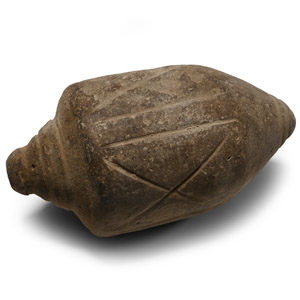
Turco-Mongol 'Greek Fire' Ceramic Fire Bomb or Hand Grenade
14th-15th century A.D.Sold for (Inc. bp): £59
A hollow vessel with cylindrical body, short neck and domed mouth, band of X-motifs and vertical lines to the body; intended to be filled with explosive liquid and a wick, and used as a hand grenade. 1.05 kg, 18 cm
From an important specialist collection, London, UK, 1990s onwards. This lot is accompanied by an illustrated lot declaration signed by the Head of the Antiquities Department, Dr Raffaele D’Amato. -
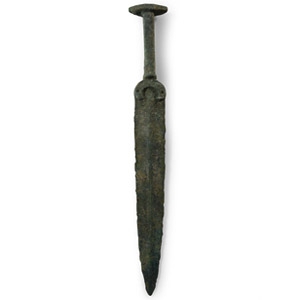
Luristan Bronze Dagger
12th century B.C.Sold for (Inc. bp): £338
The blade with raised central shallow rib and with separated crescent quillon, fitted with an integral rectangular-section lentoid pommel. 165 grams, 30.5 cm
Acquired 1980-2015. Ex Abelita family collection. This lot is accompanied by an illustrated lot declaration signed by the Head of the Antiquities Department, Dr Raffaele D’Amato.
The men who built the gravestones found in Luristan in the Middle Bronze Age, favoured offensive weaponry: bow, dagger, sword, spear, and javelin. The oldest daggers consisted of a blade and a wooden hilt. The blades were cast together with the tang and regularly featured a groove in the middle. Over time, during the Late Bronze Age, in addition to hilts filled with organic material, the daggers in which the hilt was cast in one piece with the blade developed.

