
Auction Highlights
-
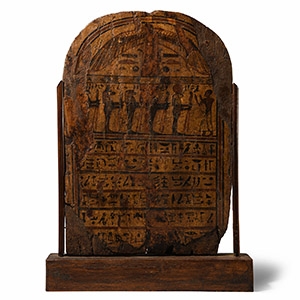
Egyptian Wooden Stela for Pa-di-Amun-(em)-ipat with Ra-Horakhty
Sold for (Inc. bp): £15,600
Arch-topped and composed of two vertical boards, coated with gesso and skilfully painted on one side; the lunette decorated with a winged sun-disc and two pendant uraei; the central vignette depicting the deceased worshipping the falcon-headed god Ra-Horakhty with the Four Sons of Horus standing behind, each with their name written above; the lower register with six lines of hieroglyphic text providing an offering formula for the benefit of the deceased: Transliteration of the hieroglyphs: 1) ḥtp-dı-͗nsw rꜤ-ḥr-Ꜣḫtı͗nṯr Ꜥ nb pt sḥḏ [.....] wsır͗ ẖntt [ım͗ntt?] 2) nṯr Ꜥ nb Ꜣbḏw dı⸗͗f pr.t-ḫrw t ḥnḳt kꜢ Ꜣpd [....] ḫt nb(t) (n) fr(t) wꜢbt […] 3) ḫt nbt nḏm dı⸗͗f ḥtpw ḏfꜢw [...]f ḫꜢ m t dı⸗͗f ḫꜢ m 4) ḥnḳt dı⸗͗f ẖꜢ ır͗p [...] dı⸗͗f ḫꜢ m ı͗[...] dı⸗͗f ḫꜢ ı(͗Ꜣ)r(r)t dı⸗͗f 5) m snṯr ḥr ḫꜢwt [...] ḳrs nfr ḥr ım͗nt nfr 6) n [..] wsır͗ [......] pꜢ-dı-͗ım͗n(m) ıp͗ Ꜣ.t ms (n) ḫꜢ [....] Translation: 1) An offering that the king and Ra-Horakhty, Great God, Lord of Heaven, the illuminated [...] Osiris Foremost [of the West?] 2) Great God, Lord of Abydos (that) he may give a voice-offering (of) bread, beer, oxen, and fowl […] everything good and pure […] 3) everything sweet, he gives offerings of provisions […] a thousand of bread, he gives a thousand of 4) beer, he gives a thousand of wine […], he gives a thousand of vines, he gives a thousand of 5) incense on the altar […] a good burial in the beautiful West 6) for […] the Osiris[…] Pa-di-Amun-(em)-ipat born (to) Kha[…]; on the verso, an old handwritten collection label reading: 'From Harding & Sm[ith] Collection Sale Sotheby 2 Nov 1922 L.N. 234. A families[sic] stele, arched top, with the deceased worshipping a standing Horus attended by the four Children of Horus and six horizontal lines of inscription in colour. SP/10a'; mounted in a custom-made wooden frame. -
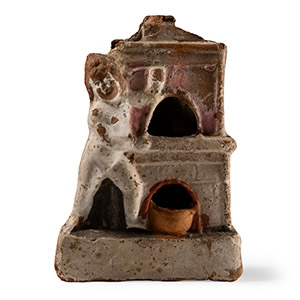
Romano-Egyptian Terracotta Figure of Eros
Sold for (Inc. bp): £5,850
Depicted nude in a dynamic pose with his legs apart and the weight of the body upon his right leg, standing in front of a two storey structure, probably an oven; his left arm raised and right arm extended in front of his torso and resting on the edge of the structure; the oven painted pink at the top and white at the bottom with an offering receptacle at floor level. -
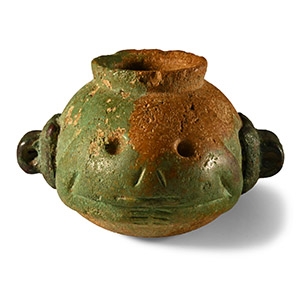
Egyptian Indurated Limestone Frog-Shaped Cosmetic Vessel
Sold for (Inc. bp): £9,750
Squat ovoid in profile, modelled with the legs folded beneath the body, with hollow socket eyes, flared rim to mouth; copper lug on either side. -
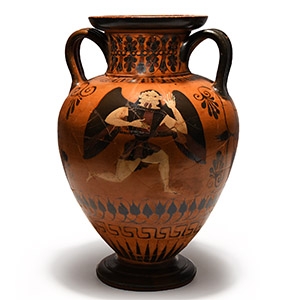
Attic Black-Figure Neck-Amphora with Gorgon and Quadriga Attributed to the Swing Painter
Sold for (Inc. bp): £41,600
With inverted echinus lip and tall neck, a ribbed handle to each side with coiling lotus buds and palmettes beneath the handles; Side a) a running winged Gorgon depicted frontally, dressed in a black and red chiton; Side b) an aristocratic warrior wearing a Chalcidian helmet and driving a quadriga, the two central horses superimposed, the other two turned outward; a frieze of lotus buds and a band Greek key motifs below, the neck decorated with red and black palmettes, and elongated lotus blossoms; restored. -
.jpg)
Attic Red-Figure Bell Krater with Drunken Male Revellers Attributed to the Kadmos Painter
Sold for (Inc. bp): £32,500
With a high foot, laurel wreath encircling the neck, checkerboard and meander patterns alternating around the lower body, roundels of tongue motif to the handles with palmettes and tendrils below; two red-figure scenes to the body: Side a: a high-quality depiction of a kōmos composed of five figures, including a young man holding a torch, a double flute player next to three dancers, all possibly followers of Dionysus; Side b: three draped figures conversing comprising a central female figure between two opposed male figures, one holding a staff; two old labels: one with 3061-133 on the inner rim, and 113/2 (believed to be an old Christie's lot label from the 1960s by Richard Falkiner) on the sidewall, further old accession numbers 321 and 35 under the base. -
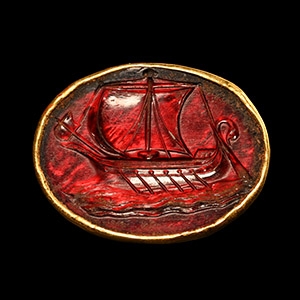
Hellenistic Gold Ring with Galley Gemstone
Sold for (Inc. bp): £29,900
With D-section hollow-formed hoop and flared ellipsoid bezel, set with a Roman intaglio depicting a war galley under sail. -
.jpg)
Roman 'Published' Terracotta Oil Lamp with Fighting Gladiators
Sold for (Inc. bp): £2,340
Grey fabric, broad discus with concentric rings and chamfered shoulder, short nozzle flanked by volute scrolls; scene of two murmillo gladiators in combat, one having fallen to the ground; maker's stamp to the underside 'MAR[..]S'; mounted on a custom-made stand. -
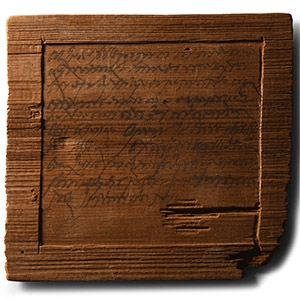
Roman Inked Wooden Tablet for a Contract Between Bassus and Neronianus
Sold for (Inc. bp): £15,600
A reused tablet with a recessed panel on one side, the last tablet of a legal document which consisted of two (diptychon) or three tablets (triptychon); ten black inked lines of New Roman cursive script, the end of a record of a transaction in formulaic legal language, probably a sales contract, between the buyer (emptor) Bassus and a person called Neronianus; traces of text (perhaps in rustic capitals) to the reverse. -
.jpg)
Roman Marble Head of Hercules Wearing the Nemean Lion Skin
Sold for (Inc. bp): £7,800
Modelled with naturalistic features, gazing left, sculpted pupils and strong lids; luxuriant beard and moustache framing the face; strong forehead with tightly formed curls emerging from beneath the lion's skin hood; the hood with clear eye detailing and the mane with regularly arranged tufts; original iron pin to the front of the muzzle; mounted on a custom-made display stand. -
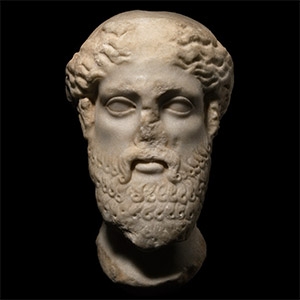
Roman Marble Head of Dionysus
Sold for (Inc. bp): £23,400
From a Greek original, wearing a crown of leaves and corymbs, hair falling in straight lines underneath the diadem; full beard composed of four rows of thick tufts with drilled holes; slightly open mouth with a fleshy lower lip; low cheekbones and hollow cheeks; large almond-shaped eyes with lachrymal duct; mounted on a custom-made display stand. -
.jpg)
'The Anglesey' Romano-British Marble Head of a Celtic Warrior
Sold for (Inc. bp): £7,150
Carved with comma-leaf detailing to the hair, a low brow over almond-shaped eyes, broad triangular nose and thick moustache obscuring the mouth; mounted on a custom-made stand. -
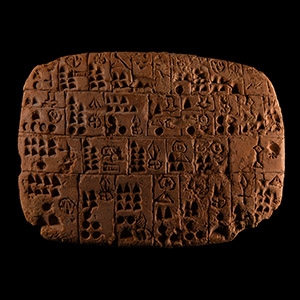
Proto-Sumerian Terracotta Tablet with Archaic Text
Sold for (Inc. bp): £11,050
Lentoid-section slab with incised grid to each face: one with three columns, impressed roundels and crescents, grid and other symbols; the other face with four columns, each cell filled with marks and symbols. -
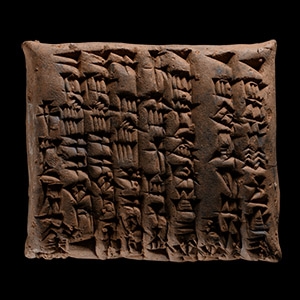
Babylonian Cuneiform Tablet, a Clothes Receipt from Puzur-Akum to Astaqar
Sold for (Inc. bp): £3,640
Pillow-shaped clay tablet with cuneiform text to both broad faces and one edge from Garšana (iv/Šu-Sîn 8?), a receipt for various clothing, with several dedications to the deities Ninsiana, Mami, Dadmuštum and Šubula; Dadmuštum is rarely mentioned, reading: '1 tu ba-tab tuh-hu-um 3-kam us 2 1 tu ša -ga-du ba-tab tug-hu-um / 3-kam us 1 tu ta -ki-ru-um 3-kam us 4 dnin- dsi -an-na 4 tu guz-za 4-kam us 6 2 tu guz-za 4-kam us dma-mi x ? 2 tu guz-za 4-kam us / dda-ad-muš-tum R 8 2 tu niĝ -lam 4-kam us dšu-bu-la ki-la -bi 26 1/3 ma-na 10 2 tu bar-dul us-bar 4 tu sag us-bar 12 5 tu us -bar 4 ma-na 3 tu mug 14 ki !-aš-ta -gar -ta puzur -a-ku-um šu ba-ti 16 iti ki-siki- dnin-a-zu mu ma -gur -mah mu-/dim' translation: '1 (simple) garment batab tuhhum (a kind of fabric?), thrice, medium quality 1 garment šagadu (of linen) batab tuhhum thrice, medium quality 1 garment takirum, thrice, medium quality (for) Ninsiana; 4 tufted garments, in quadruple, medium quality 2 tufted garments, in quadruple, medium quality : (for) Mami 2 tufted garments, in quadruple, medium quality : (for) Dadmuštum. 2 niglam garments, in quadruple, medium quality : (for) Šubula Their weight is 26 1/3 mines. 2 bardul garments (from) the weavers 4 garments if first quality (from) the weavers 5 (simple) garments étoffes (from) the weavers : 4 mines 3 garments in coarse wool Puzur-Akum has received (these garments) from Aštaqar. In the month of Kisiki.Ninazu The year in which the big (ceremonial) boat was built'. -
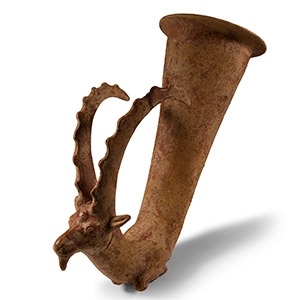
Western Asiatic Ceramic Ibex Rhyton
Sold for (Inc. bp): £7,800
With trumpet-shaped mouth, ibex-shaped finial with curved horns and legs folded beneath the body, spout to the chest; repaired. -
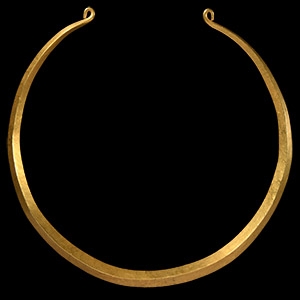
Celtiberian Gold Neck Torc
Sold for (Inc. bp): £14,950
A heavy penannular neck torc with carinated body and tapering coiled terminals. -
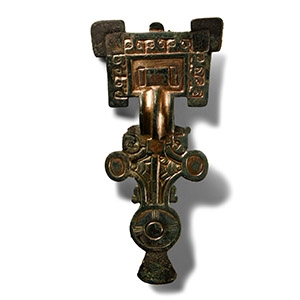
'The Dullingham' Anglo-Saxon Gilt Bronze Great Square-Headed Brooch
Sold for (Inc. bp): £3,120
With trapezoidal headplate, shallow bow, narrow triangular foot and pelta-shaped finial, pin-lugs and catch to the reverse; the headplate with (originally silvered) angled panels to the upper corners and D-shaped lug at the middle of the upper edge; rectangular corner panels interrupting a frieze of Salin's Style I face motifs, inner plain band and raised rectangular panel above the junction with the ribbed bow; lappets of Salin's Style I profile heads flanking the junction of the bow with the footplate and vertical bar running to the finial, bisecting a cruciform panel with Salin's Style I zoomorphic forms, and outer plain lobes; finial comprising a disc with four radiating ribbed arms and central boss, pelta-shaped terminal; cleaned and one lateral lobe reattached. -
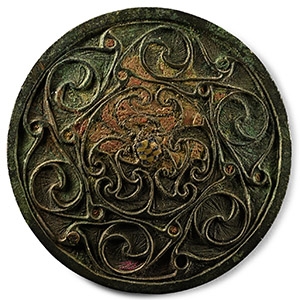
'The Driffield' Anglo-Saxon Enamelled Bowl Mount
Sold for (Inc. bp): £4,160
With a slightly domed profile and a raised circumferential border to the upper face; decorated with Celtic designs featuring elaborate curvilinear tendrils and triskele-style swirls enclosing an area of fine-line trumpet spiral designs, set around a central rectangular panel filled with millefiori-style enamel work in the form of an irregular chequerboard of blue and yellow enamel, the circular recesses retaining red enamel traces; two parallel rivets to the reverse. -
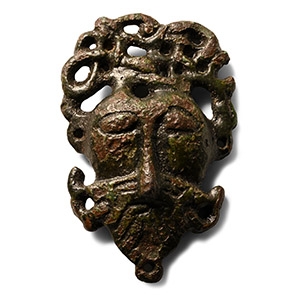
'The Ferryhill' Anglo-Scandinavian Viking Bronze Three-Dimensional Urnes Stirrup-Type Mount with Head of Odin
Sold for (Inc. bp): £9,100
A bowed anthropomorphic mount in the form of the face of Odin, with oval right and damaged left eye, beard and hair raised to form a convex shape, rounded cheeks, a triangular nose and a beard, moustache with lateral protrusion, the hair openwork and formed of entwined linear elements, five rivet holes present. -
.jpg)
Medieval Decorated 'He who loves from the heart, gives with a good heart' Posy Boxwood Comb
Sold for (Inc. bp): £9,100
Central panel decorated with a heart pierced by two arrows and inscription: 'qui de bon [COER] eyme', and verso openwork carving of blind interlaces and inscription: 'de bon [COER] donne', translating to 'He who loves from the heart, gives with a good heart'; probably given as a love token. -
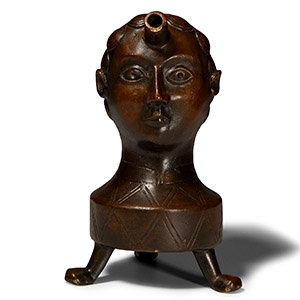
Medieval Bronze Aquamanile of a Male Bust
Sold for (Inc. bp): £11,050
Hollow-formed vessel formed as a male bust; discoid body with chamfered shoulder bearing bands of running zigzag detailing and three splayed feet; the head with low-relief hair and rim of bosses with linear spirals, gracile facial features with lentoid eyes and slender nose, small pouting mouth; short spout to the forehead, filler-hole to top of the head with hinged cover; handle to the rear formed as a reptile with head and forepaws placed on the hair below the hinge and joining the base above one of the feet. -
.jpg)
Medieval Limoges Gilt Christ Crowned on the Cross
Sold for (Inc. bp): £7,150
Parcel-gilt bronze crucifix with cloisonné enamel geometric ornament; separate appliqué Corpus Christi, crowned with detailed musculature; lower legs and feet absent; mounted on a custom-made stand. -
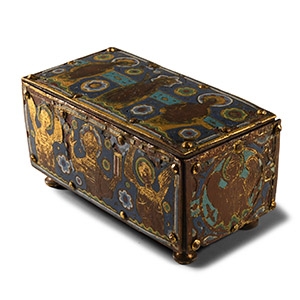
Medieval Chrismatory with Limoges Panels
Sold for (Inc. bp): £22,100
Inner wooden casket with chamfered rim and separate lid, encased within rectangular gilt-bronze panels with enamel decoration, four gilt-bronze stud feet to the underside; the lid with three nimbate figures, a female saint with palm frond and two flanking figures holding books, all reserved on a blue field with interstitial polychrome rosettes; Side A: nimbate bearded bust of Christ in Majesty with right hand in gesture of benison, left hand supporting a book, flanked by two winged nimbate angels; Side B: nimbate bust of a winged angel in a roundel; Side C: geometric repeating pattern of lozenges with floral fill; Side D: mirror image of Side B. -
.jpg)
Medieval Gold Heraldic Signet Ring with Goat
Sold for (Inc. bp): £28,600
Substantial D-section hoop, expanding shoulders with reserved flowers and foliage, discoid bezel with intaglio regardant leaping goat in a pelletted ring, fronds and stars in the field, enigmatic inscription 'd[..] / de.to'. -
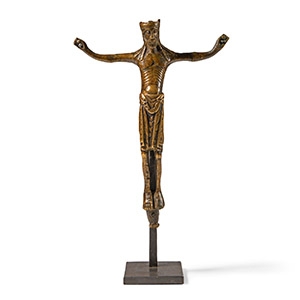
Medieval Bronze Corpus Christi
Sold for (Inc. bp): £13,650
With flat-topped crown, hair hanging in hanks to the shoulders, long D-shaped face with domed eyes, slender figure with ribs emphasised, knee-length loincloth falling in rippling folds; mounted on a custom-made stand.
-
.jpg)
Cretan School Wooden Pedestal Cross Base with 'Descent from the Cross' Gilt Painted Scene
Circa 17th century A.D.Sold for (Inc. bp): £13,000
Hollow-constructed stepped pedestal with socket to accept a devotional cross; gesso surface with moulded edging and gilt finish; painted scene of the 'descent from the cross' and 'lamentation of the Christ' with Christ laid out on the Holy Shroud surrounded by sorrowful Mary Magdalene, Virgin Mary, Mary of Clopas, St John the Evangelist, St Joseph of Arimathea and Nicodemus holding a ladder in the background; coffin with open cover to the left, cave of Golgotha to the right with skull, landscape with city of Jerusalem in the background. 8 kg, 104 cm wide
Fine condition.
Ex property of a London lady, part of her family's collection. Accompanied by an academic report by Dr Raffaele D’Amato. This lot has been checked against the Interpol Database of stolen works of art and is accompanied by search certificate no. 11542-196369.
In the Orthodox world, single wooden crosses representing the Stavrosis (Crucifixion) were positioned as icons in their own right, with candles placed in front of them as offering for the dead. It is a tradition that dates back to Byzantium, and was continued in the Slavic Orthodox world with the creation of splendid painted wooden crucifixes placed on equally beautifully painted pedestals. In this case the complex representation includes all the elements of the Gospel that recall the passion, death and resurrection of Christ. Christ has been taken down from the cross and is surrounded by his loved ones. His muscular body highlights the wound in his right side procured by Longinus' spear. The pain of the mother, the piety of Mary, is expressed here with the mute silence of the Madonna, who holds her son's head, which contrasts with the pain manifested by the other bystanders. Saint Joseph of Arimathea, who procured the tomb and the sacred sheet, devoutly holds the feet of Christ. The right side of the scene shows the Golgotha, symbol of the human death of Christ. The left of the scene shows the open tomb, symbol of the human and divine Resurrection of Christ. The sacred sheet, loose inside the sepulchre with open lid, appears as a symbol of the saving grace of the Resurrection. The city in the background represents ancient Jerusalem transformed into its heavenly equivalent through the Resurrection of Christ. -
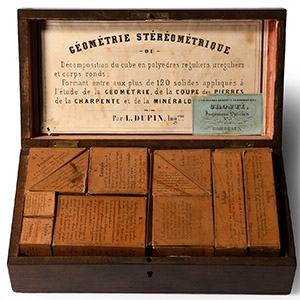
Natural History - Mineralogical Geometry Set
French, circa 1850 A.D.Sold for (Inc. bp): £2,340
A rare complete set of folded-card polyhedrons, each with extensive printed notes on the surfaces, dimension and properties; to be assembled from the 120 components into two adjacent cuboids within a wooden box with hinged lid and paper insert announcing 'Géométrie Stéréométrique -ou- Décomposition du cube en polyèdres réguliers, irréguliers et corps ronds... par L. Dupin Ing.eur' (Stereometric Geometry or the disassembly of the cube into regular and irregular polyhedrons and cylinders... by L. Dupin, Inventor). 463 grams total, 23.3 x 12.3 x 6.7 cm (case)
Private American collection, New York, USA. This lot has been checked against the Interpol Database of stolen works of art and is accompanied by search certificate no.12065-211002.
The box contains an educational set of geometric shapes comprising 120 individual three-dimensional cardboard pieces with printed names and numbers corresponding to the key, arranged in various smaller interlocking configurations. The producer, Louis Dupin de la Guérinière, was a French civil engineer who began to produce and sell folded models to show the physical properties of polyhedrons. His models were intended not only as educational aids for students of mathematics, but also for those whose work involved perspective drawing, stone-cutting and mineralogy. The sets began production in the 1840s and were a popular study-aid. The present example has an adhesive label in the lid naming the supplier as Crosti of Rue Ste. Catherine, Bordeaux, France. -
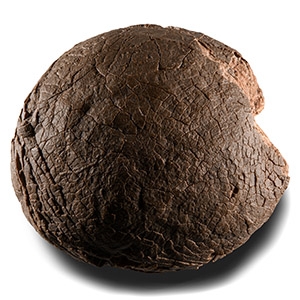
Natural History - Fossil Hadrosaur Dinosaur Egg
Late Cretaceous Period, circa 100-66 million years B.P.Sold for (Inc. bp): £520
A near complete Charonosaurus sp. hadrosaur egg, retaining the leathery surface, and possibly showing the internal remains at one corner. 1.73 kg, 14.1 cm
From Xixia Basin, Henan Province, China. Ex Eons Ago, USA, circa 2008. Prepared by Christine Coyle, U.S.A. From the private collection of Mr A Hills, Kent, UK.
Dinosaur eggs are known from about 200 sites around the world, the majority in Asia and mostly in terrestrial (non-marine) rocks of the Cretaceous Period. It may be that thick calcite eggshells evolved during the Cretaceous (145 to 65 million years ago). Most dinosaur eggs have one of two forms of eggshell that are distinct from the shells of related modern animal groups, such as turtles or birds; however, some eggs closely resemble the type of shells seen in present day ostrich eggs. -
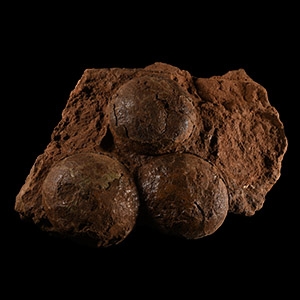
Natural History - Fossil Hadrosaur Dinosaur Egg Nest
Late Cretaceous Period, circa 100-66 million years B.P.Sold for (Inc. bp): £1,820
A large section of Charonosaurus sp. hadrosaur egg nest on matrix, including three eggs each retaining some of the original shell surface. 17.3 kg, 43 cm
From a collection acquired on the UK art market from various auction houses and collections mostly before 2000. From an important Cambridgeshire estate; thence by descent.
Dinosaur eggs are known from about 200 sites around the world, the majority in Asia and mostly in terrestrial (non-marine) rocks of the Cretaceous Period. It may be that thick calcite eggshells evolved during the Cretaceous (145 to 65 million years ago). Most dinosaur eggs have one of two forms of eggshell that are distinct from the shells of related modern animal groups, such as turtles or birds; however, some eggs closely resemble the type of shells seen in present day ostrich eggs. -
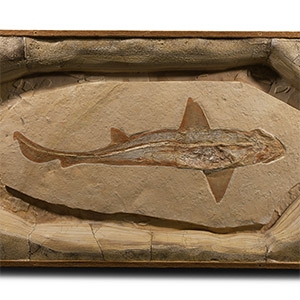
Natural History - Cretaceous Fossil Reef Shark
Late Cretaceous Period, circa 96-95 million years B.P.Sold for (Inc. bp): £13,000
A rare complete example of Paratriakis curtirostris within micritic matrix, displaying the spine, fins and tail with visible fin supports; the head with a number of teeth in situ; mounted in a custom-made wooden frame with a textured insert. 40.1 kg total, shark: 81 cm (68 x 127.5 cm)
Found Haqel, Lebanon. Ex Fine Fossils, UK. From the private collection of Mr J.G., a company executive. Studied by the University of Manchester, UK. Accompanied by an original signed handwritten note from Sir David Attenborough, 7 November 2022, which reads 'Dear J[ ] G[ ], You are indeed lucky to have such a spectacular fossil. Best wishes, David Attenborough'. Accompanied by a certificate of authenticity from Fine Fossils with certificate no.COLL011. Accompanied by a detailed geological report by Paul Goodrich. This lot has been checked against the Interpol Database of stolen works of art and is accompanied by search certificate no.12091-214455.
Paratriakis curtirostris was a resident in the shallows of the Tethys Ocean, which separated Africa, Europe, Indo-Australia and Asia. The genus is now extinct, but has a relative in the modern-day dogfish Triakis. -
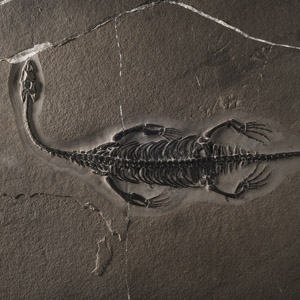
Natural History - Fossil Keichousaurus Marine Reptile Skeleton
Triassic Period, circa 250 million years B.P.Sold for (Inc. bp): £2,340
Comprising a complete Keichousaurus hui skeleton on a rectangular matrix. 2.58 kg, 20 x 29.5 cm
From Xingyi, Guizhou, China. Ex J. Shaul, collection, UK.
Keichousaurus was a late Triassic marine reptile, a member of the Pleurosaur family, which went extinct 250 million years ago during the Triassic-Jurassic extinction event. They were specialised fish eaters, and were highly unusual amongst marine reptiles in that they gave birth to live young rather than laying eggs. -
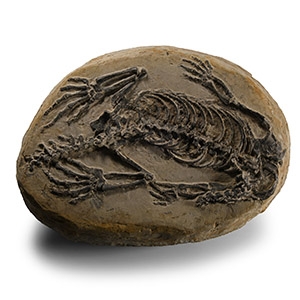
Natural History - Fossil Claudiosaurus Skeleton
Late Permian-early Triassic Period, circa 252-250 million years B.P.Sold for (Inc. bp): £1,430
On a rounded matrix. 8.85 kg, 32.5 cm
From Madagascar. From a Cambridgeshire, UK, collection.
Claudiosaurus is an extinct genus of diapsid reptiles from the Late Permian Sakamena Formation of the Morondava Basin, Madagascar. It is theorised that this was a semi-aquatic, lizard-like dinosaur. -
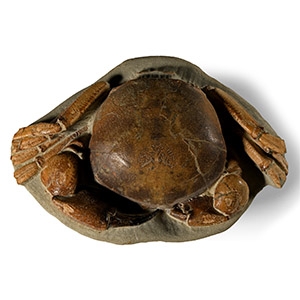
Natural History - Fossil Giganteus Crab
Neogene Period, circa 15-12 million years B.P.Sold for (Inc. bp): £247
A well preserved and prepared complete Tumidocarcinus giganteus from a classic fossil location; witha handwritten provenance label to verso. 926 grams, 17 cm
Found by Mike Kemper, Waipare, Mount Cass, New Zealand, February 2014. From the private collection of a Lancashire gentleman. -
.jpg)
Natural History - Huge Megalodon Giant Shark Fossil Tooth
Pliocene Period, circa 5.2-2.5 million years B.P.Sold for (Inc. bp): £2,860
A Carcharocles megalodon tooth displaying good polished enamel. 626 grams, 15.8 cm (along edge)
Ex Fossils UK. From the private collection of a Lancashire gentleman.
Carcharodon megalodon is regarded as one of the largest and most powerful marine predators in vertebrate history and likely had a profound impact on structuring of the marine communities. Fossil remains indicate that this giant shark reached a length of more than 16 metres (52 ft) and also affirm that it had a cosmopolitan distribution. Scientists suggest that in life it looked like a stockier version of the great white shark, Carcharodon carcharias. -
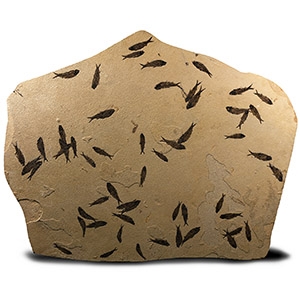
Natural History - Huge Knightia Fossil Fish Display
Eocene Period, circa 58-33 million years B.P.Sold for (Inc. bp): £1,950
With a shoal of Knightia alta sp. specimens, some preserved on top of each other, on an irregular matrix; mounted on plywood backing. 42.9 kg, 117 cm wide
From Wyoming (Green River Formation), USA. Property of a Cambridgeshire, UK, gentleman.
In southwest Wyoming (and parts of Colorado and Utah) in the Green River Formation are found some of the world's most outstanding specimens of fossil fish. The Green River system was composed of three lakes: Lake Ulinta, Lake Gosiute and Fossil Lake. These Eocene lakes lay in a series of intermountain basins formed by geological events that uplifted the Rocky Mountains during the early Tertiary time. The climate was much different from the desert-like climate of this area today. Both the fauna (crocodiles, alligators, boa constrictors and some subtropical fish families) and the flora (such as large palm trees) indicate a climate much like that found along the Gulf Coast today. Large amounts of ash found in the sediments indicate that volcanoes were particularly active at this time. -
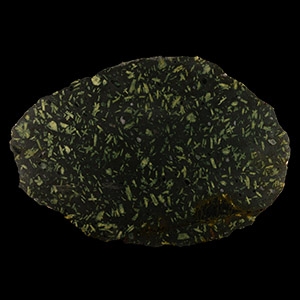
Natural History - Large Historic Roman 'Spartan Basalt' Cut & Polished Green Porphyry Sheet
Sold for (Inc. bp): £845
A very large lacquered cut section, mined in Greece, cut and polished on one side, probably recycled material mined in ancient Roman times. 1.01 kg, 32 cm
From Greece. Ex Mineral Imports, London, UK. Gregory, Bottley & Lloyd (Gregory's). -
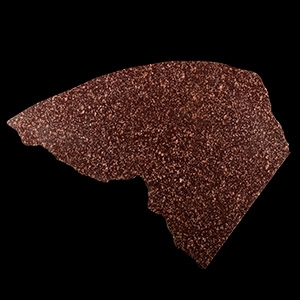
Natural History - Large Historic Cut & Polished Porphyry Slice
Sold for (Inc. bp): £780
Comprising lacquered porphyry slice of irregular shape, cut and polished on one side, probably recycled material mined in ancient Roman times between the 1st and 5th century A.D. 917 grams, 28 cm
From Egypt. Ex Mineral Imports, London, UK. Gregory, Bottley & Lloyd (Gregory's).
Mons Porphyrites (today Jabal Abu Dukhkhan) is the mountainous site of a group of ancient quarries in the Red Sea Hills of the inhospitable eastern desert in Egypt, a five day trip from the Nile during Roman times. They were discovered by Caius Cominus Leugas in 18 A.D., and during the Roman Empire the mines officially belonged to the emperor and were the only known source of the Imperial Porphyry, Mons Porphyrites. This dark purple stone was associated with royalty and used for prestigious sculpture and architecture. The location of the mines was lost some time in the 5th century, and rediscovered in the early 19th century. Excavations in the area have revealed the well-preserved quarries and the dwelling places of the quarry men, and also thousands of ostraca have been discovered containing messages that provide details of how the quarrying took place, and of how the highly skilled quarrymen ordered their food.
