-
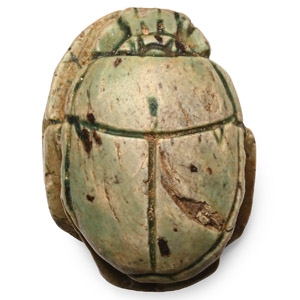
Large Egyptian Steatite Scarab with Hieroglyphs
Late Period, 664-332 B.C.Estimate: £300 - 400 (+bp*)
Detailed carapace and head, underside with animals and wedjat motif; pierced longitudinally. 6.65 grams, 24 mm
Mrs Allinson to Mrs Foster, 1867 and thence by descent to the current owner, Stanley Crescent, London, UK. -
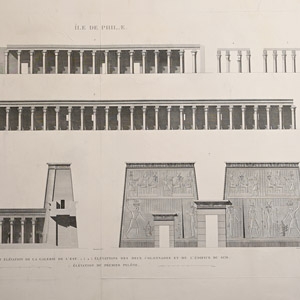
Very Large Egyptian Expedition Lithograph of the Temple of Philae
Early 19th century A.D.Estimate: £100 - 140 (+bp*)
Proof etching on laid paper of plate 6 from Description de l'egypte entitled Île de Philae. Coupe et élévation de la galerie de l'est. Élévations des deux colonnades et de l'édifice du sud. Élévation du premier pylône. 252 grams, 104 x 68.5 cm
From the collection of a North American priest. Acquired between 1981-1996. Property of a North American collector.
Produced between February 1802 and 1830 on the orders of Napoleon Bonaparte; published between 1809 and 1828. Just 1,000 copies were distributed to various institutions, printed on laid paper with an 'Égypte ancienne et moderne' watermark. The book is subtitled Recueil des observations et des recherches qui ont été faites en Égypte pendant l’expédition de l’Armée française, publié par les ordres de Sa Majesté l’Empereur Napoléon le Grand (Gathering of observations and discoveries which were made in Egypt during the expedition of the French army, published on the orders of His Majesty the Emperor Napoleon the Great). It was the world's first encyclopedia devoted exclusively to the remains of ancient Egypt. The plates of this book are the first to present the archaeological sites of Thebes (Luxor). The Philae temple complex was one of the major monuments dismantled from its original location and relocated to a new site during the Aswan High Dam project. Most of the complex dates to the Ptolemaic Period, although some earlier and later elements remain. -
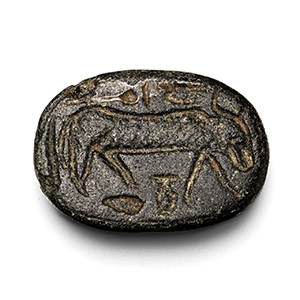
Egyptian Steatite Scaraboid with Face
Late Period, 664-332 B.C.Estimate: £200 - 300 (+bp*)
Modelled as a domed face of Hathor with small cow-ears and a wig with coiled lappet ends, and an advancing cow on the underside. 10.18 grams, 32 mm
From the collection of a gentleman, acquired on the London art market in the 1990s. -
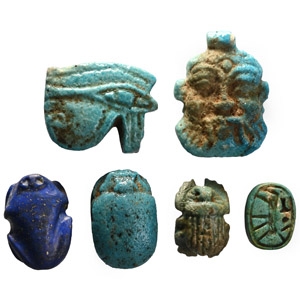
Egyptian Faience Amulet and Scarab Group
Late-Ptolemaic Period, circa 664-30 B.C.Estimate: £600 - 800 (+bp*)
Comprising: a Bes head amulet, a frog amulet, a wedjat, an amuletic plaque, and two scarabs. 19.8 grams total, 15-29 mm
From the collection of a gentleman, acquired on the London art market in the 1990s. -
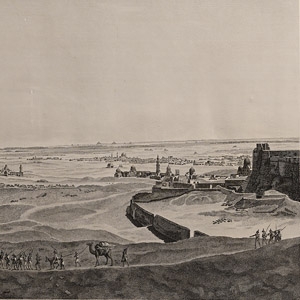
Very Large Egyptian Expedition Lithograph of Kaire
Early 19th century A.D.Estimate: £100 - 140 (+bp*)
Proof etching on laid paper of plate 61 from Vol .I of Description de l'Égypte : ou, Recueil des observations et des recherches qui ont été faites en Égypte pendant l'expédition de l'armée française. entitled Le Kaire. Vue générale de la ville des tombeaux. 259 grams, 104 x 67 cm
From the collection of a North American priest. Acquired between 1981-1996. Property of a North American collector.
Produced between February 1802 and 1830 on the orders of Napoleon Bonaparte; published between 1809 and 1828. Just 1,000 copies were distributed to various institutions, printed on laid paper with an 'Égypte ancienne et moderne' watermark. The book is subtitled Recueil des observations et des recherches qui ont été faites en Égypte pendant l’expédition de l’Armée française, publié par les ordres de Sa Majesté l’Empereur Napoléon le Grand (Gathering of observations and discoveries which were made in Egypt during the expedition of the French army, published on the orders of His Majesty the Emperor Napoleon the Great). It was the world's first encyclopedia devoted exclusively to the remains of ancient Egypt. The plates of this book are the first to present the archaeological sites of Thebes (Luxor). The papyrus manuscript was recovered from the underground chambers (hypogea). The original papyrus is now held in the Bibliothèque Nationale (1-19), Paris (Papyrus Cadet). -
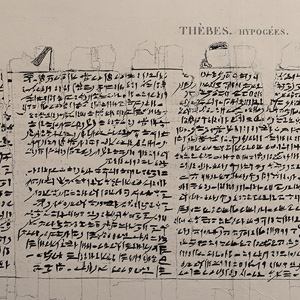
Very Large Egyptian Expedition Lithograph of the Hypogees Papyrus Manuscript from Thebes
Early 19th century A.D.Estimate: £100 - 140 (+bp*)
Proof etching on laid paper of plate 66 from Vol.II of Description de l'Égypte : ou, Recueil des observations et des recherches qui ont été faites en Égypte pendant l'expédition de l'armée française. entitled Thèbes. Hypogées. Manuscrit sur papyrus. 230 grams, 102 x 69 cm
From the collection of a North American priest. Acquired between 1981-1996. Property of a North American collector.
Produced between February 1802 and 1830 on the orders of Napoleon Bonaparte; published between 1809 and 1828. Just 1,000 copies were distributed to various institutions, printed on laid paper with an 'Égypte ancienne et moderne' watermark. The book is subtitled Recueil des observations et des recherches qui ont été faites en Égypte pendant l’expédition de l’Armée française, publié par les ordres de Sa Majesté l’Empereur Napoléon le Grand (Gathering of observations and discoveries which were made in Egypt during the expedition of the French army, published on the orders of His Majesty the Emperor Napoleon the Great). It was the world's first encyclopedia devoted exclusively to the remains of ancient Egypt. The plates of this book are the first to present the archaeological sites of Thebes (Luxor). The papyrus manuscript was recovered from an underground tomb chamber (hypogeum). The text is written in hieratic, a cursive form of hieroglyphs, often used for religious papyrus documents. -
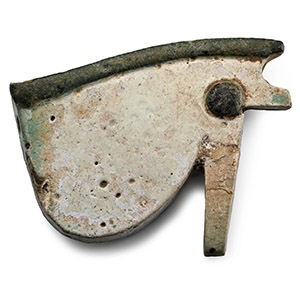
Large Egyptian Faience Eye of Horus Amulet
Late Period, 664-332 B.C.Estimate: £300 - 400 (+bp*)
Wedjat amuletic bead with applied black detailing to the pupil and brow. 16.5 grams, 50.4 mm
with Archaeologia, Switzerland, before 1983. Ex private North American collection. London private collection, 2016. -
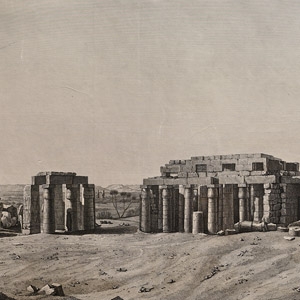
Very Large Egyptian Expedition Lithograph of the Memnonium at Thebes
Early 19th century A.D.Estimate: £100 - 140 (+bp*)
Proof etching on laid paper of plate 23 from Vol.II of Description de l'Égypte : ou, Recueil des observations et des recherches qui ont été faites en Égypte pendant l'expédition de l'armée française. entitled Thèbes. Memnonium. Vue générale du tombeau d'Osymandyas et d'une partie de la plaine de Thèbes prise du ord-ouest. 226 grams, 105 x 69.5 cm
From the collection of a North American priest. Acquired between 1981-1996. Property of a North American collector.
Produced between February 1802 and 1830 on the orders of Napoleon Bonaparte; published between 1809 and 1828. Just 1,000 copies were distributed to various institutions, printed on laid paper with an 'Égypte ancienne et moderne' watermark. The book is subtitled Recueil des observations et des recherches qui ont été faites en Égypte pendant l’expédition de l’Armée française, publié par les ordres de Sa Majesté l’Empereur Napoléon le Grand (Gathering of observations and discoveries which were made in Egypt during the expedition of the French army, published on the orders of His Majesty the Emperor Napoleon the Great). It was the world's first encyclopedia devoted exclusively to the remains of ancient Egypt. The plates of this book are the first to present the archaeological sites of Thebes (Luxor). The "Memnonium" is the Greek name for the mortuary temple of Ramesses II, now known as the Ramesseum. -
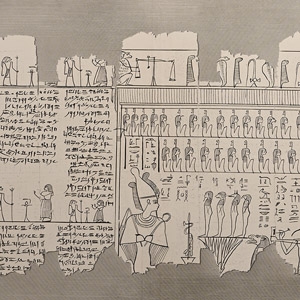
Very Large Egyptian Expedition Lithograph of the Hypogees Papyrus Manuscript from Thebes
Early 19th century A.D.Estimate: £100 - 140 (+bp*)
Proof etching on laid paper of plate 64 from Vol.II of Description de l'Égypte : ou, Recueil des observations et des recherches qui ont été faites en Égypte pendant l'expédition de l'armée française. entitled Thèbes. Hypogées. Manuscrit sur papyrus. 4eme partie. 235 grams, 105 x 69.5 cm
From the collection of a North American priest. Acquired between 1981-1996. Property of a North American collector.
Produced between February 1802 and 1830 on the orders of Napoleon Bonaparte; published between 1809 and 1828. Just 1,000 copies were distributed to various institutions, printed on laid paper with an 'Égypte ancienne et moderne' watermark. The book is subtitled Recueil des observations et des recherches qui ont été faites en Égypte pendant l’expédition de l’Armée française, publié par les ordres de Sa Majesté l’Empereur Napoléon le Grand (Gathering of observations and discoveries which were made in Egypt during the expedition of the French army, published on the orders of His Majesty the Emperor Napoleon the Great). It was the world's first encyclopedia devoted exclusively to the remains of ancient Egypt. The plates of this book are the first to present the archaeological sites of Thebes (Luxor). The papyrus manuscript was recovered from an underground tomb chamber (hypogeum). This includes a scene (bottom right) depicting the weighing of the deceased's heart before Osiris's divine tribunal. The heart is balanced against the feather of Maat, and the ibis-headed Thoth records the verdict. If the heart fails to balance, it is devoured by a fearsome creature called Ammut, and the deceased would cease to exist. -
.jpg)
Egyptian Bronze Uraeus Mount
Late-Ptolemaic Period, circa 664-30 B.C.Estimate: £100 - 140 (+bp*)
Formed as a rearing cobra with the hood divided into cells to accept inlay. 6.54 grams, 35 mm
From the collection of a gentleman, acquired on the London art market in the 1990s.
The uraeus depicts a rearing cobra and symbolises royal power and authority, as well as the Lower Egyptian goddess Wadjet. -
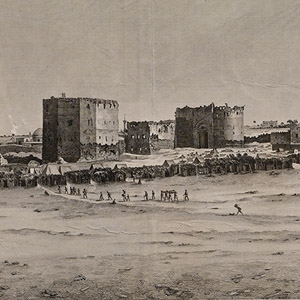
Very Large Egyptian Expedition Lithograph of a View of Alexandria
Early 19th century A.D.Estimate: £100 - 140 (+bp*)
Proof etching on laid paper of plate 98 from Description de l'Égypte : ou, Recueil des observations et des recherches qui ont été faites en Égypte pendant l'expédition de l'armée française. entitled Vue de l'Esplanade ou Grande Place du port neuf et de l'Enceinte des Arabes, Seconde partie. 233 grams, 105 x 66.5 cm
From the collection of a North American priest. Acquired between 1981-1996. Property of a North American collector.
Produced between February 1802 and 1830 on the orders of Napoleon Bonaparte; published between 1809 and 1828. Just 1,000 copies were distributed to various institutions, printed on laid paper with an 'Égypte ancienne et moderne' watermark. The book is subtitled Recueil des observations et des recherches qui ont été faites en Égypte pendant l’expédition de l’Armée française, publié par les ordres de Sa Majesté l’Empereur Napoléon le Grand (Gathering of observations and discoveries which were made in Egypt during the expedition of the French army, published on the orders of His Majesty the Emperor Napoleon the Great). It was the world's first encyclopedia devoted exclusively to the remains of ancient Egypt. The plates of this book are the first to present the archaeological sites of Thebes (Luxor). -
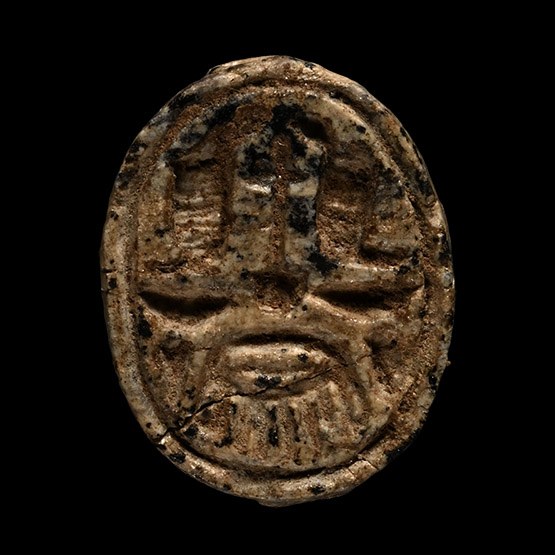
Egyptian Faience Scarab with Hieroglyphs
Late Period, 664-332 B.C.Estimate: £150 - 200 (+bp*)
Modelled as a scarab resting on a textured base with a tubular extension behind and before the head forming part of the piercing, the underside features two rearing cobras atop neb signs flanking a nefer sign, with a large nwb sign (meaning 'gold') below. 2.66 grams, 18 mm
From the property of a London, UK, gentleman, 1970-2000s. This lot is accompanied by an illustrated lot declaration signed by the Head of the Antiquities Department, Dr Raffaele D'Amato.

