-
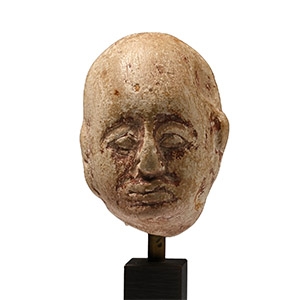
Egyptian Stone Head of a Man
Hyksos Period, circa 1648-1540 B.C.Estimate: £700 - 900 (‡+bp*)
A miniature male head with high eyebrows, large eyes, and protruding nose and mouth; traces of polychrome; inked collector's number '46' on the back; mounted on a custom-made display stand. 76 grams total, 92 mm including stand
Collection of Ambassador G.P., Nr.203, before 1965. with Galerie Rhéa, Zurich, Switzerland. -
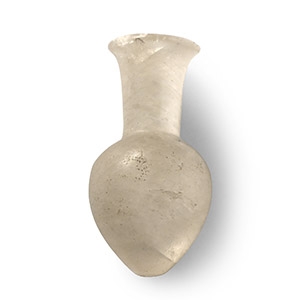
Egyptian Rock Crystal Piriform Vessel
Old Kingdom, 5th-6th Dynasty, circa 2500-2200 B.C.Estimate: £4,000 - 6,000 (+bp*)
Model amphora with trumpet-shaped mouth and piriform body; shallow socket above. 55 grams, 59 mm
with Archaeologia, Switzerland, before 1983. Ex private North American collection. London private collection, 2016.
This model vessel was probably linked to the "Opening of the Mouth" ritual, which revived the deceased. -
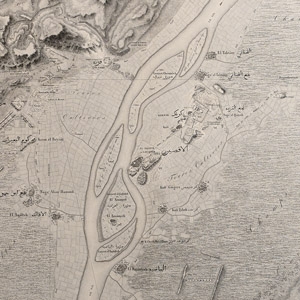
Very Large Egyptian Expedition Lithograph of Thebes
Early 19th century A.D.Estimate: £100 - 140 (+bp*)
Proof etching on laid paper of plate 1 entitled Thèbes. Plan général de la portion de la Vallée du Nil qui comprend les ruines, Volume II, Plate 1. 341 grams, 103.8 x 69.5 cm
From the collection of a North American priest. Acquired between 1981-1996. Property of a North American collector.
Produced between February 1802 and 1830 on the orders of Napoleon Bonaparte; published between 1809 and 1828. Just 1,000 copies were distributed to various institutions, printed on laid paper with an 'Égypte ancienne et moderne' watermark. The book is subtitled Recueil des observations et des recherches qui ont été faites en Égypte pendant l’expédition de l’Armée française, publié par les ordres de Sa Majesté l’Empereur Napoléon le Grand (Gathering of observations and discoveries which were made in Egypt during the expedition of the French army, published on the orders of His Majesty the Emperor Napoleon the Great). It was the world's first encyclopedia devoted exclusively to the remains of ancient Egypt. The plates of this book are the first to present the archaeological sites of Thebes (Luxor). -
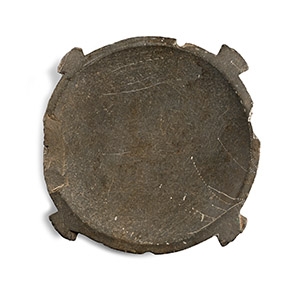
Egyptian Schist Plate
Middle Kingdom, 2040-1782 B.C.Estimate: £650 - 850 (‡+bp*)
Discoid palette with rounded underside and flat base, dished central field, flat rim with four radiating trapezoidal projections. 450 grams, 16.4 cm
Acquired in the mid 1980s-1990s. Private collection, Switzerland, thence by descent. Private collection, since the late 1990s. Accompanied by a copy of an Art Loss Register certificate no.S00038135. -
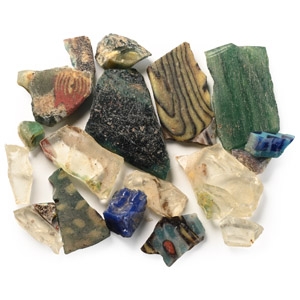
Romano-Egyptian Mosaic Glass Fragments
Circa 1st century A.D.Estimate: £100 - 140 (+bp*)
Including geometric and other patterns. 18 grams total, 5-30 mm
Ex Gallery Mikazuki prior to 1984. Propery of a London, UK, gentleman. -
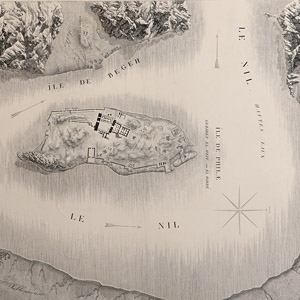
Very Large Egyptian Expedition Lithograph of the Isle of Philae
Early 19th century A.D.Estimate: £100 - 140 (+bp*)
Proof etching on laid paper of plate 1 from Île de Philae entitled Plan Général de l'île et de ses environs. 255 grams, 104 x 69 cm
From the collection of a North American priest. Acquired between 1981-1996. Property of a North American collector.
Produced between February 1802 and 1830 on the orders of Napoleon Bonaparte; published between 1809 and 1828. Just 1,000 copies were distributed to various institutions, printed on laid paper with an 'Égypte ancienne et moderne' watermark. The book is subtitled Recueil des observations et des recherches qui ont été faites en Égypte pendant l’expédition de l’Armée française, publié par les ordres de Sa Majesté l’Empereur Napoléon le Grand (Gathering of observations and discoveries which were made in Egypt during the expedition of the French army, published on the orders of His Majesty the Emperor Napoleon the Great). It was the world's first encyclopedia devoted exclusively to the remains of ancient Egypt. The plates of this book are the first to present the archaeological sites of Thebes (Luxor). The Philae temple complex was one of the monuments moved during the construction of the Aswan High Dam. It was carefully dismantled piece by piece and reassembled on the island of Agilkia. -
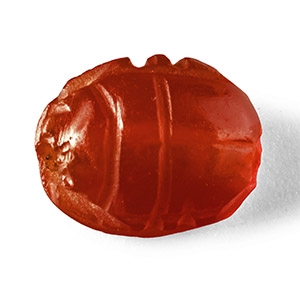
Egyptian Carnelian Scarab Amulet
Late Period, 664-332 B.C.Estimate: £100 - 140 (+bp*)
Carved in the round scarab with longitudinal piercing. 0.40 grams, 8.5 mm
Ex Belinda Elliston collection, 20th century. -
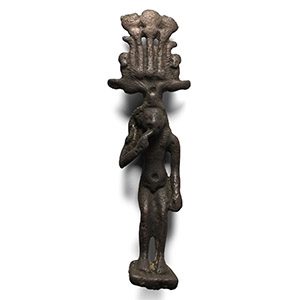
Egyptian Bronze Harpokrates Statuette
Late-Ptolemaic Period, 664-30 B.C.Estimate: £250 - 350 (+bp*)
Devotional figurine of Harpokrates seated with his hand raised to his mouth, wearing a nemes headdress with curled side lock, topped by an elaborate hem-hem crown characteristic of the god. 59 grams, 10.7 cm
From the collection of a gentleman, acquired on the London art market in the 1990s.
Harpokrates is the Greek rendering of the Egyptian name Hor-pa-khered, which means ‘Horus the Child’. This name refers to Horus as the divine infant of Isis and Osiris. Wearing an amulet of Harpokrates was believed to offer the same protection that Isis granted to her beloved son. Larger bronze statuettes like this example were likely votive offerings to Harpokrates to secure his favour and protection. -
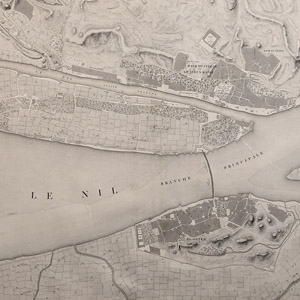
Very Large Egyptian Expedition Lithograph of the 'Environs du Kaire' (Cairo and district)
Early 19th century A.D.Estimate: £100 - 140 (+bp*)
Proof etching on laid paper of plate 16 from Vol .I of Description de l'Égypte : ou, Recueil des observations et des recherches qui ont été faites en Égypte pendant l'expédition de l'armée française. entitled Environs du Kaire. Plan particulier de l'île de Roudah, du vieux Kaire et du Gyzeh. 238 grams, 105.5 x 69.5 cm
From the collection of a North American priest. Acquired between 1981-1996. Property of a North American collector.
Produced between February 1802 and 1830 on the orders of Napoleon Bonaparte; published between 1809 and 1828. Just 1,000 copies were distributed to various institutions, printed on laid paper with an 'Égypte ancienne et moderne' watermark. The book is subtitled Recueil des observations et des recherches qui ont été faites en Égypte pendant l’expédition de l’Armée française, publié par les ordres de Sa Majesté l’Empereur Napoléon le Grand (Gathering of observations and discoveries which were made in Egypt during the expedition of the French army, published on the orders of His Majesty the Emperor Napoleon the Great). It was the world's first encyclopedia devoted exclusively to the remains of ancient Egypt. The plates of this book are the first to present the archaeological sites of Thebes (Luxor). The papyrus manuscript was recovered from the underground chambers (hypogea). The original papyrus is now held in the Bibliothèque Nationale (1-19), Paris (Papyrus Cadet). -
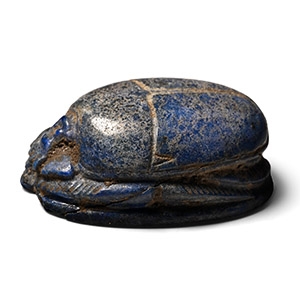
Egyptian Lapis Lazuli Scarab
Late Period, 664-332 B.C.Estimate: £400 - 600 (+bp*)
Carved in the round with longitudinal piercing, ellipsoid base. 12.8 grams, 30 mm
Ex early 20th century collection. -
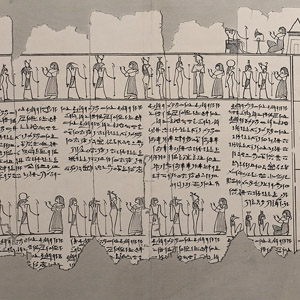
Very Large Egyptian Expedition Lithograph of the Hypogees Papyrus Manuscript from Thebes
Early 19th century A.D.Estimate: £100 - 140 (+bp*)
Proof etching on laid paper of plate 62 from Vol.II of Description de l'Égypte : ou, Recueil des observations et des recherches qui ont été faites en Égypte pendant l'expédition de l'armée française. entitled Thèbes. Hypogées. Manuscrit sur papyrus. 2eme partie. 231 grams, 103 x 69.5 cm
From the collection of a North American priest. Acquired between 1981-1996. Property of a North American collector.
Produced between February 1802 and 1830 on the orders of Napoleon Bonaparte; published between 1809 and 1828. Just 1,000 copies were distributed to various institutions, printed on laid paper with an 'Égypte ancienne et moderne' watermark. The book is subtitled Recueil des observations et des recherches qui ont été faites en Égypte pendant l’expédition de l’Armée française, publié par les ordres de Sa Majesté l’Empereur Napoléon le Grand (Gathering of observations and discoveries which were made in Egypt during the expedition of the French army, published on the orders of His Majesty the Emperor Napoleon the Great). It was the world's first encyclopedia devoted exclusively to the remains of ancient Egypt. The plates of this book are the first to present the archaeological sites of Thebes (Luxor). The papyrus manuscript was recovered from an underground tomb chamber (hypogeum). The text is written in hieratic, a cursive form of hieroglyphic writing often used for religious papyrus documents. -
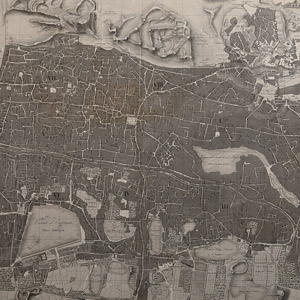
Very Large Egyptian Expedition Lithograph of the Plan of Cairo
Early 19th century A.D.Estimate: £100 - 140 (+bp*)
Proof etching on laid paper of plate 50 from Vol .I of Description de l'Égypte : ou, Recueil des observations et des recherches qui ont été faites en Égypte pendant l'expédition de l'armée française. entitled Le Kaire. Plan particulier de la ville. 231 grams, 106 x 69.5 cm
From the collection of a North American priest. Acquired between 1981-1996. Property of a North American collector.
Produced between February 1802 and 1830 on the orders of Napoleon Bonaparte; published between 1809 and 1828. Just 1,000 copies were distributed to various institutions, printed on laid paper with an 'Égypte ancienne et moderne' watermark. The book is subtitled Recueil des observations et des recherches qui ont été faites en Égypte pendant l’expédition de l’Armée française, publié par les ordres de Sa Majesté l’Empereur Napoléon le Grand (Gathering of observations and discoveries which were made in Egypt during the expedition of the French army, published on the orders of His Majesty the Emperor Napoleon the Great). It was the world's first encyclopedia devoted exclusively to the remains of ancient Egypt. The plates of this book are the first to present the archaeological sites of Thebes (Luxor). The papyrus manuscript was recovered from the underground chambers (hypogea). The original papyrus is now held in the Bibliothèque Nationale (1-19), Paris (Papyrus Cadet).

